Self-healing ‘concrete batteries’ now 10 times better — they could one day power cities, scientists say


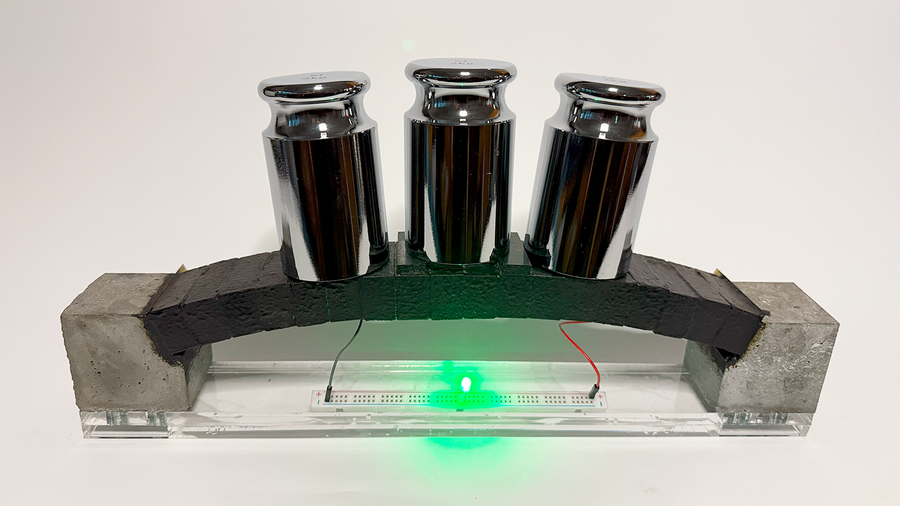
MIT researchers have improved a new type of “concrete battery”, opening the way to its use in buildings, bridges and sidewalks in giant energy stores capable of fueling whole cities.
The material is called carbon concrete conductive electrons – or EC³ – and is made by combining cement, water, common liquid electrolyte and extremely fine carbon powder called carbon black nanometry.
When mixed, the ingredients create a dense network and driver capable of transporting an electrical load. Once installed in concrete, the material and everything that is built there (whether buildings and bridges or sidewalks) is capable of storing and freeing energy if necessary.
It is a concept known as supercapacitious energy storage, and researchers hope that it can offer a viable solution to one of the renewable energyThe biggest challenges: namely how to store power locally when the sun does not shine or the wind does not blow.
In relation: Your domestic gadgets could soon be without battery – scientists create tiny solar cells that can be powered by inner light
In a new study published on September 29 in the journal Proceedings of the National Academy of Sciences (PNA)The researchers said they had a ten increase in EC³ energy storage capacity since 2023. Fivecubics meters (176.5 cubic feet) of the material can now store more than 10 kilowatt hours of electricity – about enough to supply a typical cleaning for a day.
Barely two years ago, the achievement of this level of storage would have required the volume nine times, the team said.
“With these higher energy densities and a demonstrated value in a broader application space, we now have a powerful and flexible tool that can help us take up a wide range of persistent energy challenges”, the main author of the study Damian Stefaniuksaid the researcher at MIT, in a statement.
“One of our greatest motivations has been to help allow the transition of renewable energies. Solar energy, for example, has traveled a long path in terms of efficiency. However, it can only generate power when there is enough sun. So, the question becomes: how to answer your energy needs at night or cloudy days?”
Beaten
While EC³ does not correspond to the energy density of traditional battery technologies as lithium-ion (which pack hundreds of more energy in the same weight or the same volume), the fact that it can be thrown directly into the construction components and can last as long as the structure itself, without Rely on rare or toxic materialsmakes it particularly attractive for scientists.
The new increase in performance came from a better understanding of the interaction between the carbon network inside concrete and electrolyte and modifications of the way the material is made.
Rather than soaking the material slabs in electrolyte after tightening, the researchers added the electrolyte directly to the water used in the initial mixture. This allowed the production of thicker and energy -rich slabs without compromising conductivity.
The team also tested different types of electrolytes, including seawater, and has found several viable options. The best results came from a mixture of quaternary ammonium salts – used in domestic disinfectants – and acetonitrile, a common driver solvent in industrial processes.
Feed the block
The most exciting for scientists has been aware that he has only made small changes to the way concrete is made to produce EC³. This potentially opens huge opportunities in sustainable construction, where the material could be used to develop what researchers have nicknamed the “multifunctional concrete” which can store energy, absorb carbon dioxide from the atmosphere and even repair.
The material has already been tested in Japan to heat the sidewalks in snow conditions, offering a potential alternative to road salt. The team is now working on real world applications, houses that operate out of network in parking spaces and roads that could one day load electric vehicles.
“What excites us the most is that we have taken a material as ancient as concrete and has shown that it can do something completely new,” said the study co-author James WeaverAssociate Professor of Materials Science and Engineering at Cornell University, said in the press release.
“By combining modern nanosciences with an old element of civilization, we open a door to infrastructure that does not only support our lives, it feeds them.”


