Senate navigates complex rules to pass government shutdown spending bill


NEWYou can now listen to Fox News articles!
The Senate did not delay final passage of the interim spending bill aimed at ending the government shutdown.
Oh, you might think that happened. Especially after the Senate ended a filibuster on the bill just before 11 p.m. ET Sunday night. So why didn’t the Senate immediately move to a final vote? After all, the plan had to be submitted to the House. Flight delays were piling up. Federal workers were at their wit’s end, without pay. SNAP benefits were in limbo. So why not just step things up?
Well, it’s more complicated than that. And believe it or not, the Senate has kind of stepped things up.
At least from the Senate’s perspective.
JOURNALIST’S NOTEBOOK: PAUL IS FIRM AGAINST THE EXPENSE BILL AS THE CLOCK QUICKLY STOPS

The Senate ultimately did not delay passage of the interim spending bill aimed at ending the government shutdown. (J. Scott Applewhite/AP)
Several factions in the Senate were not ready to immediately vote to end the shutdown last Sunday. It was clear that the Senate would eventually pass the bill to fund the government. This is to say nothing of the worsening impacts of the shutdown almost every hour.
Sen. Rand Paul, R-Ky., was the only Republican to break with his party and vote no in the test vote to break a filibuster on the government’s reopening deal. Paul voted no because he wanted a change in the bill regarding hemp.
The measure prevents “unregulated sales” of “hemp-intoxicating” products at gas stations and small retailers. It preserves the sale of non-toxic CBD in other hemp-related products.
So if the Senate got 60 votes Sunday night to break the filibuster and only needed 51 votes to pass the bill, why was the Senate blocked by Paul or even others?
Sen. Markwayne Mullin, Republican of Oklahoma, told reporters that a senator was requesting a vote on an amendment that would keep member salaries sequestered during future government shutdowns. This would be in addition to Paul requesting a vote on an amendment related to hemp policy.
Paul’s request was known before. But this additional request underscores the precarious balance of any unanimous consent agreement in the Senate. Once a senator gets something, others are likely to ask for something for themselves.
Paul told reporters he thought leaders were happy to give him their vote. But Paul said Sen. John Kennedy, R-La., blocked that for a short time.
Meanwhile, Mullin said Democrats have remained “silent” about their willingness to cede debate time to expedite consideration of the bill. Any senator could drag this process out for days, so their cooperation would be crucial to ending the shutdown quickly.
It’s a question of speed.
Strap in for this next part. It gets complicated.
SENATE DEMOCRATS, REPUBLICANS REACH AGREEMENT TO REOPEN GOVERNMENT
Sunday night’s vote aimed to break a filibuster to proceed with the spending measure originally passed by the House starting in September. It took 60 yeses for this.
So the Senate had just broken a filibuster to start working on the bill. That’s all.
Typically, the Senate can cut off 30 hours of debate after breaking the filibuster, unless Paul relents. This would have taken us to a minor procedural vote to be able to debate the bill before dawn last Tuesday morning.
That is, unless there is an agreement with Paul – or for that matter – with other Democratic senators to speed things up.
But wait. There’s more.

Complaints from Sen. Rand Paul, R-Ky., about the hemp provisions threatened to block progress on the ruling. (Al Drago/Bloomberg via Getty Images)
Senate Majority Leader John Thune, R-S.D.,’s intention — and it was done with a wink and a nod to get agreement on Sunday — was for him to file what’s called a “substitute” amendment. A substitute simply removes the old text from the House bill and replaces it with the new spending package.
But because it’s a substitute amendment, Thune must then “file fence” to break a filibuster on it. Typically, Thune couldn’t do it until last Tuesday. Closure petitions require an interim day before maturation. So that means the Senate couldn’t vote to break a filibuster on the substitute (e.g. the new bill) until last Thursday. Again, it takes 60 yes. And if there is no agreement, the Senate could lose another minute before voting yes or no on the substitute. Presumably it would have been Friday.
But we’re not done yet.
Trump Ends Shutdown, Faces Backlash, Moves EPSTEIN SURPRISE MIDDLE OF CHAOTIC WEEK
If the Senate had passed the new text on Friday, Thune would then have had to file cloture again on the underlying bill, wait a day (Saturday), then take a vote to break a filibuster on the issue (he still needs 60) on Sunday.
That scenario meant the Senate would finally pass the newly revamped spending bill on Monday. And that would mean the House wouldn’t have taken up the bill until next Tuesday or Wednesday.
So that would have really prolonged the government shutdown.
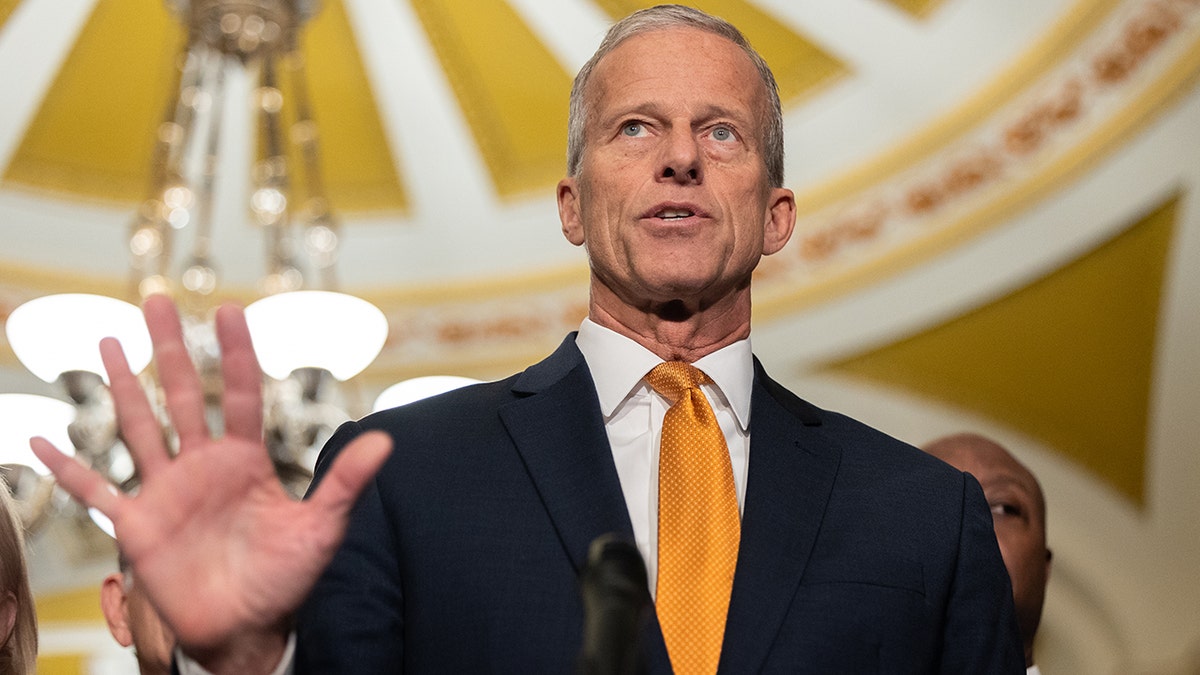
It was in Senate Majority Leader John Thune, R-S.D.’s, interest to strike a deal with Paul in an effort to speed things up. (Nathan Posner/Anadolu via Getty Images)
That said, it would probably never happen. It’s just doing things according to the rules.
But that’s also why Thune had an interest in making a deal with Paul to speed things up. Otherwise, Paul or Democrats opposed to the bill could have slowed things down and prolonged the shutdown.
But consider for a moment that if the left really wanted Democrats to stand up and fight, there is a group of rank-and-file Democrats who are upset that their party caved. But again, they had the opportunity to extend the shutdown and chose not to do so. There were also a handful of Democrats who were more than happy for others to vote to open the government — even if they wanted to but weren’t willing to vote yes. They relied on the yes – or the courage – of their colleagues.
And Paul was upset about the hemp provision.
“It’s really dismissive,” Paul said of the hemp issue. “I’m not looking to delay things. I’m looking to try to get things done.”
Paul said his “goal is to condense time.” That’s exactly what he got: a vote to remove the hemp provision. But senators blocked it. And without significant Democratic protests, the Senate approved the bill Monday without significant delays.
CLICK HERE TO DOWNLOAD THE FOX NEWS APP
So they didn’t really drag things out. Truth be told, most lawmakers were done with the shutdown and wanted to end it quickly — regardless of their politics.
But they will have another opportunity when the next round of funding expires on January 30.