Congress leaves DC with government shutdown, healthcare deadlines looming


NEWYou can now listen to Fox News articles!
Capitol Hill is a ghost town where the House and Senate don’t sit until a few days into the new year.
Lawmakers left town the week before Christmas and, with their departure, left several key fights unresolved — with deadlines looming for both Republicans and Democrats.
Government funding
Congress voted last month to end the longest government shutdown in history, after 43 days of impasse.
But lawmakers failed to reach an agreement on federal funding for the rest of fiscal year 2026, which they are expected to do every year. Instead, they passed part of the FY 2026 funding while extending the deadline for the majority of areas to January 30.
CONGRESSIONAL DEMOCRATS EXPAND 2026 BATTLEGROUND, ZERO ON HOUSE’S NEW REPUBLICAN GOALS

Speaker of the House Mike Johnson during an announcement on “Trump Accounts” for children in the Roosevelt Room of the White House in Washington, DC, Tuesday, December 2, 2025. (Yuri Gripas/CNP/Bloomberg via Getty Images)
Senate Republicans had hoped to reach an agreement on the vast majority of the remaining funds before leaving town, but various objections from senators on both sides delayed the vote.
This legislation will now have to be taken into account at the beginning of January. During this month, the House and Senate will only be in session together for a total of eight days before the Jan. 30 deadline.
The Senate will have 15 session days in total, while the House will have 12.
Health care
Millions of people across the country are expected to see an increase in the amount they pay for their health premiums each month starting in January.
Congress, meanwhile, failed to pass a compromise between the House and Senate to help Americans cope with rising costs.
For some Americans benefiting from Obamacare, that’s partly because the COVID-19 pandemic-era boosted subsidies expire at the end of 2025.
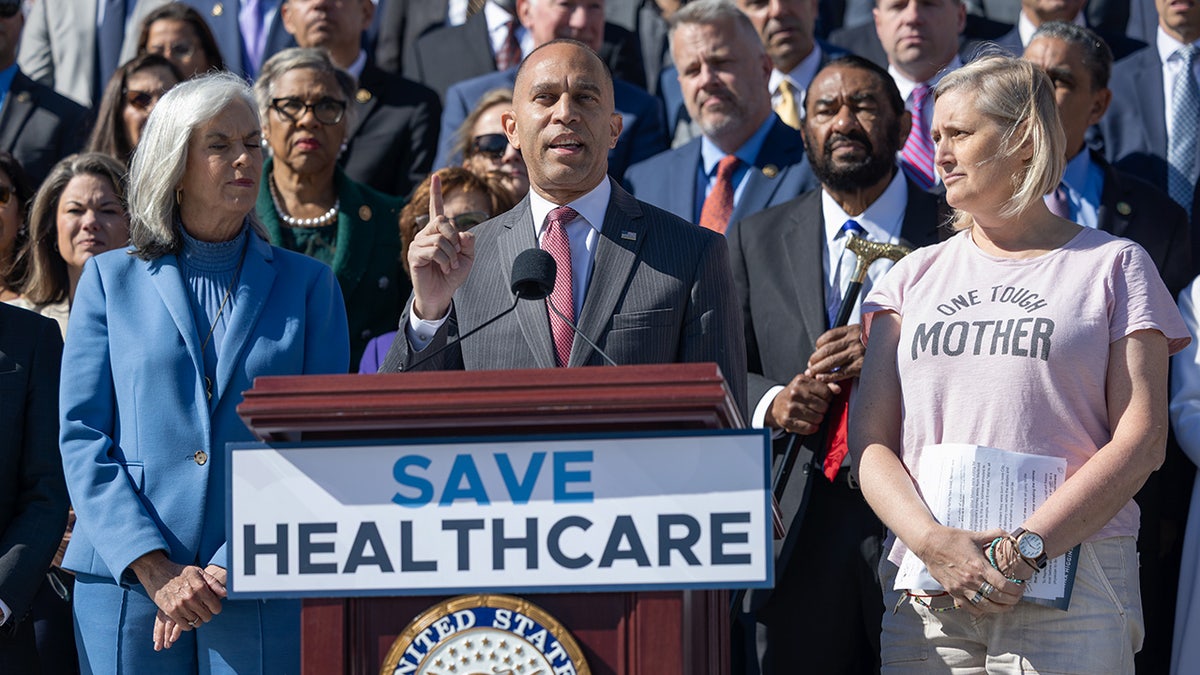
House Minority Leader Hakeem Jeffries speaks during a news conference on health care with other House Democrats on the east steps of the U.S. Capitol on the 15th day of the government shutdown in Washington, October 15, 2025. (Nathan Posner/Anadolu via Getty Images)
Republicans have largely rejected the idea of expanding these subsidies, at least without significant reforms. But a small group of moderate Republican lawmakers are pushing for a short-term extension to give Congress time to create a more permanent cost-cutting system.
THE Hitchhiker’s GUIDE to knowing where we stand with a health package
The House passed a health care reform bill aimed at expanding options in the commercial insurance market the week before leaving town. In the Senate, however, plans for a duel between Republicans and Democrats did not come to fruition.
This will now be an issue for Republican congressional leaders to address in 2026 — while Democrats will likely seize on it as an election year issue.
Electoral redistricting
Mid-decade redistricting has upended state and federal politics in the United States this year, with President Donald Trump pushing several Republican-controlled states to change their positions in Congress to give Republicans an advantage in the 2026 midterms.
Democratic-led states, like California, responded by redrawing their own maps to give the left an advantage. This led to lengthy legal battles on both sides.
In Texas, where new maps could give Republicans up to five new House seats, the Supreme Court granted an emergency stay on a lower court’s order, allowing the Republican-led initiative to move forward.
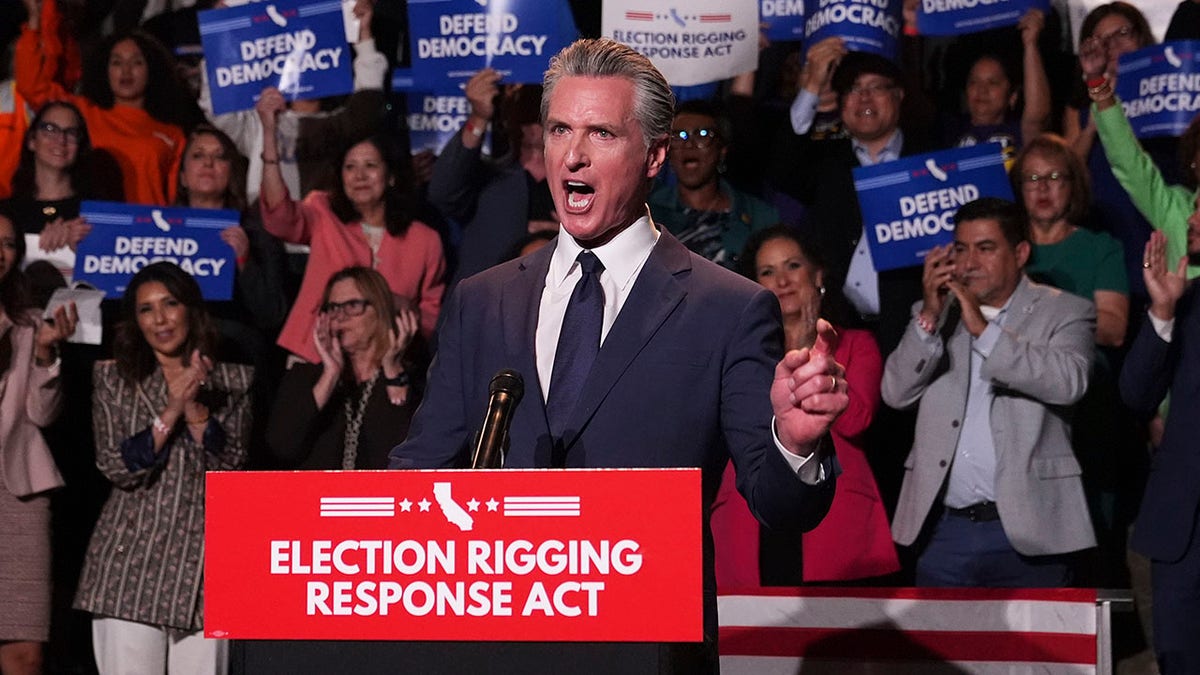
California Gov. Gavin Newsom speaks during a news conference Thursday, Aug. 14, 2025, in Los Angeles. (Marcio José Sánchez/AP Photo)
CLICK HERE TO DOWNLOAD THE FOX NEWS APP
The federal court battle over the Golden State’s new map is expected to continue into the new year. Meanwhile, states like Virginia, Illinois, Alabama and Louisiana could still decide to create new lines before next November.
Several House lawmakers introduced legislation banning redistricting mid-decade, but to no avail so far.
House Minority Leader Hakeem Jeffries, D-N.Y., warned at a news conference earlier this month: “Republicans may have started this redistricting battle. As Democrats, we plan to finish it.”
Speaker Mike Johnson, R-La., by contrast, has taken a largely hands-off approach, preferring to leave the issue to state legislatures and courts.


