Are we all living in Florida now? The rise of ‘don’t say climate’ politics.


Last May, as scorching heat broke records in South Florida and smoke from distant wildfires in Mexico made the skies hazy, Ron DeSantis, Florida’s Republican governor, signed a law erasing most mentions of “climate change” in state law. “We are restoring common sense to our approach to energy and rejecting the agenda of radical green fanatics,” he wrote on X.
At the time, it seemed like another Florida story, another example of the culture war trumping reality. Looking back, it was a glimpse of where the country was heading.
Secure · Tax deductible · Takes 45 seconds
Secure · Tax deductible · Takes 45 seconds
President Donald Trump’s second term plunged the United States into a “don’t say climate” policy. Even as horrific floods and fires broke out across the country this year, congressional Republicans canceled the nation’s only climate plan. The administration has removed “climate change” from hundreds of government web pages and dismissed facts about global warming as “stupid alarmist rhetoric.” Rather than react, Democrats have been talking less about climate change since the 2024 elections, emphasizing “cheap energy” instead.
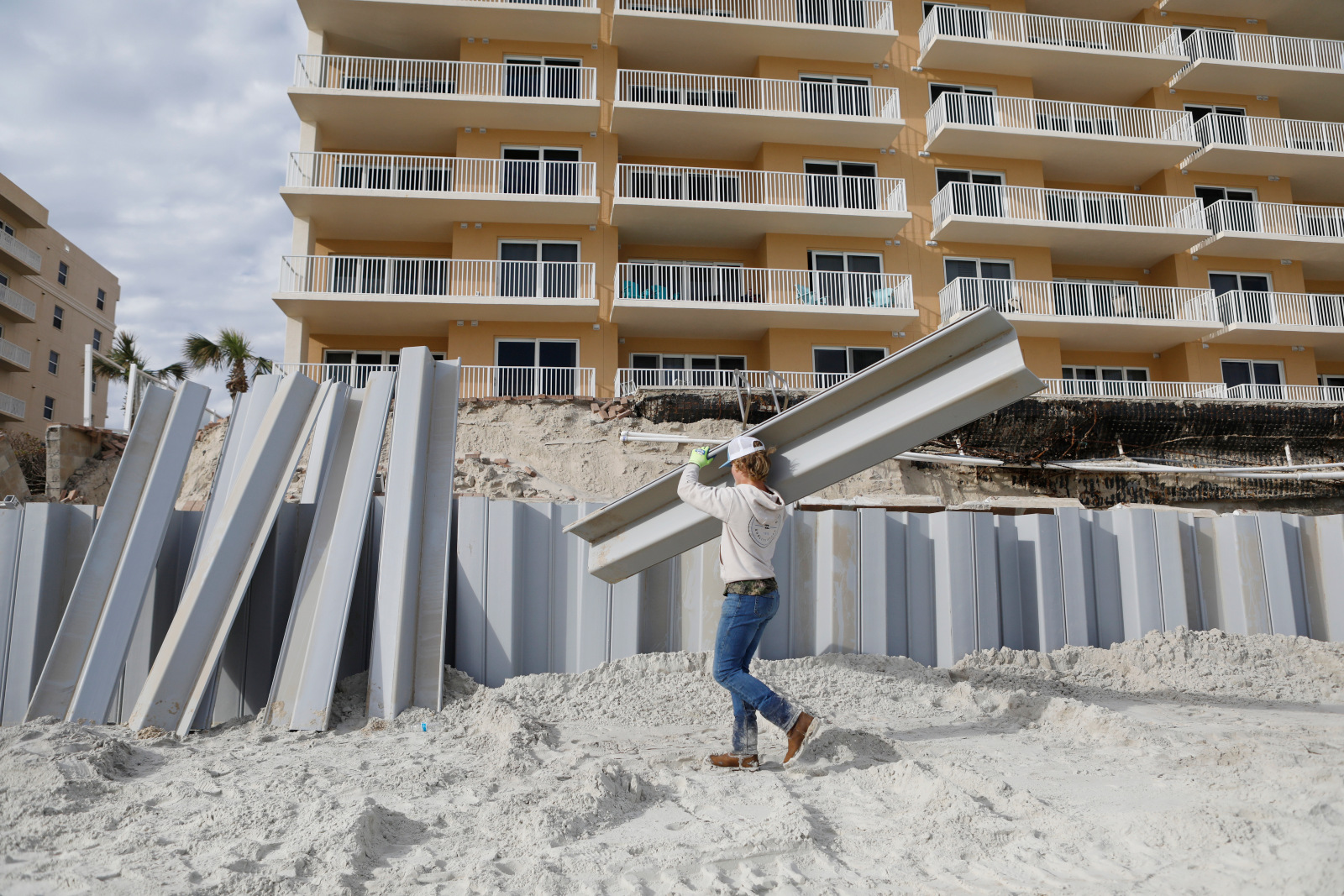
Even though talking about climate change is politically radioactive, adapting to its effects is no longer an option. Florida tops the list of states most at risk from climate change, facing a combination of heat, drought, fires, floods and hurricanes. Miami Beach and cities in the Florida Keys have increased their roads as seas begin to rise. DeSantis has committed more than $1 billion to Resilient Florida, a grant program that helps local governments address some of these problems.
You don’t need to mention climate change to start adapting to it – a phenomenon now seen across the country. PG&E buries its power lines underground to avoid starting fires in California’s dried-out forests, in the name of “wildfire safety.” After Hurricane Harvey flooded Houston, the county began buying homes that had repeatedly flooded and moving residents, turning their old homes into open spaces to absorb floodwaters.
“There’s been a drastic increase in the number of people realizing that whether it’s floods, droughts, fires or air quality impacts — take your lead — disasters have gotten ahead of us,” said Katharine Mach, a professor of environmental science and policy at the University of Miami.
The Washington Post/Getty Images
Since at least the 1980s, the public debate on climate change has revolved around the desire to control global carbon emissions. But as time passes and emissions continue to rise, it’s now about living with the effects of an overheating planet. A United Nations report released last week reveals that the world will soon exceed its goal of limiting global temperature rise to 1.5 degrees Celsius (2.7 degrees Fahrenheit), with current policies likely to lead to warming of 2.8 degrees C (5 degrees F) by the end of the century. That’s a slight improvement over previous estimates, but it still results in an unrecognizable planet.
“We have unleashed a world in which many climate impacts are now locked in,” said Rachel Cleetus, senior policy director for climate and energy at the Union of Concerned Scientists. “Because we didn’t act quickly enough, it’s no longer just about mitigating the effects. We have to adapt.”
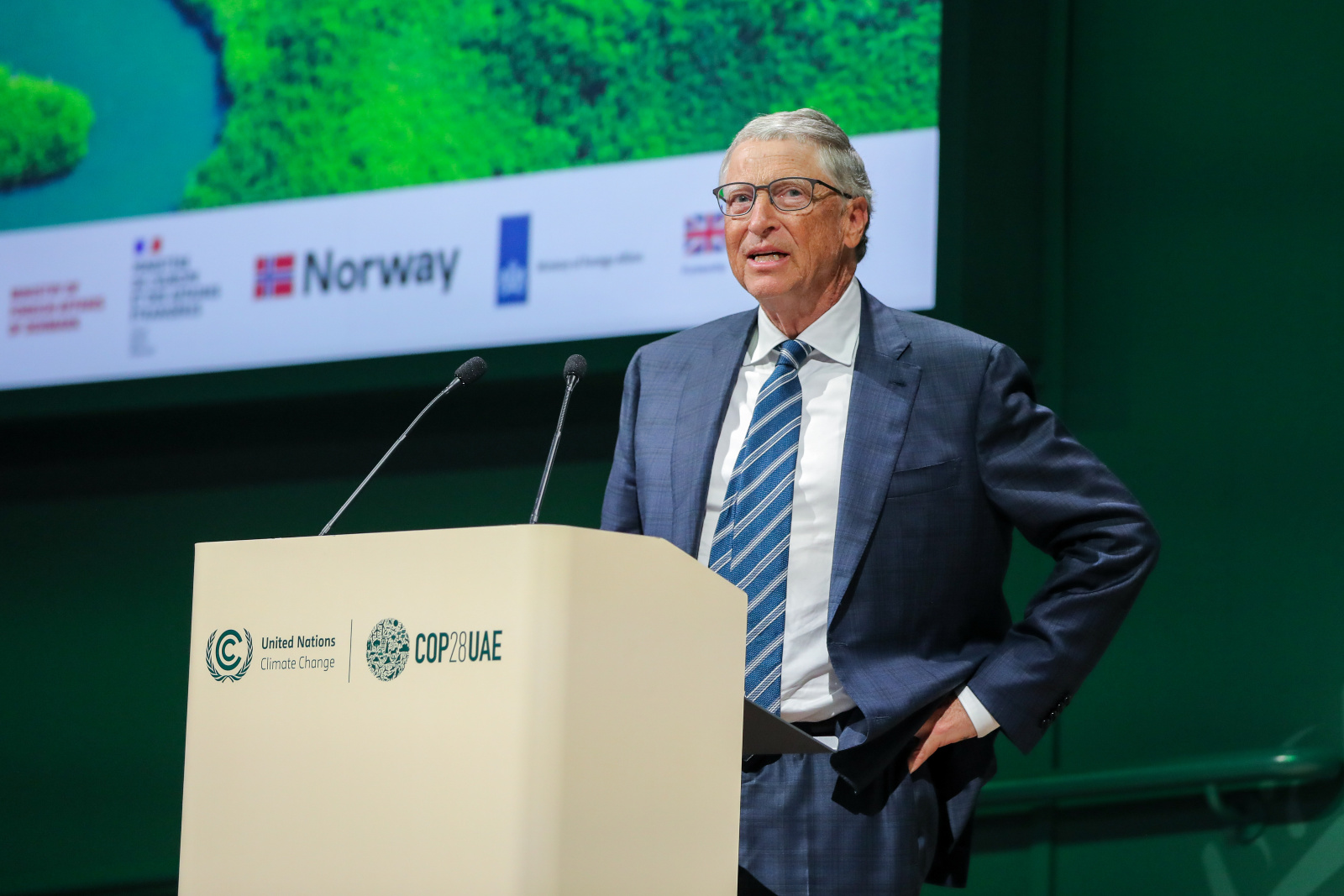
Bill Gates, who has long funded efforts to transition to clean energy, recently wrote an essay in which he argued that climate advocates have spent too much time and effort on reducing emissions, and not enough on programs that help people remain resilient in the face of increasingly dangerous weather.
“Unfortunately, apocalyptic outlook leads much of the climate community to focus too much on short-term emissions targets, and that diverts resources from the most effective things we should be doing to improve life in a warming world,” Gates wrote.
The question of how to finance low-income countries’ efforts to adapt to this unpredictable new environment has become a central concern at this year’s global climate negotiations in Belém, Brazil, which begin on November 10. “This is a responsibility that the richest countries, the main emitting countries, have been avoiding for a very long time,” Cleetus said. Another recent UN report reveals that developing countries will need at least $310 billion per year over the next ten years to prepare for the effects of climate change. In 2023, the richest countries have provided only $26 billion.
Meanwhile, the Trump administration has eviscerated foreign aid, cutting development funding from poorer countries while undermining its own ability to respond to national disasters. Budget cuts to the National Oceanic and Atmospheric Administration have hampered forecasters’ ability to predict what’s coming, at the same time that shrinking the Federal Emergency Management Agency has forced local governments to fend for themselves. The United States is not sending any high-level delegates to the Belém talks, marking the first time the country will not be represented at the annual United Nations climate conference.
“I have never seen an administration so deliberately undermine a country’s ability to prepare and deal with challenges like this,” said Susanne Moser, a social scientist considered one of the leading experts on climate adaptation.
Christopher Edralin/COP28 via Getty Images
Billionaires like Gates are filling the void. MacKenzie Scott, another influential philanthropist, recently donated $60 million to the Center for Disaster Philanthropy to help with disaster preparedness and recovery.
Experts said the new focus on adapting to climate change was necessary, but they said Gates — like many before him — unnecessarily pitted the need to adapt against the need to reduce emissions when both things can happen at the same time.
“Ultimately, adaptation cannot succeed if climate change is not contained,” Moser said. Today, the world has experienced about 1.3°C of additional warming since the industrial era, but as Gates notes, it could reach 3°C by the end of the century.
“A 3-degree world is not a world in which adaptation can bring well-being and health,” Moser said. “It’s just people living in ruins and trying to survive. »
There is a well-held view among environmentalists that discussions about how to adapt to climate change distract from the core mission of reducing emissions that cause global warming, known as mitigation. It is sometimes seen as a form of abandonment. But studies have repeatedly shown that talk of adaptation does not necessarily reduce public support for mitigation efforts. Rather, adaptation challenges – the high cost of raising roads in low-lying coastal areas or the difficulties of relocating communities out of dangerous areas – highlight the need to reduce emissions. “Once you start adaptation and see how difficult it is, mitigation seems like child’s play,” Moser said.
If Florida is to be believed, the two could go hand in hand. Yoca Arditi-Rocha, CEO of the CLEO Institute, a climate education nonprofit in Florida, says the state has made a lot of progress that isn’t often talked about. In fact, it’s one of the largest electric vehicle markets in the country, and also near the top for utility-scale and rooftop solar installations.
Arditi-Rocha hopes Florida can show the rest of the country that climate action can still move forward, even if the term itself remains politically banned. Getting specific help, she said: Talking about how cities need more trees for shade, or how they need to prepare for hurricanes and heat waves, is just practical. Then again, so is reducing carbon emissions.
“We have to close the overflowing bathtub,” Arditi-Rocha said. “We can’t clean the floor forever. »


