Should you buy a new or used camera for astrophotography?


Astrophotography – the art of capturing the night sky – is a captivating blend of art and science, and a hobby that rewards patience and technique. For many photographers starting out or upgrading their equipment, a central question is what type of photo equipment they are investing in.
Astrophotography is a photographic discipline that rewards a thorough understanding of your equipment. So we’ll look at whether you should buy a new or used camera when investing in gear. The choice of course has implications for your budget, creative potential and long-term satisfaction, but in 2026, with technology evolving rapidly, there are some great deals to be had on fantastic old-fashioned camera equipment that can deliver very satisfying results.
In this guide, we’ll break down the key differences between new and used equipment, why these differences matter for shooting the night sky, which models you can find good deals on right now, and how to pair your camera body with the right lenses to get the most out of your astrophotography.
The basics: Differences between new and used

At its simplest, the difference between new and used equipment is its condition, but the implications run deeper and can impact your purchasing decisions.
New cameras and lenses come with full manufacturer warranties, the latest features, and pristine sensors with maximum lifespan. They offer peace of mind, whereas with used equipment you will always be taking a calculated risk.
But you’ll also spend a lot less – sometimes 30-60% below retail value – and this will allow you to stretch your budget further, in terms of lenses, tracking mounts or accessories that are often essential to getting the most out of your astrophotography. If you can take the risk of potentially shorter remaining life and any cosmetic wear and tear associated with a used device, these savings can be very worthwhile.
It’s also worth pointing out that the most reputable used marketplaces (like MPB or KEH) carefully price equipment and often include return policies or short warranties that mitigate some of said risk, so if possible we recommend purchasing from one of these platforms.
What to look for in used astrophotography equipment
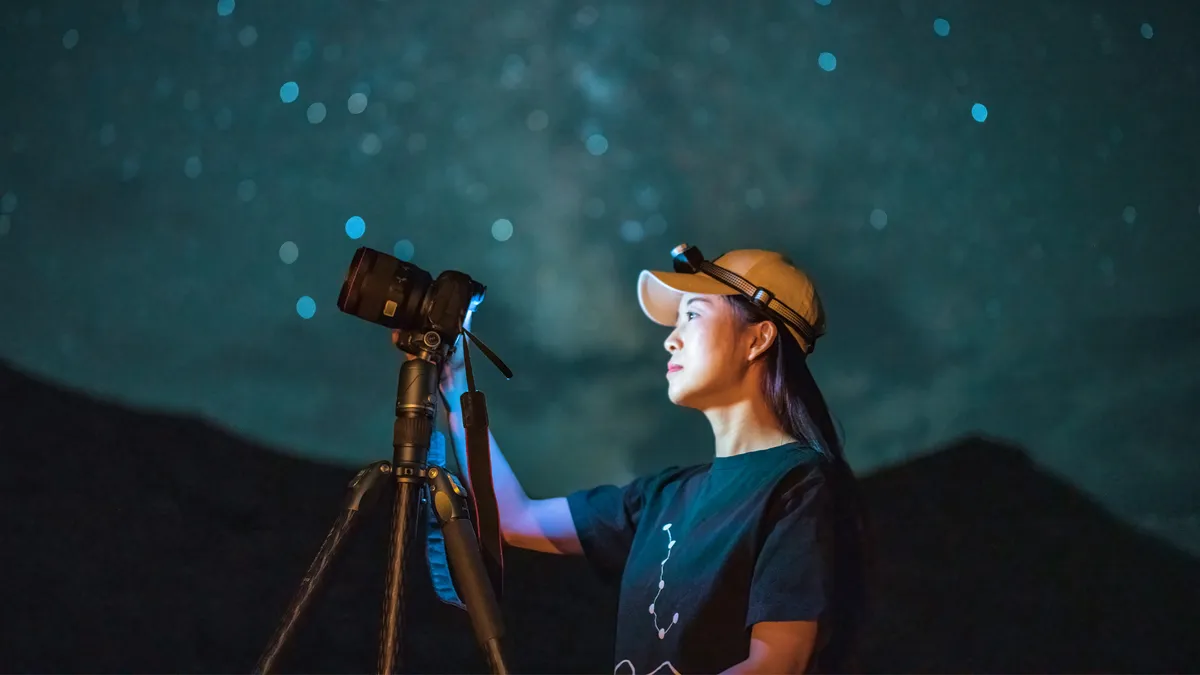
Astrophotography pushes cameras to their limits, unlike everyday photography. Here are some things worth considering or investigating further if you’re looking for used equipment.
Noise and sensor health: Astrophotography involves long exposures at high ISO settings, which exacerbates sensor noise. New cameras typically feature newer sensors with minimal wear, more precise pixel performance, and more advanced noise reduction algorithms. Older or heavily used sensors may display hotter pixels and uneven calibration, complicating stacking and post-processing.
It’s also about technology, as older devices don’t have such advanced sensors. So if you buy new and spend money on the latest technology, you will likely notice a difference in noise levels.
Battery life and reliability: Long astronomy sessions drain batteries quickly, especially when using live viewing or other monitoring equipment. New equipment typically offers better battery life and more reliable electronics, which is important when you’re miles from home in the dark. If you are buying second hand, we recommend sourcing a few new batteries from reputable suppliers (try to buy genuine branded stock if possible) to keep the kit working.
Features for Night Sky Shooting: Modern cameras, especially if they are the mirrorless type, include more and more features that make astrophotography easier. These include things like silent shooting modes to eliminate vibration, advanced noise reduction, higher dynamic ranges, and on-sensor stabilization. Although not essential, these features can improve workflow and results if efficiency is a priority for you.
Good deals on used equipment

Most of us photographers don’t have the luxury of buying new every time, and even the most experienced professionals will have purchased their fair share of used cameras over time. So it’s worth doing some research to find out what strategies you can use to get great astrophotography gear without breaking the bank.
Most classic DSLRs and early mirrorless bodies that are now a generation or two old are still solid performers – the key is using them correctly and pairing them with the right lenses.
Full-frame mirrorless bodies like the Sony A7 III have become staples on the second-hand market, offering excellent dynamic range and low-light performance for deep-sky and Milky Way work. Expect to pay between $600 and $800 for a decent A7 II or III that will still deliver excellent performance.
If you don’t want to go the mirrorless route, older DSLRs are still worth looking into. Canon’s 5D range remains a mainstay – even if it’s not particularly trendy – and something like the 5D Mark IV will offer excellent value for money. It’s still one of the best cameras on the market, with excellent weather resistance for nights outdoors. Both the Canon 6D and Nikon D750 offer brilliant low-light performance, with the Mark I version of the former available for well under $500.
Look for used markets that offer seasonal promotions or discounts for new buyers, providing additional savings on certified equipment.
New equipment to consider

If budget allows, many newer cameras offer features that benefit astrophotographers. Full-frame mirrorless bodies like the Nikon Z series or Canon EOS R8 combine modern sensor technology with lightweight bodies, making them perfect for astronomy and travel photography. With newer models, you will also notice the difference in weight and portability.
Advanced models like the Sony A7 IV offer improved noise performance and processing power right out of the box, which can make a noticeable difference for low-light captures, but are probably useless for beginning astrophotographers.
Pairing with the correct lens

Buying the right camera body is only part of the equation and, in many cases, perhaps the least important. For astrophotography, especially wide-field nightscapes, lens choice is essential. This is where you’ll want to spend a little more money, if you can.
The fundamental science of how lenses work means that astrophotography generally benefits from wide-angle and fast lenses. Faster lenses (low f-numbers like f/1.4 – f/2.8) let in more light, reducing noise and exposure time. Wide fields of view (14mm to 35mm full frame) capture large swaths of the sky, including constellations and the Milky Way.
Look for wide lenses to start. Try an f/2.8 then, when you’re done, spend a little more and invest in the more expensive f/1.8 or f/1.4 versions. These will cost you around $1,000 used or between $1,500 and $2,000 new. Not for the faint-hearted, but the Sigma f/1.4 DG lens is one of the best available for low-light wide-angle photography.
It’s worth mentioning that manual focus lenses can also be cost-effective options, offering good sharpness and control without a high price tag – sharp, fast and precise autofocus is less important for astrophotography.
The size of your camera’s sensor impacts how the lens behaves. Full-frame sensors capture wider scenes with less noise, while APS-C bodies crop more narrowly, which can be an advantage for telephoto astro work but means narrower shots.
What is the verdict?

So, should you buy new or used equipment for your astrophotography? In summary, the key question isn’t always “new or used”: instead, consider what combination of features and cost provides you with the greatest astrophotographic value.
If you value peace of mind, longevity, and the latest low light features, purchasing a new body, especially a modern mirrorless body, may be worth the investment and most modern setups will last a very long time. However, for many photographers, buying used gear represents a smart way to get more capability for less, freeing up money for lenses and other accessories that will make your final images more rewarding. If you’re just starting out and want to find a simple setup to learn the ropes and start capturing impressive images, our money would definitely be invested in used equipment.
Whatever you choose, the key to good astrophotography is not just price, but also understanding your specific equipment, even if a previous owner has used it before. Know your camera, understand your lenses, and you’ll be mastering long exposures and creating stunning images of the night sky before you know it.


