Shropshire maternity failings mums welcome medical notes alert


Joanne WrittleWest Midlands Health Correspondent, Shropshire

 BBC
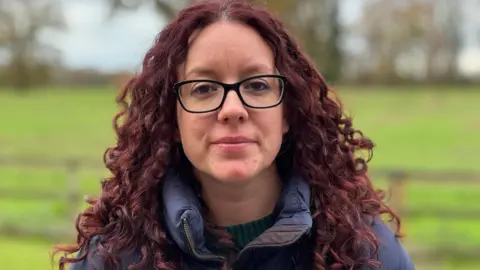
BBCWhen Kayleigh Griffiths lost her baby daughter, Pippa, in 2016 following failed motherhood in Shropshire, she had no idea how many times she would have to tell her traumatic story at future medical appointments.
She worked to get an “Ockenden alert” on her medical records — an idea that came to her during meetings with other traumatized families.
Donna Ockenden is the lead midwife who led the 2022 review which found more than 200 babies and nine mothers in Shropshire could have survived with better care.
Ms Grifiths wants the alert to be offered to more affected families, and potentially to the national population.
She added that this meant health workers “could see this alert and see what it meant for us.”
“And that might just mean that they take a little more time to read our notes, to understand what our story is, so that we don’t have to repeat the same story every appointment because it’s traumatic,” she added.
Pippa was his second daughter. She died from a group B streptococcal infection. In 2017, a coroner ruled her death was preventable.
At the time of the inquest, Ms Griffiths was pregnant with her third child, now aged eight.
When she gave birth to him, he was temporarily taken to neonatal care, but she was not informed of this until she was taken to see him. She said it was “so traumatic to see him like that.”
Fortunately, he was fine. But Ms Griffiths said “having that alert on our records probably would have stopped all of that because people would have known at every stage of our care that we had already been through so much.”
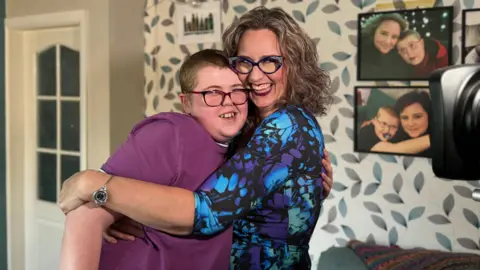
Reverend Charlotte Cheshire also has the Ockenden alert on her notes, and is waiting for it to be added to those of her 14-year-old son Adam.
Adam suffered multiple disabilities after developing an infection. The 2022 Ockenden review found 94 children, like Adam, suffered life-changing injuries.
Reverend Cheshire has to attend frequent medical appointments with Adam, who is autistic, particularly because of his profound learning difficulties, as well as his hearing and vision impairments.
Before the alert was added, she frequently had to tell the story of her failure.
“In a situation where there is recognized medical negligence and birth harm, it’s like revisiting the trauma every time, and I truly believe that if they’re going to see us, if they’re going to treat us, they need to at least know the big picture,” she said.
“Nothing can undo the harm done to us, but this is not just a moment that disappears in history.
“This is something that will be with me and Adam for the rest of our lives, so it’s important that they know, ‘oh, this is one of those families that carries a very complex level of trauma,’ and have no choice but to turn our medical care over to another clinician, despite everything we’ve already been through.”
Ms Griffiths is also pushing for other improvements in Shropshire, including looking at how junior doctors learn about baby loss.
She also wants the medical notes alert to be offered to other people.
“Nationally we know there is a problem in the maternity area, so other people might have something similar to this alert on their record,” she said.
“We could look at expanding it to other services. People have such varied experiences, from sexual abuse to mental health. It could be scaled to such a wider level than [it] makes it easier to care for people.
Shrewsbury and Telford Hospital NHS Trust said it hoped to roll out the alert to other areas of care within the organisation.
“We will listen and learn from families, with the support of Donna Ockenden, as we strive to provide excellent maternity and neonatal services,” said the group’s chief executive, Jo Williams.
“We hope that the alert will bring positive and lasting change,” she added.


