What an Ancient Sea Anemone Reveals About the Origins of Animal Complexity


Every cell in an animal’s body carries the same DNA. Yet this unique genetic blueprint somehow produces neurons that fire, muscles that contract, and tissues that have entirely different functions. How identical genomes give rise to such variety remains one of the central mysteries of biology.
New research indicates that the regulation of genes – and not just genes – is key to the emergence of diverse cell types from a single genome. By analyzing an ancient sea anemone cell by cell, the researchers constructed a detailed map linking DNA control elements to the formation of different cell types. Reported in Nature ecology and evolutionthe work suggests that the regulatory framework underlying animal cell diversity was already established early in evolutionary history.
“Expression tells us what the cells do, but regulatory DNA tells us where they come from, how they grow, and what germ layer they come from,” Dr. Marta Iglesias, co-first author of the study, said in a press release.
The roots of cellular diversity
Differences between cell types depend on how genes are controlled rather than the genes themselves. Yet most of what we understand about this process comes from a small number of well-studied species, leaving its deeper evolutionary origins unclear.
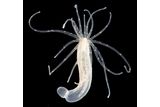
To explore these origins, researchers turned to a starlet sea anemone. Sea anemones, along with jellyfish and corals, belong to the cnidarians, one of the earliest groups of animals to evolve, first appearing about half a billion years ago. Despite their ancient lineage, cnidarians possess specialized cell types, making them a valuable system for studying the origin of cellular diversity.
Learn more: Million-year-old mammoth tooth carries oldest host-associated bacteria DNA ever discovered
Cellular identity revealed in an ancient sea anemone
To study how cellular identity is constructed and maintained, the researchers analyzed approximately 60,000 individual cells from the starlet sea anemone, Nematostella vectensis. The dataset included cells from two life stages – adult animals and early gastrula stage embryos, when the basic body plan is still being established – allowing the team to capture both developmental origins and mature cellular states.
Rather than grouping cells based on which genes were active, the researchers focused on regions of DNA that control gene activity. These regulatory elements act as control switches, determining when and where genes can be used. From this analysis, the team assembled a vast catalog of more than 112,000 regulatory elements in the anemone genome – a surprisingly rich regulatory landscape for an animal of its size.
When cells were organized according to these regulatory patterns, a different picture emerged. Instead of grouping solely by function, cells grouped based on their developmental origins, revealing which embryonic layers they came from. This made it possible to distinguish cell types that fulfill similar roles but follow different developmental pathways.
This distinction was particularly clear in muscle cells. Some muscle cells shared similar functions and relied on many of the same genes, even though they came from different embryonic layers. Although their genetic activity looked similar, the regulatory instructions controlling these genes were entirely different, showing that similar cell types can be constructed using distinct regulatory strategies.
Overview of the evolution of animal cell types
Cnidarians were among the first animals to develop specialized cell types such as neurons and muscle cells. They also evolved a distinctive cell called a cnidocyte, equipped with microscopic harpoon-like structures used for hunting and defense – the source of the familiar sting of jellyfish and sea anemones.
The results suggest that these early animals already had a flexible way to generate new cell types. By tracing how cellular identities are constructed in an ancient animal, the study offers a new framework for understanding where animal cell types come from and how today’s biological complexity arose.
“This study opens up a whole new world of possibilities. In the future, we will study animal cellular evolution by comparing genome sequence information, and for the first time we will be able to do this systematically and on a large scale,” said co-author Arnau Sebe-Pedrós.
Learn more: Bowhead whales can live up to 200 years and their DNA may hold the secret to longevity
Article sources
Our Discovermagazine.com editors use peer-reviewed research and high-quality sources for our articles, and our editors review the articles for scientific accuracy and editorial standards. See the sources used below for this article:


