SpaceX Falcon 9 rocket launches 29 Starlink satellites to orbit from Florida

When you purchase through links on our articles, Future and its syndication partners may earn a commission.

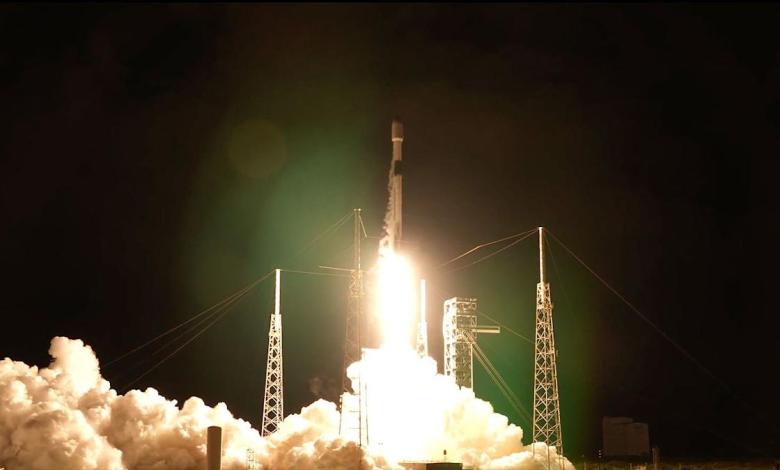
A SpaceX Falcon 9 rocket carrying 29 Starlink satellites launches from the Cape Canaveral space station in Florida on Sunday, January 18, 2026. | Credit: SpaceX
Another Starlink launch is now in the record books.
SpaceX sent a new batch of 29 Starlink satellites (group 6-100) into low Earth orbit on Sunday, January 18. At 6:31 p.m. EDT (11:31 p.m. GMT), the company launched a Falcon 9 rocket from Complex 40 at the Cape Canaveral space station in Florida.
About nine minutes later, the Falcon’s upper stage reached its preliminary orbit and was on track to deploy its payload about an hour after leaving the ground, following a coasting period and a second burn of its Merlin engine.

The first stage of a SpaceX Falcon 9 rocket stands on its four landing legs atop the Atlantic Ocean-based droneship “A Shortfall of Gravitas” after launching 29 Starlink satellites into orbit from the Cape Canaveral space station in Florida on Sunday, January 18, 2026. | Credit: SpaceX
Past B1080 missions:
Axe-2 | Euclid | Axe-3 | CRS-30 | SES ASTRA 1P | NG-21 | 17 Starlink launches
This launch marks the 24th successful flight of the Falcon 9 (B1080) first stage. The booster made a propulsive landing, landing on its four outstretched legs atop the droneship “A Shortfall of Gravitas” parked in the Atlantic Ocean.
The ever-growing Starlink megaconstellation now has more than 9,500 active satellites, according to tracker Jonathan McDowell. The network provides Internet access to areas of the world where other means of connection are rare. The service also supports Wi-Fi on airlines and direct cell-to-satellite calling for some providers.
Sunday’s launch marked SpaceX’s 8th launch in 2026 and the 591st Falcon 9 mission since 2010.


