Science reveals dogs’ favorite type of TV


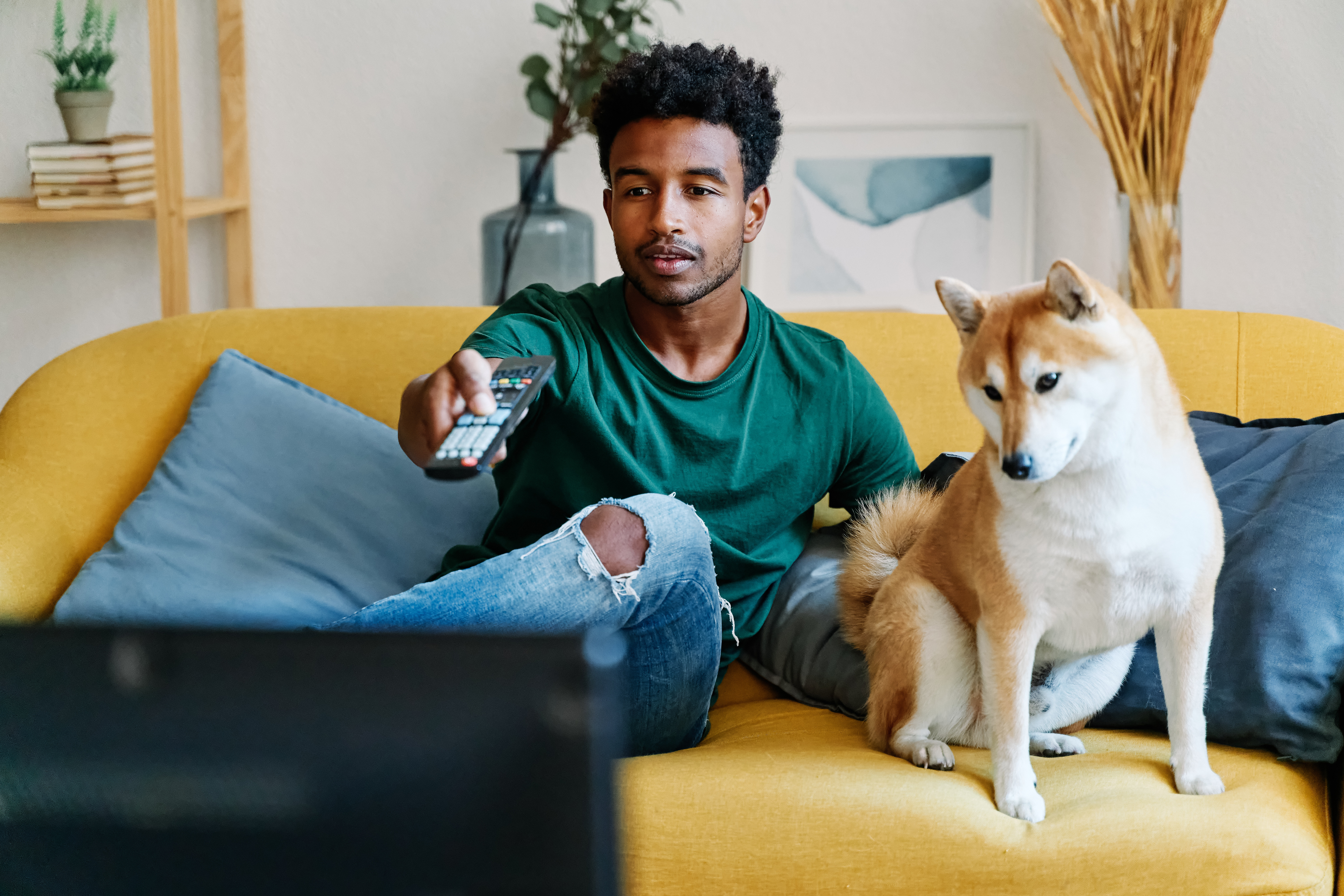
At the end of a long day, many of us humans relax with an episode of a favorite television program. If you have a dog at home, you may have wondered if your beloved pet can do the same. Despite the modern proliferation of dog -centered television programs, the answer is a bit complicated, according to new research.
It turns out that your dog likes or not the time in front of the tube depends both on the individual fido temperament and what is played out. Traits like excitability and the level of anxiety determine how pets engage with television, according to a study based on the survey published on July 17 in the journal Scientific reports.
“The personality of the dog influences their habits of vision,” explains Jeffrey Katz, senior study author, professor of psychology and researcher in comparative cognition at the University of Auburn in Alabama, explains Popular science. He and his co-authors also found that the subject of a show plays a big role in canine engagement levels, with content centered on the animal giving a more enthusiastic response than the images of people.
The results are based on our understanding of how our canine companions see the screen. In addition to offering an overview of pet psychology, this search line could even help veterinarians create standardized tests for the vision of dogs.
[Related: Dogs really are communicating via button boards, new research suggests. ]
Fido investigator
Katz and his colleagues collected their data through a digital survey, distributed via social media. They asked basic demographic questions, included standardized ladders in temperament and canine impulsiveness and have designed their own series of new questions related to the way dogs interact with television. The new set of questions is called “the Viewing scale for dog television” (DTVS), and invites respondents to indicate how often (on a five -point “never” scale) their pets like a linen on television or growled in response to different categories of television or visual sounds on the screen. They specifically asked the owners to consider the content containing other dogs, non-dog pets, non-welcoming animals, humans and inanimate objects such as cars. Then they gathered all this data for the evaluation.
Out of 513 complete responses, 453 came from animal owners who said their dog watched television. Through the dozens of questions, most dog owners have indicated that their pet answered animal content, whether audio or a video alone. Fewer people have said that their dogs regularly react to non -animal content – cement that the representation of the media is important, even for pets. Then there were personality trends.
The owners who evaluated their dogs as more excitable were more likely to report their puppies trying to follow out-screen objects or animals: pider, search or scan what they see beyond the limits of the television. The owners who described their pets as a negative reactive (similar to a more frightening or anxious appearance) on one of the personality questionnaires were also much more likely to point out that their dog responds to non -animal stimuli at higher rates. Things like door sounds, car horns or human faces have more often triggered reactions in tight pets. Factors such as age, breed and exhibition at the previous television did not stand out as the main engines of dog television habits.
“I thought it was very well done,” said Freya Mowat, a veterinary ophthalmologist at the University of Wisconsin who research on canine visual psychology but was not part of the new study team Popular science. In particular, Mowat notes that the statistical approach gives credibility and reduces the chances of inadvertently. Instead of imposing tendencies on data or assessing a relationship at a time, Katz and its co-authors used a grouped analysis method that allowed data to sort, revealing what factors were most responsible for the influence of variability between the response population.
[ Related: A visit to dog college. ]
“Animals are more interesting than inanimate people and objects”
The new results are also closely aligned with an investigation study in 2024 conducted by Mowat and a distinct group of dog researchers from the University of Wisconsin. This research included more than 1,000 answers and also specific video clips to owners to show their pets. He also reported that other animals (and in particular dogs) were the most attractive canine television content. They also found slight trends related to race and age. Sports and livestock -type dogs were over -represented among television observers and older dogs seemed less likely to get involved with television.
The sample size differences, investigation questions and analysis method could explain why the new research has not observed exactly the same trends. Basically, they approached the mystery of television for dogs in different angles and disciplines: vision vs behavioral psychology, known as Mowat. Nevertheless, “it was just surprising or reassuring how similar some of the results have been,” she said. Obviously, for dogs, “animals are more interesting than inanimate people and objects”.
However, to solve the differences in the results and resume exactly what keeps dogs attentive, more research is necessary, says Mowat. She and Katz laboratories intend to continue to continue the exploration line, extending their work beyond surveys and in real experiences. Katz hopes to start a citizens’ science business, forcing owners to record the video of their dogs by watching the video so that animal behavior can be officially cataloged and classified. At the start, he had thought that such tests could be used to select universally soothing videos for dogs. However, based on highly individualized responses based on the temperament that animals seem to show in survey data, it admits that it seems less likely.
“We wanted to find a more general set of stimuli that all dogs would like,” explains Katz. Now he thinks it would be a serious challenge, because personalities and individual history of dogs are annoying. For anxious dogs, there may not be uniformly relaxing video stimuli. For excitable dogs which are quick to bark, leave a documentary of nature in progress while you go to the grocery store could be more difficult than it is worth it. To determine what a dog could like to see on television is “easy to do for individual dogs, but more difficult for groups,” he said.
Mowat, on the other hand, works on a better method of visioning dog. Currently, she says that the strategies are raw and not standard (like waving a hand in front of the face of a dog or passing a pet through a makeshift obstacle course). A set of finely adjusted videos could better reveal how old puppies can see.
How the vision of dogs is different
And all research helps to keep the big question away from what dogs experience to look at human screens to start. The vision of dogs is different from ours. On the one hand, the canines have only two types of colored receptors compared to the three primates – this makes puppies of red -green color uniformly. In addition, their visual “fusion rate” (essentially the frequency of threshold to which a flickering light begins to appear stable), is higher than ours, note Mowat – so video content can resemble a series of flashing images instead of a smooth video to a dog. Finally, dogs see in lower resolution than people because they have a lower photoreceptor density, she said. Together, all these factors mean that television listening to human vision may not be as interesting for a pet. However, our pets pay attention.
High contrast colors, animal content, nature sounds and many movements can explain part of why. “What we have designed for our children could actually be quite engaging – perhaps not always good – but engaging for our animals,” says Mowat, whose work in 2024 revealed that caricatures were surprisingly interesting for some dogs.
But then there may be another factor in play.
“They can really look because we look,” she suggests. “We are sitting on the sofa with them, and it’s a pleasant and complementary thing to do.”

More offers, reviews and purchasing guides


