Staff photographed sleeping at ‘unsafe’ York eating disorder unit


Anna Collinson, Jo Adnitt and Hannah KarpelBBC news surveys

 Provided
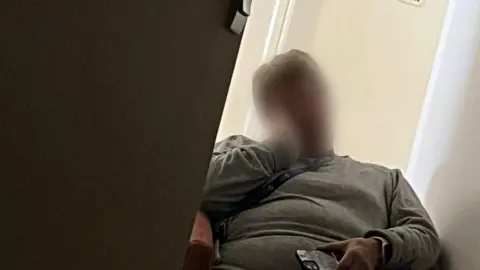
The staff of a specialized food disorder unit was photographed while they should have taken care of patients who were likely to injure themselves.
There have been several “dangerous” incidents due to staff failures, according to the reporters.
Many seriously ill patients told the BBC that they thought their time on the unit had aggravated their condition.
Schoen Clinic York said that “when specific concerns were raised, they were fully surveyed and discussed” but no “systemic problem” was found.
In total, we spoke to nine former hospitalized patients and five staff who spoke to us:
- Workers slept when they were supposed to monitor vulnerable patients
- Staff attend the self -control of patients and not to help them
- Patients with diets served as non -hygienic food
- Workers using a triggering language such as “you are not thin enough to be here”
If you have been assigned by one of the problems raised in this article, help is available via the BBC action line page.
Naomi, who is in their thirties, wanted to live at home during the treatment of her anorexia so that she could continue to take care of her child. However, he was told that community treatment was not available and should be admitted to Schoen Clinic York for specialized care 24 hours a day.
Two years earlier, Care Quality Commission (CQC) had judged service as “good”, saying that it had provided “sure care” and “well the risk managed”.
However, all the patients to whom the BBC spoke, notably Naomi, in disagreement with vehemence with the conclusions of Watchdog of Health. They spent time on unity, after the CQC inspection, and were funded by the NHS.
Since 2022, the CQC has said that there had been “continuous supervision of the supplier”, including two visits to speak to patients and staff. They said it was “concerning” that “people who used the service feel so disappointed”.
 Provided
Daily care in the service of Schoen Clinic York food disorders were mainly provided by nurses and health assistants, who included agency staff.
The patients said that while some were “workers” and “support”, others had little experience with mental health problems and sometimes lacked compassion.
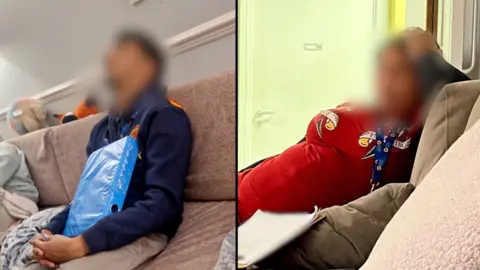
The BBC has seen photographs and a video taken by two patients, Naomi and Harriet, who, according to them, show that three members of the sleeping staff during the periods when they should have monitored them.
A care guide given to patients said they would be “supervised” for 40 minutes after each meal – a time when they could be tempted to rid their body of food by vomiting, taking laxatives or doing excessively exercise.
Naomi said she had taken her photo shortly after eating her dinner.
Frustrated by the “bad care” she had received, Naomi took a photo of the sleeping health assistant to prove that this had happened.
She said that “had the impression that it was total contempt for us as patients” and “illustrated a lack of care”.
Molly, 23, from Leeds, spent four months in Schoen in 2023 and agreed with Naomi.
During her stay, Molly needed individual observation to prevent her from excessively. However, she says that she “woke up in the night often and heard snoring staff” then left the bed and quietly punctuated the room to try to burn the energy.

People with food disorders are sensitive to self -harm. However, patients said some workers had not provided appropriate therapeutic support.
“I was in my room, cutting me up. The staff came to see me do and come back without saying anything,” said Abbie, 26, who was hospitalized in 2023.
Evening staff intervened after Abbie deliberately injured his head. She says that she was rushed to A&E, but the staff member who was supposed to take care of her fell asleep in the waiting room for several hours.
“I was tempted to give it, but I suffered so much that I couldn’t,” she said.
The lack of surveillance has left vulnerable patients in “dangerous” situations, according to the staff denominators, who have asked to remain anonymous because they are worried to express themselves will have an impact on their ability to work in the future.
We shared the conclusions of our investigation with the president of the Royal College of Psychiatrics ” Eating Disorders Faculty, Dr Ashish Kumar.
“I sympathize that sometimes there are staff who are overworked or units who lack staff,” he said. “However, do not respond to patients when they suffer can cause more serious damage and possibly death.”
Schoen said that he was unable to comment on individual cases, but the staff “anticipate and manage the risk of” self -manage through “individualized care plans, improved observation if necessary and clinical climbing protocols”.
All staff members were “checked, trained and supervised before working with patients,” he added.
 Provided
Naturally, the quality of foods served to a person suffering from a food disorder is important to facilitate their recovery.
However, patients said they had not been taken seriously when they have repeatedly raised concerns about meals served in Schoen Clinic York.
A woman told us that she and others were served as food with hair in May 2025.
“I said to myself:” I can’t eat that. We are here with food problems, you cannot use hairy food “,” she said.
A month earlier, health inspectors had awarded a hygienic notation to a star in Schoen. Only 90 out of 31,380 care establishments in England have such a low score.
The concerns included the kitchen workers not wearing hair nets or binding their hair back.
Many patients have told us that food could sometimes be “non -edible”.
“When we complained, they said” it’s just your food disorder that speaks “, said the former patient Harriet, who was unit in 2023.
The same year, Molly’s mother Sarah worried that she wrote to the clinic management.
“The dishes often contain meat that looks like cartilage, jelly and fat, with a high percentage of fats,” she wrote. “I would expect the quality of the nutrition provided to be the highest to motivate patients to eat.”
In response, Schoen said it was taking seriously “food quality concerns”.
“There was a period when we had to use a food supplier designated by our owners” who “aligns the time when some patients have raised concerns,” said a spokesperson.
Schoen said he had “tackled the problems” identified in the last inspection of food hygiene and that his kitchens were supervised by a new Head chef.
“I am absolutely horrified and disgusted to hear about these terrible experiences,” said Wera Hobhouse, president of the all-party parliamentary group on food disorders.
Responding to patient relationships that Schoen’s staff used a triggering language as “just eating something”, the liberal democratic deputy too often said that “food disorders are considered a choice” and “there is so much patient with patients in progress”.
“We know that people can completely recover from a diet, but too many patients are in services where staff are not well trained,” she added.
 BBC / Ben Cryer
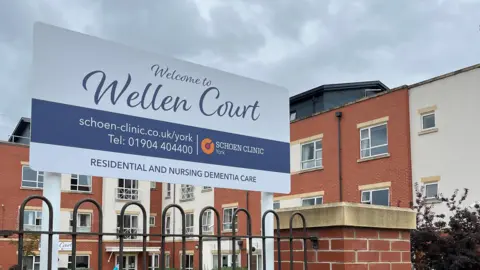
Schoen Clinic York expanded in February to treat patients with dementia in the same building as those suffering from food disorders and that the BBC has been informed that the staff would move between the two services.
The BBC learned that a week after the food disabilities are closed in August, the dementia unit – also known as Wellen Court – was prevented from accepting new patients in the midst of safety problems.
The York Municipal Council, which finances local dementia of dementia, confirmed that it had “temporarily interrupted” admissions to ensure “that there is a safe environment”.
At the rear of its concerns, the CQC carried out an unexpected inspection, with the results which will be published in due time.
Schoen said that he had hosted “improved backup measures” and that his residents have received “high care standards”.
- If you have been assigned by one of the problems raised in this article, help is available via the BBC action line page.

Get our flagship newsletter with all the titles you need to start the day. Register here.


