State officials say the Trump administration has been absent on election security


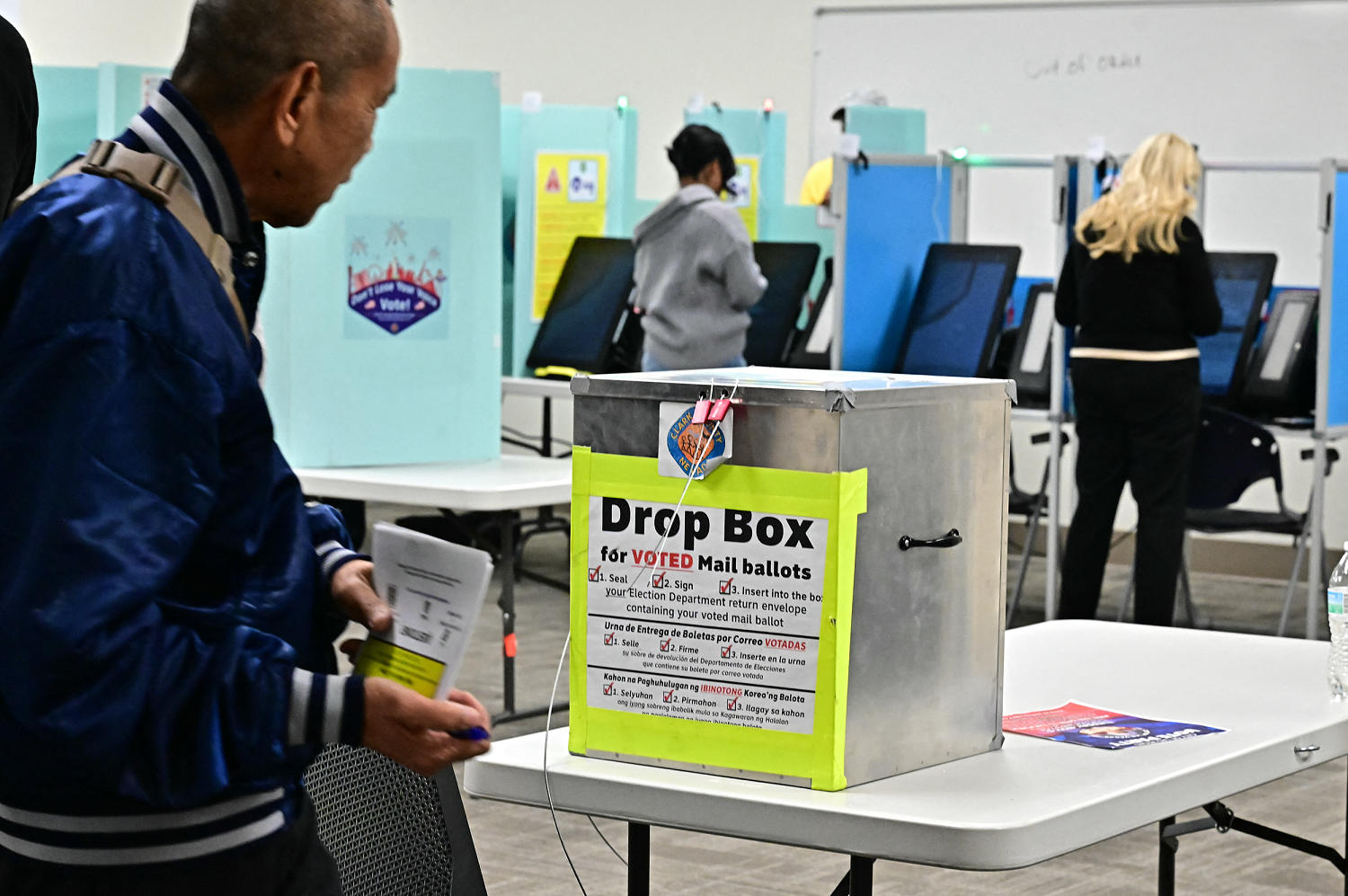
State election officials received an unusual invitation from the Trump administration last week: a call in late February about midterm preparations organized by the FBI.
The surprise email came at a tense time. The Justice Department has sued dozens of states over unredacted voter rolls, the FBI raided an Atlanta-area election office and President Donald Trump has called for nationalizing at least some elections.
Some state election officials said the invitation was also the first time they had heard about election security from anyone in the Trump administration in months — if ever. Seven Trump officials – including as many as three cabinet secretaries – were scheduled to appear at a National Association of Secretaries of State (NASS) conference in Washington, DC, last month, but ultimately only one White House aide showed up.
“Given what happened over the last two weeks, the drama that happened at NASS, and then just arbitrarily sending out an email with a predetermined date and time with everyone’s emails exposed, saying answer this call,” said Nevada Secretary of State Cisco Aguilar, a Democrat, “my response was: [I] answered them immediately, like, is this real?
Nine secretaries of state at the NASS annual conference, which took place before the FBI was invited to the briefing, said in interviews that they had little contact with the second The Trump administration, which last year gutted the federal agency responsible for helping states secure their elections.
The first Trump administration designated elections as critical infrastructure and created the Cybersecurity and Infrastructure Security Agency, which worked with states to help secure their elections both physically and digitally, under the Department of Homeland Security.
The agency offered money, manpower and expertise and funded information sharing among states until last year, when it was devastated by deep budget cuts. Funding for threat monitoring through the Election Infrastructure Information Sharing and Analysis Center, a nonprofit agency funded by DHS, was cut because it “no longer supports the department’s priorities,” according to a letter DHS sent to the center last year that was obtained by NBC News.
“The fact that they actually dismantled and defunded the very real and proven infrastructure that was in place in 2020 to protect our elections from foreign interference, that speaks for itself about where their focus really is,” said Michigan Secretary of State Jocelyn Benson, a Democrat running for governor. “State officials are all we have left in terms of guardrails for all of these processes. »
Benson said she’s trying to get the funding to hire former CISA employees to work for the state and try to “rebuild” those federal systems in preparation for Michigan’s upcoming elections.
“It’s harder now than before, because we had these tools, and we came to rely on these tools,” said Arizona Secretary of State Adrian Fontes, a Democrat. “You can kind of find a solution to your problem, but the other tools that you were used to that can give you the best results aren’t there.”
When an election web portal in Arizona was hacked last year, Fontes broke with tradition and chose to alert only state authorities, not the federal government.
Colorado Secretary of State Jena Griswold said her state set up its own threat monitoring operation to replace the one CISA no longer funds, but the loss of federal government resources and analysts has taken its toll.
“We’re catching a lot. I can’t tell you what we’re missing,” said Griswold, a Democrat. “If the same cyberattack happens in three states, we can tell people what’s happening in our state. But we don’t know what’s happening in other states.”
Several secretaries said the federal government’s intelligence briefings were invaluable during the first Trump administration.
“In Trump 1.0, the Department of Homeland Security and CISA in particular have been great partners,” said Minnesota Democratic Secretary Steve Simon.
Connecticut Democratic Secretary of State Stephanie Thomas said her office was able to conduct public information campaigns to counter misinformation that it knew was in danger because of these briefings.
“But now, who knows? We don’t have briefings,” she said.
Simon and Thomas said separately that they contacted the federal government last year hoping to continue briefings, but never got answers.
Thomas’ office confirmed Friday that the FBI’s invitation to an election briefing was the first time it had heard from the Trump administration on anything other than voter rolls. Connecticut is one of dozens of states that the Justice Department has sued to try to obtain their unredacted voter rolls.
The voter rolls lawsuits have frustrated state election officials, who say they have been unable to get answers about what the federal government wants with data that includes Social Security numbers and other protected personal information.
Asked about the Trump administration’s reduced support for the state’s election security, the White House touted Trump’s support for new voting restrictions.
“President Trump is committed to ensuring that Americans have full confidence in the administration of elections, and that includes completely accurate and up-to-date voter rolls, free of errors and illegally registered non-citizen voters,” White House spokeswoman Abigail Jackson said in a statement. “The President also urged Congress to pass the SAVE Act and other legislative proposals that would establish a uniform photo ID standard for voting, ban no-excuse absentee voting, and end the practice of ballot harvesting to ensure the safety and security of our elections.
Not all states were as dependent on CISA as others. Aguilar said Nevada began investing in its own systems before Trump’s 2024 election.
And New Hampshire Secretary of State David Scanlon, a Republican, touted his state’s work on cybersecurity.
“It’s the ‘Live Free or Die’ state. We have tended not to rely on federal assistance for our electoral process,” he said. “I am confident that we can handle any problem that is thrown at us, whether the federal government is involved or not.”
Other Republican secretaries of state have also placed less blame on the Trump administration.
West Virginia Secretary of State Kris Warner said he worked with the U.S. Election Assistance Commission, a bipartisan federal agency aimed at helping states run their elections, and with the Trump administration during midterm preparations.
Warner, who was elected in 2024, said they also began working with a local university on vulnerability assessments, something other state officials said CISA did for them.
At the NASS conference in Washington, Maine Secretary of State Shenna Bellows, a Democrat, pushed the only White House aide in attendance, Jared Borg, to explain Trump’s executive order on elections, in which he attempted to impose a requirement for documentary proof of citizenship and make other major election changes.
“So how do we reconcile the executive order with the Constitution and the legislative branch? ” she said, pointing out that the Constitution directs states to oversee elections with some regulation from Congress.
Borg said the best answer to that question would be from Homeland Security Secretary Kristi Noem and Attorney General Pam Bondi, who he said would speak at the conference the next day.
The next day, Bellows was among the audience awaiting their appearance at an afternoon session. But it ended up being canceled at the last minute.


