This dual-CPU PC from 1995 was so cool, Microsoft had to kill it


If you’re interested in classic computing, there’s no better expert to talk to than Retro Roadshow’s Huxley Dunsay. He brought to the PCWorld studio a perfect example of a weird machine from the 90s: the BeBox. This design didn’t revolutionize the industry, but its dual-processor configuration and custom operating system introduced many new features that we now take for granted. Will Smith checks it out in our latest video below.
Be Inc., BeOS and BeBox hardware were the fever dream of two former Apple executives: Jean-Louis Gassée and Steve Sakoman. In the mid-90s, before personal computers were in every home and Microsoft was building its way to a monopoly position, there was still room for new players in the field. The BeBox was an attempt to create both hardware and software capable of handling multiple processors at once. And as he fell apart – and fell apart hard-it was a precursor to modern multi-core processors and multi-threaded software.
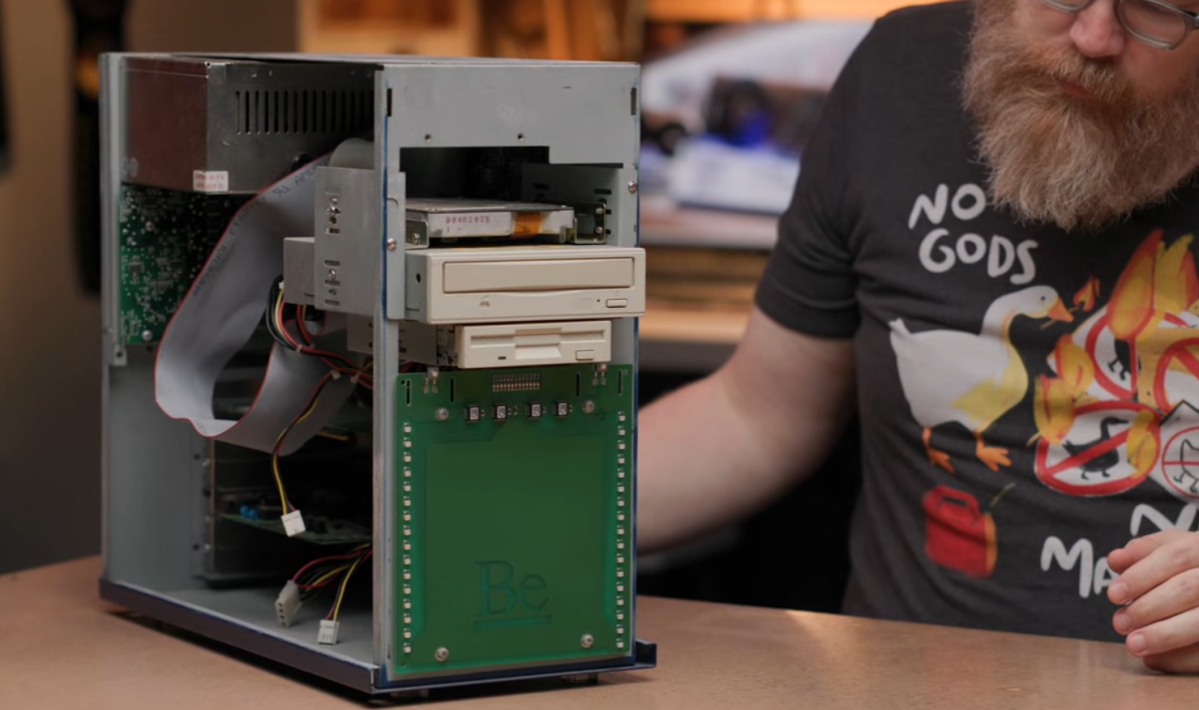
The 1995 BeBox itself looked like a fairly standard “tower” PC of the era, albeit with an interesting front panel. Inside is a mix of custom and off-the-shelf hardware (between the days of AT and ATX), including two PowerPC 603 processors running at a blistering 67 MHz each. (As Will notes, that’s several orders of magnitude less powerful than the processor in an Apple Watch today.)
Some of the custom parts of the case include a set of two front-facing LED columns, which display visual output of the two separate CPU loads. Huxley couldn’t get the visual display on the decades-old machine to work… until he replaced the BIOS battery.
Foundry
The BeBox has been positioned as a “multimedia” PC, so the rear connector panel is a bit wild. You get tons of audio ports and accessories, including a Matrox video card and a custom “GeekPort” designed to interface with anything digital and analog. It didn’t work.
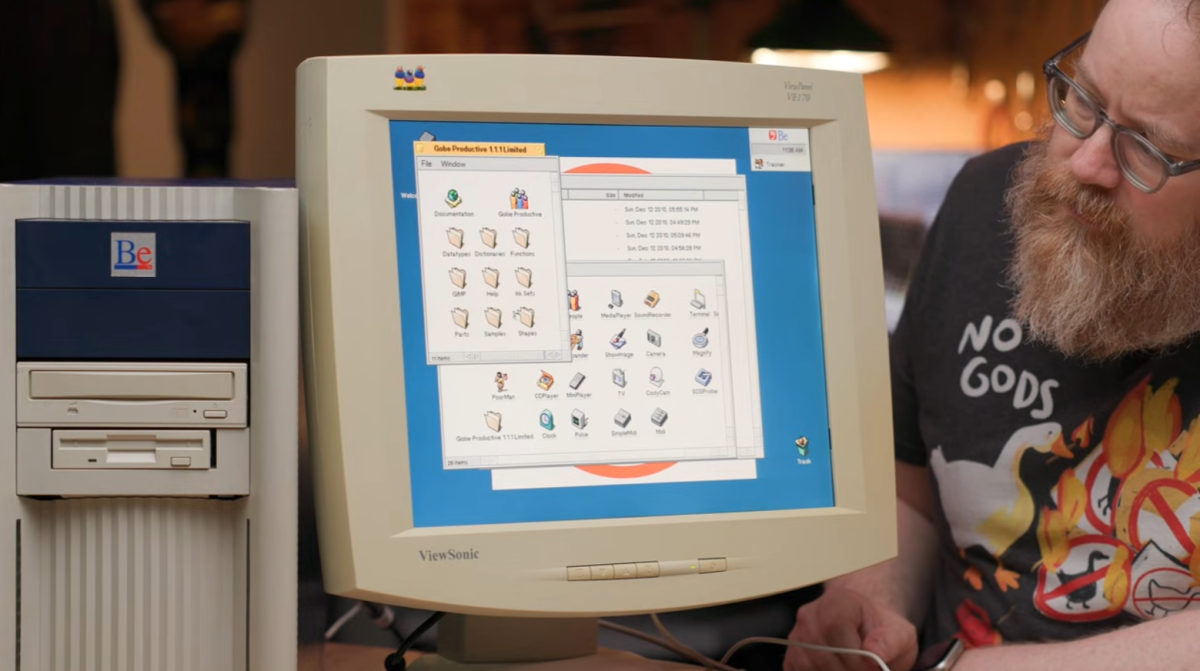
BeOS might be the most interesting and memorable part of it all. The user interface wasn’t that different from the Windows, Mac, and Linux editions of the time. But as an operating system designed from the ground up to handle multiple processors, it was completely unique. (Remember, the consumer version of Windows did not have this feature until the release of Windows 2000.) Although only 1,800 BeOS machines were originally sold, they enjoyed a small but dedicated user base.
Foundry
BeOS has an interesting history of its own. Be, Inc. discontinued hardware sales in 1997, then released a version of the software that could run on Macintosh compatible hardware, using the same PowerPC processors. They then created an x86 version of the software, which could run on the same PCs as Windows.
Microsoft relied on its PC manufacturing partners and banned them from shipping devices preloaded with Windows and BeOS, effectively killing the company. The owners of Be, Inc. sued Microsoft and won an out-of-court settlement of more than $20 million. The BeOS software was eventually sold to Palm (from the Palm Pilot, which didn’t last too long) and effectively killed. But an open source implementation of BeOS, called Haiku, can still run software originally intended for BeOS and the BeBox.
Thanks to Huxley Dunsay for the history lesson and demonstration. Be sure to check out the Retro Roadshow channel for deeper dives. And while you’re at it, subscribe to PCWorld on YouTube and join us for The Full Nerd show (and other shows!) every week.


