Remembering trailblazing trans activist Miss Major

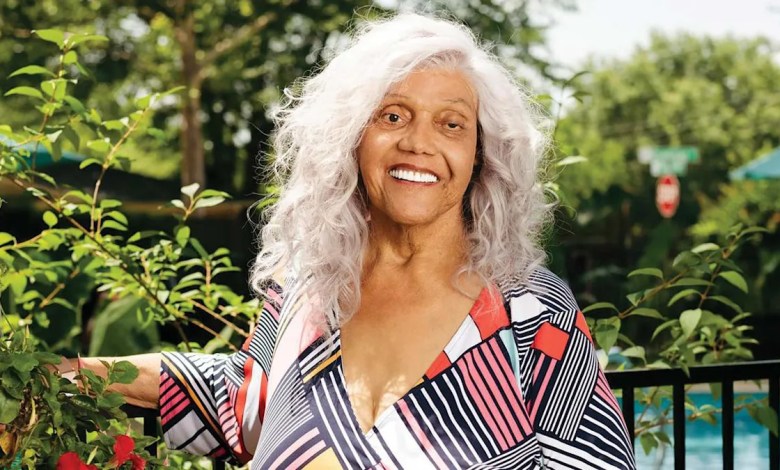
On October 13, transgender civil rights icon Miss Major Griffin-Gracy died at age 78 after spending some time in hospice care. For more than five decades, Griffin-Gracy fought for trans equality – and in a country that still fights against gay rights as fiercely today as when she arrived in New York in the 1960s. Nonetheless, she persevered as a torchbearer to brighten the lives of those who saw the world as dark and dismaying.
Chicago-born Griffin-Gracy spoke about moving to New York as a youth on LGBT Questions and Answers podcast in 2021. “The trans community was everywhere,” she said, “I immediately went to 42nd Street. Everyone went to 42nd Street: trans girls, everyone. Finding them wasn’t a problem… I found an apartment and moved into it. It had six floors of just trans girls. It was fabulous. There were so many of us it was a busy life.” Griffin-Gracy was a faithful witness to queer history. She became familiar with New York’s anti-cross-dressing laws, which remained in effect into the 21st century, and was at Stonewall in June 1969 when the riots began. In the podcast interview, she mentioned an initial moment of violence as the infamous moments unfolded. “So I spat in a guy’s face and he knocked me out,” she said. “Other than that, I don’t remember anything.”

Laverne Cox and Miss Major Griffin-Gracy
Laverne Cox and Miss Major at a screening of “The Trans List” in West Hollywood in July 2016.Greg Doherty/Getty Images
After an arrest for theft, she spent several years in men’s prisons and psychiatric hospitals, where she was subjected to mistreatment. Yet she emerged with courage and determination to uplift her trans community, becoming an advocate for the rights of incarcerated trans people. In 2005, she joined the Transgender Gender-Variant & Intersex Justice Project, an organization dedicated to providing legal services to trans, gender-variant, and gender non-conforming people, and became its first executive director, a position she held from 2010 to 2015. In 2019, she founded the House of gg (the Griffin-Gracy Educational and Historical Center), an organization focused on improving the lives of trans people by providing an oasis – and hope – for those who need support.
His death was a blow to trans activists, artists and other people, at a time when anti-trans hostility remains strong. Yet her impact endures, particularly among those she has met and inspired over the years.
“Major’s fierce commitment and intersectional approach to justice led her to directly care for people with HIV/AIDS in New York in the early 1980s, and later to lead the first mobile needle exchange in San Francisco….Miss Major fought tirelessly for her people, her love as vast and enduring as the universe she knew she was a part of,” said Muriel Tarver, executive director of the gg House.
“She was a world-builder, a visionary, and an unwavering dedication to making freedom possible for black, trans, formerly and currently incarcerated people, as well as the trans and LGB community at large….We will forever honor her memory, her steadfast presence, and her enduring commitment to our collective liberation,” Tarver said.

Miss Major as Grand Marshal at NYC Pride 2024
Miss Major served as grand marshal in the 2024 New York Pride Parade.Gotham/Getty Images
Activist Naiymah Sanchez says she appreciated the care Griffin-Gracy gave to everyone.
“Miss Major embodied the spirit of community healing, while bringing the experience of community struggles from a time in our history in America – where language, resources and support were not a reality,” said Sanchez, who is the first transgender Bernadine Casseus honoree.
For Kierra Johnson, chair of the National LGBTQ Task Force, Griffin-Gracy’s impact is immeasurable.
“There will never be enough words to fully describe the impact Miss Major had on LGBTQ+ people, on leaders of all movements, on those she loved and who were touched by her work and her words. She was a revolutionary, a visionary, a legend – a founding mother of our movement and an inspiration to those fighting for liberation,” Johnson says, adding that Griffin-Gracy “was a sharp and unyielding truth-teller.”
“She was also undeniably loving and generous to those who called her mother, aunt, colleague and friend,” adds Johnson. “There will never be another like her… And the movement she mothered will continue to march, stronger and stronger, because she marched first.”
This article is part of the January-February 2026 print issue of OUT, hitting newsstands January 27. Support queer media and subscribe – or download the issue via Apple News+, Zinio, Nook or PressReader.

This article originally appeared on Advocate: Remembering pioneering trans activist Miss Major


