A backflip rocks the rink : NPR

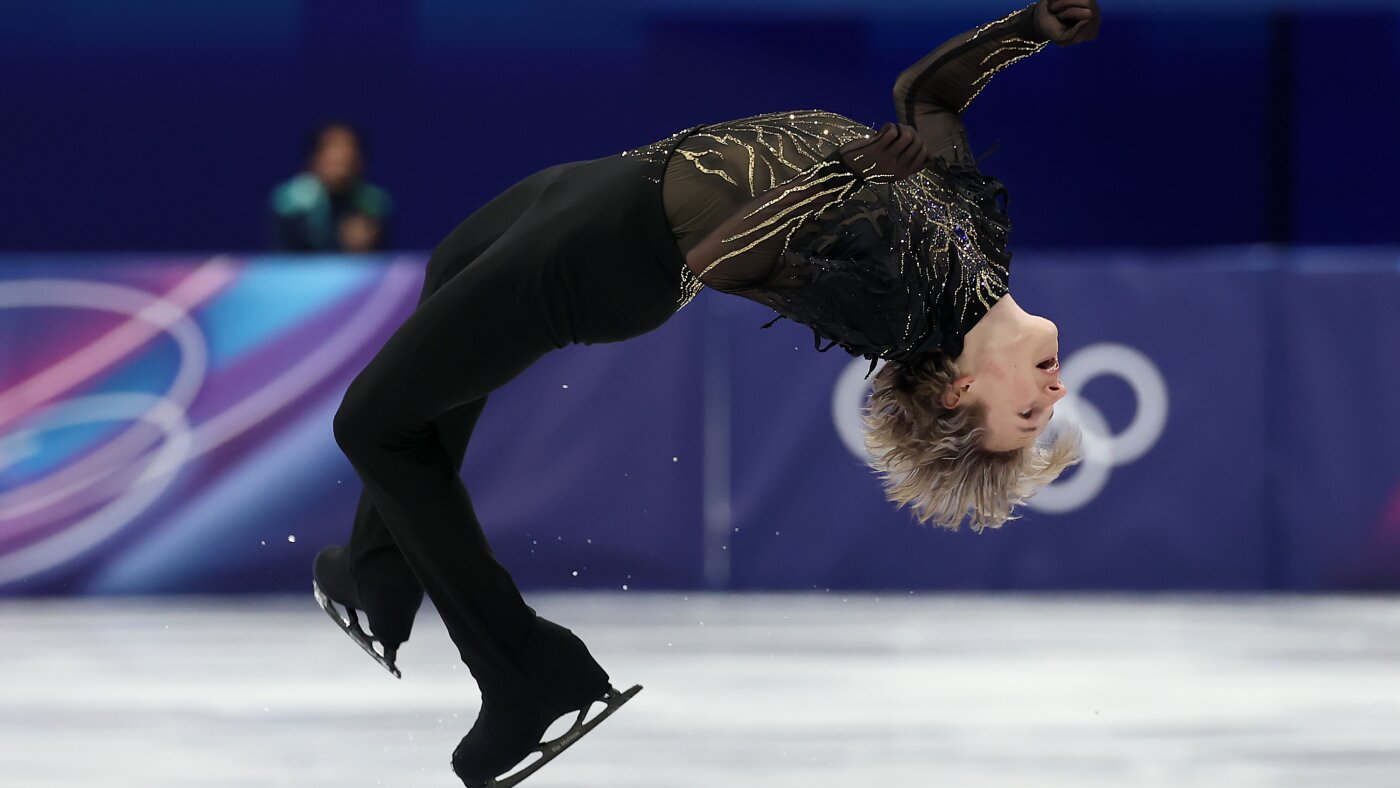

When Ilia Malinin completes her backflip, a collective roar shakes the arena.
Elsa/Getty Image
hide caption
toggle caption
Elsa/Getty Image
Watching Ilia Malinin skate in person continues to be a surreal experience. I saw him land his backflip at nationals last month, and twice in his first two Olympic skates this weekend. What strikes me every time is the effect it has on the crowd (see Snoop Dogg, For example). The collective roar shakes the room – I could feel it in the seats on Sunday – and seems to return to Malinin’s veins for the rest of his skate. I asked him after his first Olympic backflip on Saturday.
“Honestly, it’s such an incredible roaring feeling in the environment,” he said. “Once I did this backflip, everyone is screaming with joy and they are just out of control.”
We’re not used to seeing backflips on Olympic ice, largely because the move was illegal in competition from the late 1970s until 2024 (although that’s not to say people weren’t doing it). Here is a take a closer look at the backflipjust in time for today’s men’s short event.

Moving walkways line the kilometer-long route between the metro and Milan’s speed skating stadium.
Rachel Treisman/NPR
hide caption
toggle caption
Rachel Treisman/NPR
Take action
Yesterday, I briefly ventured out of the figure skating arena to the long track speed rink (an entirely different venue) to watch the women’s 1,000 meter race, eager to catch a glimpse of the stars of Team USA. Brittney Bowe and Erin Jackson in action. I did it! It was exciting to see their arms and legs moving so fast that they almost seemed to be sliding slowly. Ultimately, the title winner was Dutch phenom Jutta Leerdam, who won gold and set a new Olympic record in front of a hugely supportive crowd that included her American influencer-turned-boxer fiancé. Jake Paul.
But, in an effort to move beyond the headlines, I wanted to share some things I noticed even before this finale:
Milan’s speed skating stadium should be called Moving Walkway City. The rink is technically connected to the nearest metro station, but it’s about a kilometer walk to get there (according to my Apple Watch, it took 25 minutes each way), and most of that path is lined with conveyor belt-like structures that I’ve only ever seen at airports. There is also the option of walking on the regular sidewalk, but why would you choose that when you can feel like a slippery, wind-blown vehicle? Dusk vampire? The thing is, you really need to allow time for this part of the ride, otherwise you’ll end up like the guys behind me, almost pushing people aside on the narrow belts as they sprinted noisily ahead.
Each race happens so quickly – 1,000 meters is 2 1/2 laps around the rink – that I spent as much time walking to and from the rink as watching the action, a huge change from the long, late nights of figure skating (at least in local time). The speed rink was also much warmer than the figure skating hall, where I was cold even in my thermals. Their layouts are also totally different: I’ve seen the distinctive speed skating oval on television many times, but was struck in reality by the bustle of the carpeted space in the middle, occupied by timers, journalists and other officials.
I also didn’t realize until today that while each time trial consists of two skaters, others are warming up in the lanes right next to them at the same time. The television cameras give the impression that the two runners are the only ones on the ice, since they are following right next to them. There’s also a small camera rotating in the air behind them in a way that immediately made me think of the snitch in the field. Harry Potter Quidditch games.

Crowd favorite Jutta Leerdam of the Netherlands after her stunning gold medal ride.
Luca Bruno/AP
hide caption
toggle caption
Luca Bruno/AP
I immediately noticed that probably 80% of the crowd was wearing orange and that the cheers for the two Dutch skaters were significantly louder than the loud applause for the Americans. I didn’t see Jake Paul, but I saw a lot of people near me turning towards a particular section of the stands after Leerdam’s breathtaking final lap. I took note during a brief break in the action, when the emcee queued up John Lennon’s “Imagine” and urged the crowd to sing along (his vision didn’t quite come true). And on the return trip, I actually laughed when I saw volunteers sitting in lifeguard-type chairs along the long aisle, using megaphones to herd the masses back to the subway.
What I drink

An example of the bottle cap situation.
Rachel Treisman/NPR
hide caption
toggle caption
Rachel Treisman/NPR
Almost every drink I’ve had here has come from a plastic bottle: the water in my hotel room, the late-night Coke Zero I buy at the rink, the water natural and/or curling I choose in a cafe.
When I get home, I usually keep a reusable bottle in my bag. I was warned about the lack of refillable water bottle options in Italy and tried to plan accordingly. But what I didn’t know was the bottle cap situation. Why, oh why don’t they come off completely? You can unscrew the cap as much as you want, but some of it will always stick to the rim (and sometimes scratch your nose when you try to take a sip).
At first, I thought I was reaching new levels of sleep deprivation. But then I learned that this is the new normal, thanks to a 2024 European Union directive that aims to encourage recycling and reduce waste. THE The EU declared at the time that bottle caps were among the 10 most common single-use plastic items on European beaches, posing a threat to animals who swallow them. Understood! I think anyone who has seen a cute photo of a seal – or lost the cap from a half-full drinks bottle on the way out – can relate.


