Striking images capture an antibiotic slaying bacteria in real time


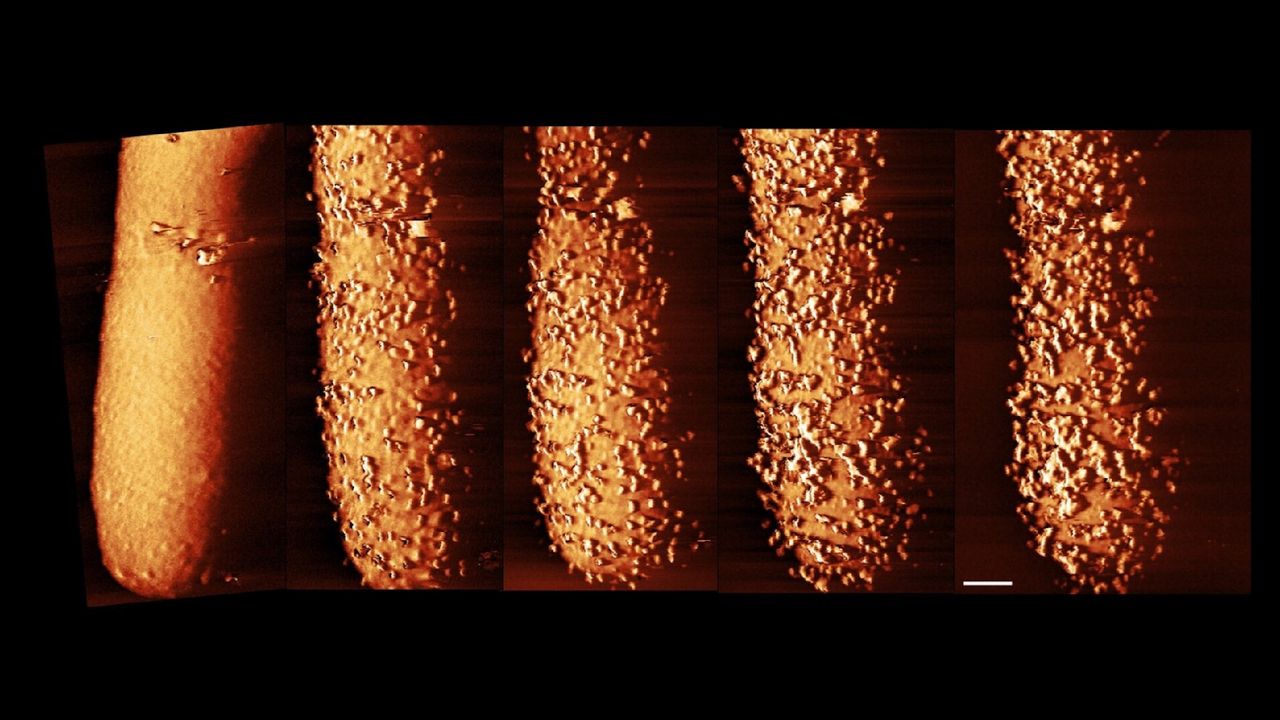
Scientists have published new images showing, in incredible details, antibiotics beating pathogenic bacteria by piercing microbes membranes and infiltrating their entrails.
Antibiotics, called polymyxins, were observed to force the shielded membranes around Escherichia coli Bacterial cells to grow bumps and bulges. The bacteria then lost their external membranes, leaving the space so that the antibiotic enters the cells.
Gram negative bacteria are a large class of microorganisms which have two membranes surrounding each cell; The two membranes sandwich a cell wall. E. coli,, SalmonellaAnd Shigella – A type of bacteria that causes dysentery – are all examples of gram negative bacteria.
Polymyxins can help treat infections caused by gram negative bacteria Resistance to other antibiotic drugs; They work by targeting the outside of the two bacteria membranes, which act as a kind of armor that prevents antibiotics. But exactly how antibiotics pass in front of this armor is not well understood.
“Polymyxins are an important line of defense against Gram-negative bacteria, which cause many deadly medication-resistant infections”, co-author of the study Bart Hoogenboomsaid a biophysicist at UCL, in the press release. “It is important that we understand how they work.”
In the new study, published on September 29 in the journal Nature microbiologyThe team of researchers captured images of the antibiotic in action. Using a technique known as microscopy by atomic force, scientists have passed a tiny needle in both directions on bacteria to map their forms. This allowed them to see how bacteria have changed when polymyxin attacked.
Forced polymyxins E. coli To quickly cultivate tiny bumps and protuberances on its outdoor membrane, found the team. As these bumps grew, bacteria lost its armor, leaving gaps in this external membrane through which antibiotics could enter and kill the cell.
“Our bacteria images directly show how many polymyxins can compromise bacterial armor,” said Borrelli. “It is as if the cell was forced to produce” bricks “for its wall external to such a rhythm that this wall is disturbed, allowing the antibiotic to infiltrate.”
Above all, polymyxins can only target bacteria that are actively developing, not those that have entered a sleeping state. The bacteria sometimes enter into a dormant state to deal with difficult conditions, surviving years without eating, developing or reproducing, only to wake up when the conditions are more favorable. Although sleeping, bacteria cannot develop their external membrane armor, so the antibiotic could not accelerate production in the same way as in the active growth of bacteria.
“Our next challenge is to use these results to make antibiotics more effective,” said Hoogenboom. “A strategy could be to combine polymyxin treatment – counter -tintively – with treatments that promote the production of armor and / or the alarm of” sleep “bacteria so that these cells can also be eliminated.”
This article is for information only and is not supposed to offer medical advice.


