Study: Apple’s N1 networking chip delivers a big Wi-Fi upgrade


Ookla, the company that makes the ubiquitous Internet speed test Speedtest.net, has released a new report comparing the Wi-Fi performance of Apple’s new N1 networking chip in the iPhone 17 against other Wi-Fi 7-enabled phones, including the iPhone 16 and several leading Android phones.
The new chip is a clear winner. Not only does this bring a clear improvement in Wi-Fi performance over the Broadcom-based solution in the iPhone 16, but it catapults the iPhone 17 family to the top of the pack for Wi-Fi 7 compatible smartphones.
The results are impressive. Apple used a Broadcom chip for Wi-Fi networking, and while it offered Wi-Fi 7 support, it wasn’t exactly one of the fastest on the market. The N1 changes all that.
Ookla
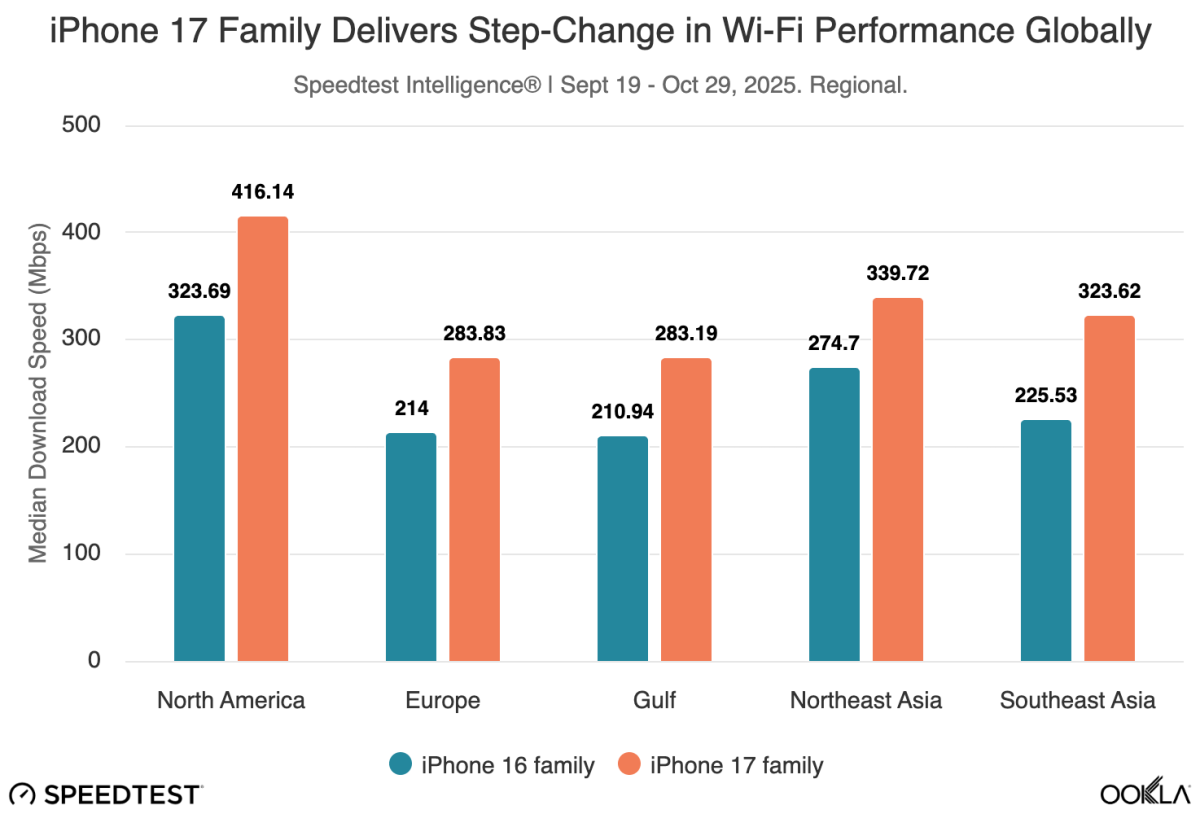
Across all regions, the iPhone 17 family’s Wi-Fi performance exceeds that of the iPhone 16 family. This is especially notable since both chips share the same 160 MHz channel width limitation: Apple didn’t get higher speeds by suddenly supporting Wi-Fi 7’s full 320 MHz bandwidth capacity.
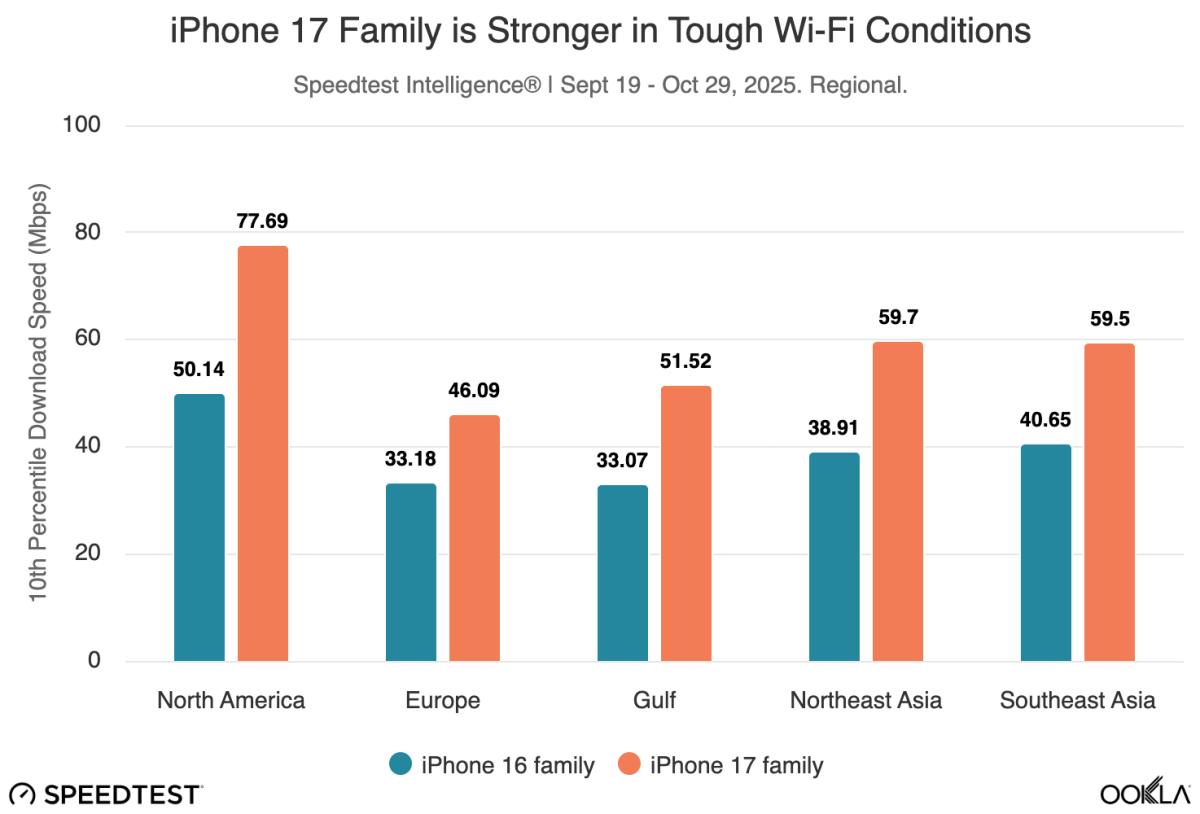
Ookla notes that the biggest improvements over last year’s iPhones are in the 10th percentile: the slowest connections. Similar to the C1 cellular chip, Apple seems more concerned with raising the floor for the worst connections than chasing the highest possible speeds.
Ookla
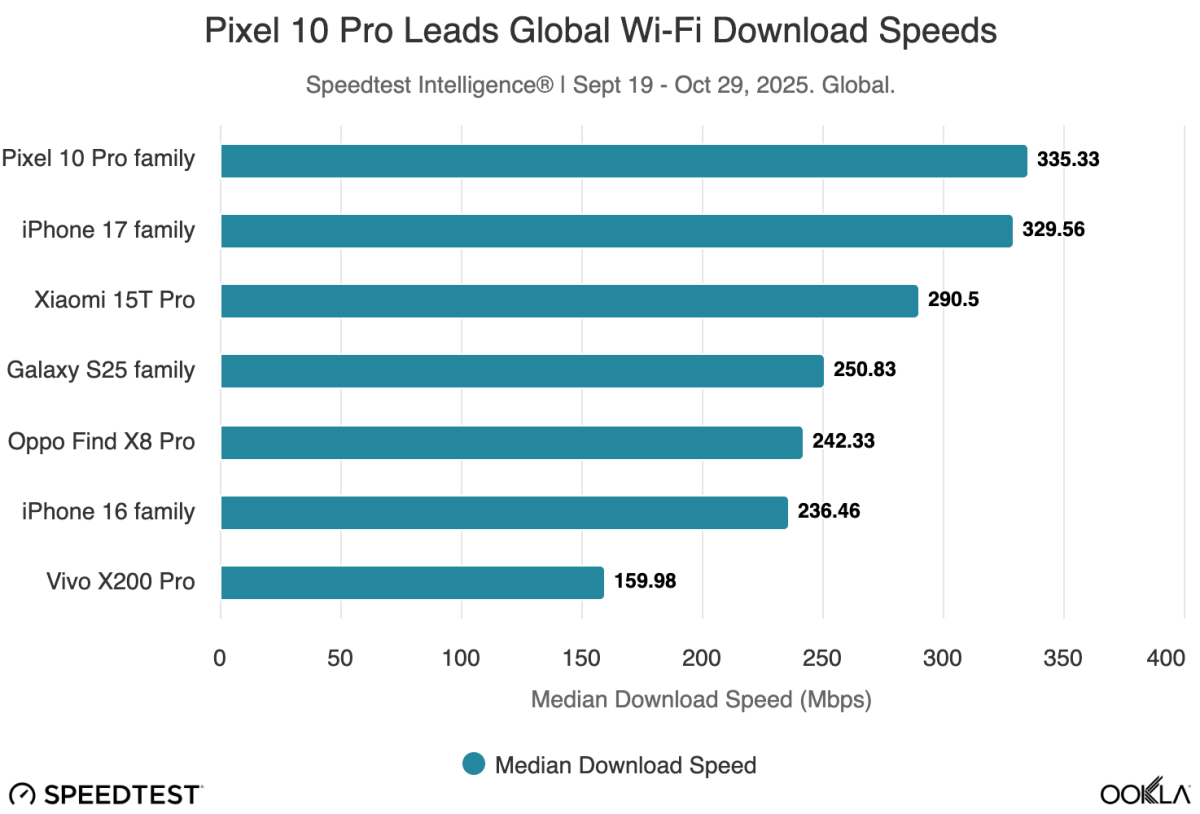
Apple’s improvements allow it to compare much more favorably to the world’s best Android phones. It doesn’t offer the fastest download speeds, but it’s now in second place, just a hair behind the Pixel 10 Pro family. This is a big jump from the iPhone 16 family.
Ookla
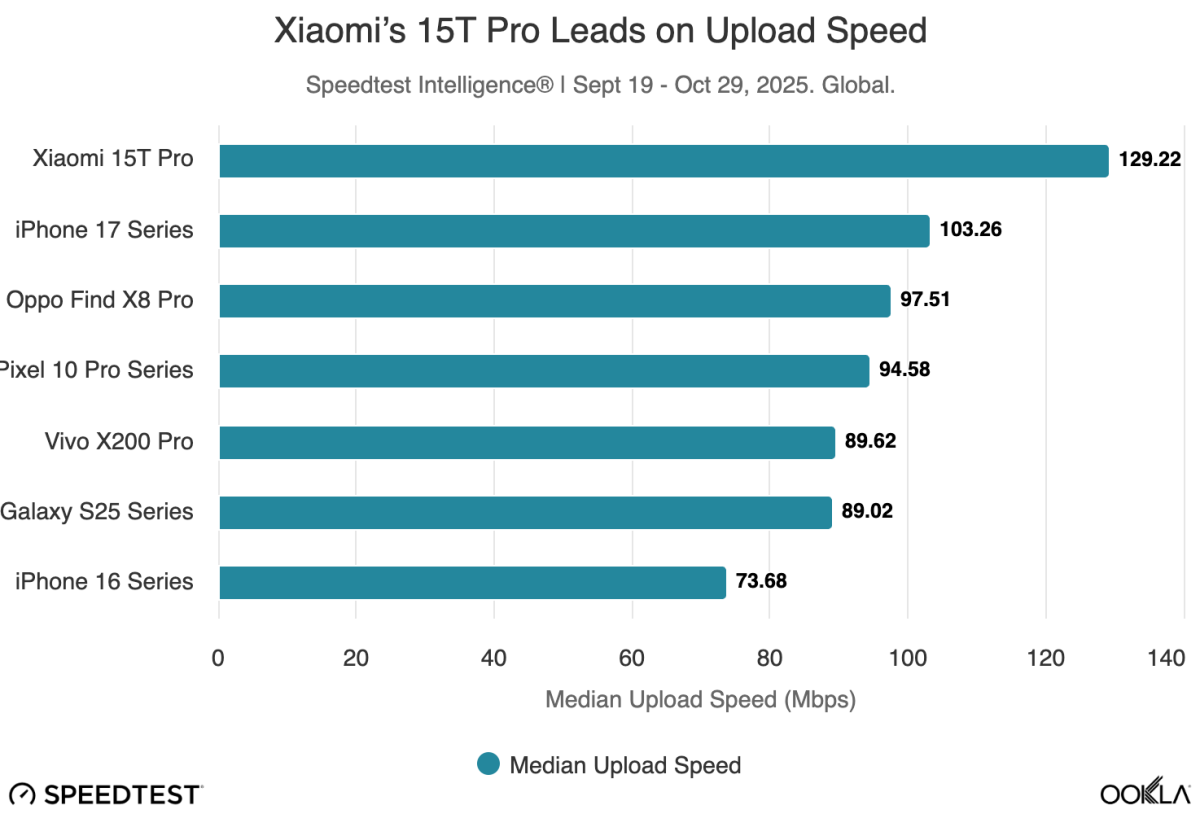
But the iPhone 17 lineup beats the Pixel 10 Pro in uplink performance. It’s still not at the top of the pack – that honor goes to the Xiaomi 15T Pro – but it’s in second place again and, once again, well ahead of the iPhone 16 lineup.
Ookla
Although the Wi-Fi capabilities of the iPhone 17’s N1 processor appear nearly identical to those of the Broadcom chip in the iPhone 16 family, it’s clear that Apple has made a superior product. This could come down to changes in internal structure, antennas, better hardware-software integration, or a dozen other things; Wireless networking is complicated.
Apple still has room to grow. The use of 320 MHz channels is still quite rare, as are Wi-Fi 7 routers in general. Many countries have also limited adoption of the 6GHz frequency for Wi-Fi. A theoretical N2 chip can implement more Wi-Fi 7 specifications and benefit from additional improvements, in addition to maintaining better connections over slower, legacy networks.
You’ll find a more in-depth analysis of Wi-Fi 7-enabled smartphones, as well as many other charts, in Ookla’s report.


