New Species of Marsupial Discovered in Peru


Scientists have identified a new species in the genus marsupial Marmosa From a single specimen collected on the east side of the Andes in San Martín, Peru.
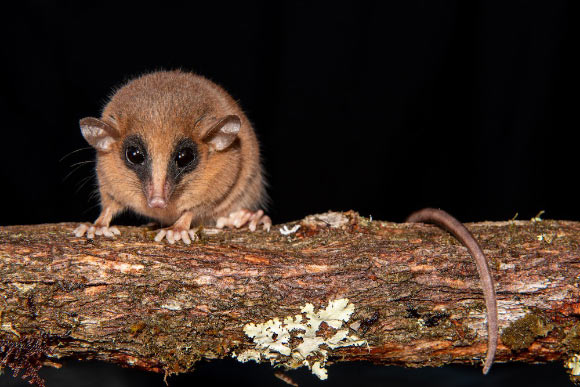
Marmosa Chachapoya. Image credit: Pedro Peloso.
Marmosa is a kind of relatively small neotropical mammals of the Didelphidae family.
It is one of the three genres that are called mouse opossums; The others are thylamys and tlacuatzine.
“”Marmosa is the most specific genus of American marsupials, including 26 species in five sub-genres that occur in a wide range of tropical and subtropical habitats from Mexico to Argentina, “said Professor Silvia Pavan of the Polytechnic University of the State of California and his colleagues.
“In addition to the named species of MarmosaTwo new putative species in northern Peru have recently been indicated by a phylogenetic analysis: one has been recovered as a member of the sub-genre Stegomarmosawhile the other nested among the species of the sub-genre Micocoureus. “”
The new Marmosa Species have been discovered at an altitude where other species of this genus are generally not found.
Appointed Marmosa ChachapoyaThe animal has a reddish brown fur, distinct marks in the shape of a mask on its face.
It has a total length – including the body and tail – up to 25 cm (10 inches); The body alone only measures 10 cm (4 inches).
According to researchers, Marmosa Chachapoya is closely linked to two sub-genre species Stegomarmosa:: Marmosa Lepida And Marmosa Andersoni.
“I immediately realized that it was something unusual,” said Professor Pavan.
“We know this species very little, including its natural history and distribution, and a single specimen has been collected so far.”
To confirm that it was a new species, scientists have studied its DNA and its physical characteristics, focusing on distinctive features such as the elongated muzzle and the delicate body.
“”Marmosa Chachapoya Is this not the only new species discovered during the expedition, “said Professor Pavan.
“We have collected several others – including a new semi -aquatic rodent – who have not yet been officially described.”
“These discoveries are particularly significant for biodiversity and conservation efforts, stressing how unknown it remains on the biodiversity of this region.”
“The results also suggest that it houses more species but unknown to science, many of which could be vulnerable without protection.”
“It is a reminder of the critical importance of scientific exploration and conservation in fields like Río Abiseo.”
The team’s article was published on June 19, 2025 in the newspaper Novitates of the American museum.
_____
Silvia E. Pavan and al. 2025. A new species of Marmosa (Mammalia, Didelphimorphia, Didelphidae) of the Parque Nacional del Río Abeseo, Peru. Novitates of the American museum 4037