New Map Reveals Antarctica’s Gigantic Submarine Canyons — Some Deeper Than 13,000 Feet


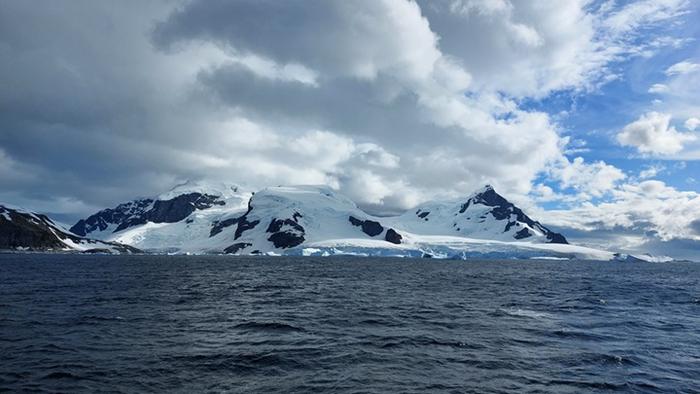
Antarctica is commonly called the land of penguins, cold temperatures and shelters around 90% of ice. But did you know that under all this ice hides kilometers and kilometers of underwater canyons?
Thousands of these geological glasses – called underwater canyons – exist worldwide, but scientists have struggled to map them and study them, in particular in distant polar regions. Now the most complete card of the Antarctic submarine canyons has been published in Marine geologyretailer 332 Canyon networks which reach a maximum depth of more than 13,000 feet.
“Some of the underwater canyons that we have analyzed reach depths of more than 4,000 meters (13,123 feet). The most spectacular are in eastern Antarctica, which is characterized by complex canyon systems, “said David Ambers, of the Faculty of Earth Sciences at the University of Barcelona, in a press release. “The systems often start with several canyon heads near the edge of the continental plateau and converge into a single main channel which descends into the deep ocean, crossing the sharp and steep gradients of the continental slope.”
How are Antarctic Submarine Canyons formed?
Antarctic canyons also facilitate the exchange of water between the deep ocean and the continental plateau. (Image credit: marine geology)
Submarine canyons are of vital importance for ecological, oceanographic and geological processes in the world. Similar to above ground canyonsThey are sculpted in the seabed and the continental plateau through centuries of erosion. In Antarctica, this erosion is caused by turbidity currents – waters rich in sediment and sediments which slowly carry the underwater areas to which they cross.
“Like those of the Arctic, the underwater canyons of Antarctica resemble canyons in other parts of the world. But they tend to be larger and deeper due to the prolonged action of polar ice and the immense volumes of sediment transported by glaciers to the continental plateau, “said Ambernà in the press release.
Learn more:: The Antarctic glacier surprised to make a hacking of ice to his neighbor
Importance of antarctic submarine canyons
These underwater canyons help create a rich biodiversity in the seas they live because of their role in the transport of nutrients between deep and shallow waters. Thanks to these new mappings, scientists have now discovered that antarctic submarine canyons play an even more important ecological role than you thought before.
The main role of canyons is to exchange water between two points, often moving colder water formed near the ice plateaus towards deeper parts of the ocean. This process is crucial both for ocean circulation and the global climate.
In addition, underwater canyons are also involved in the opposite process – transporting warmer ocean waters from the sea to the coast. These warmer waters help maintain and stabilize the interior of Antarctica glacier.
A blind spot for climate change
The awareness that the underwater canyons of Antarctica play a more important role in the global climate that was previously believed, highlights a blind spot in the science of climate change. Given that so many underwater canyons are not discovered and sub-studied, they do not take into account many current models of climate change. This is a problem because the omission of these water transportation canyons considerably limits the capacity of climate change models to predict oceanic and global climate change precisely.
“This is why we must continue to bring together high resolution [data] In non -mapped areas that will surely reveal new canyons, will collect in situ observation data and via remote sensors and will continue to improve our climate models to better represent these processes and increase the reliability of projections on the impacts of climate change, “concluded the authors of the study in the press release.
Find out more: The largest mountain range that no one has seen in the context of life under the glacial caps of Antarctica
Article Sources
Our writers at Discovermagazine.com Use studies evaluated by high -quality peers and sources for our articles, and our publishers examine scientific precision and editorial standards. Review the sources used below for this article:
As a Marketing Coordinator of Discover magazine, Stephanie Edwards interacts with readers through the social networks of Discover and writes digital content. Offline, she is responsible for courses in English and cultural studies at Lakehead University, by teaching lessons on everything, from professional communication to Taylor Swift, and obtained her graduate diplomas in the same department of McMaster University. You can find more of its scientific writing in the laboratory and its short fiction in anthologies and the literary magazine through the kind of horror.


