Continuity breeds plenty of confidence for Rams special teams unit


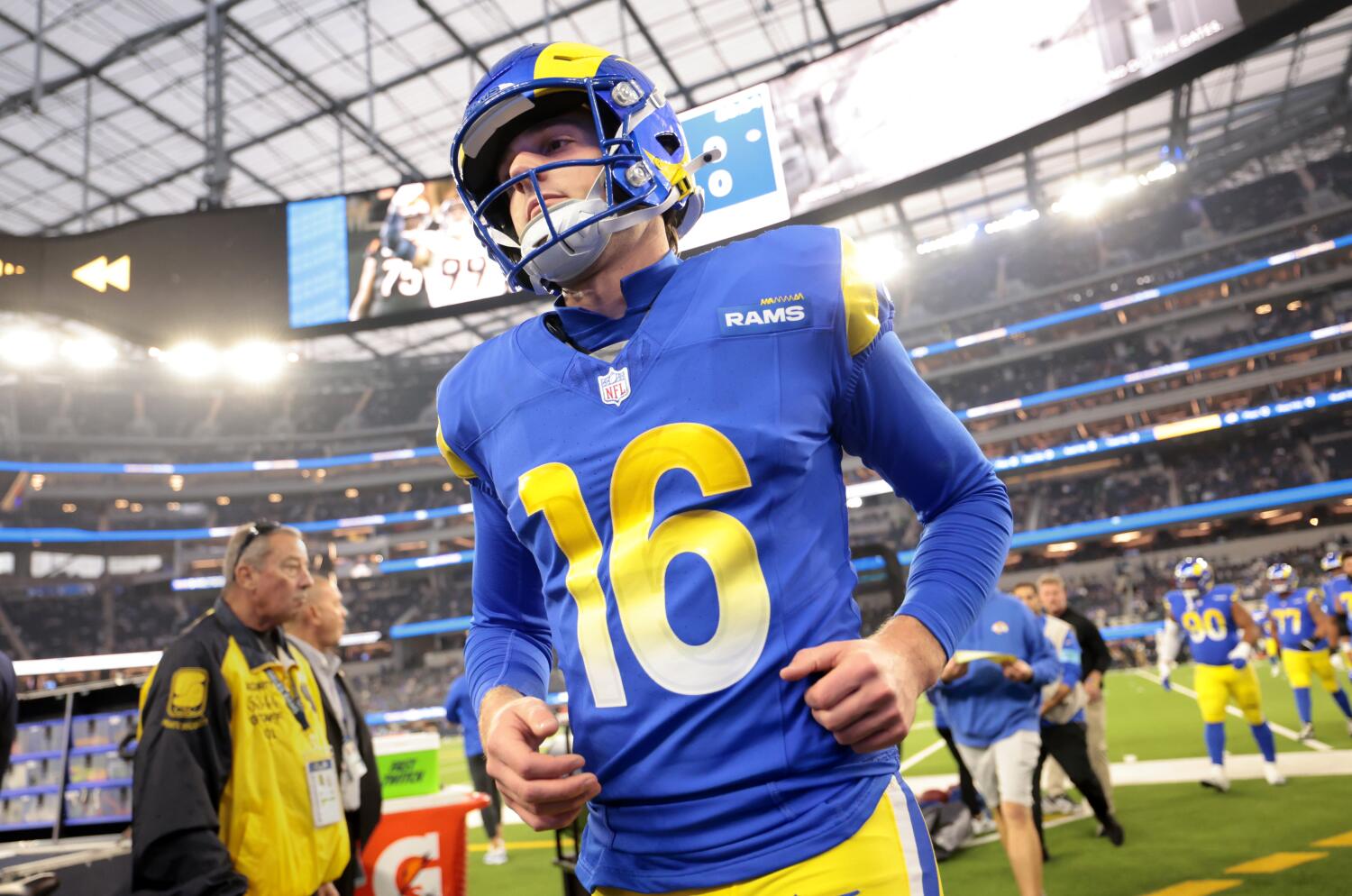
Joshua Karty, Ethan Evans and Alex Ward still have a long way to go.
But the botter, bettor / holder of the RAMs, respectively, showed signs according to which they could have the collective power of the former pillars of Rams Greg Zuerlein, Johnny Hekker and Jake Mcquaide.
From 2012 to 2019, Zuerlein kicked, Hekker weighted (and sometimes succeeded) and Mcquaide took rams under the former coordinator of special teams John Fassel.
Current specialists can imagine an equally long together future.
“We all work very well with each other,” said Evans, a third year pro. “We all know exactly what others do with each other, which makes themselves better.
“So I have the impression that we all completed very well – and I think we could do it for a long time.”
Karty, a sixth round draft choice in 2024 from Stanford, lived and learned the ups and downs after having made 29 of the 34 goals at the field and 32 of the 36 additional point attempts during the regular season.
Karty kicked a winning basket against the 49ers of San Francisco, sailed in a section of failures and inconsistency, then finished by making 17 consecutive attempts in the last five games of the regular season and two qualifying games.
It was something to “roller coaster,” said Karty, who aims to take back where he stopped last season.
Karty impressed the coach Sean Mcvay with his ability to bounce back.
“”I’m just super impressed by his mental determination, “said Mcvay.” I think there were cases last year when you could just see that he got better and better over the year.
“He has a coherent process to which he is committed. I don’t think you can take the relationship between him, Ethan and Alex. This is a big problem because these guys continue to grow together.”
Special team coordinator Chase Blackburn said Karty has a “comfort” of experience and working with Ward and Evans.
“The confidence that is built together in the offseason and the training camp together,” said Blackburn. “Do it and have them, knowing that he has the confidence and total confidence of all his teammates too.”
Evans, a third -year pro, last season reached an average of 41.5 net yards per boot of clearance. He placed 30 of the 55 kicks inside the 20 yards line.
Evans said he had a refined daily routine and does not think about it.
“I thought:” Oh, my drop had to be perfect. My steps must be this … I have to put the ball there there.
“Now it’s like, wherever Chase tells me to kick him, just kick him. Do not think about anything. Go and do it.”
The receiver Xavier Smith has held the challenge of the Vétéran Britain Covey free agent during the training camp to maintain his role as a cleaner of clearance.
The receiver Jordan Whittington, the Ballon carrier Blake Corum and Smith could again manage the kick -off.
The second recruit non -drafted Shaun Dolac and the veteran secondary Troy Reeder are among the other players who should have an impact on the special teams.


