Iran nuclear material “still there, in large quantities,” IAEA chief says, calling for urgent deal with U.S.


The head of the United Nations nuclear watchdog agency has warned of the “urgency” of reaching a diplomatic deal to avoid a war between the United States and Iran, citing the risk presented by Iran’s enriched nuclear materials, which he said remained largely intact despite U.S. strikes on three major facilities last year, and the risk that further strikes could trigger a wider conflict.
The United States and Iran concluded round of negotiations Tuesday in Geneva, with both sides saying progress had been made, but a U.S. official told CBS News there were “still a lot of details to discuss.” The official said Iran should return within weeks with detailed proposals “to close some of the open gaps in our positions.”
As this diplomacy continues, President Trump has strengthened the American military presence in the region to support its threat of new strikes if no agreement is found to curb Iran’s nuclear program.
In an interview with French channel TF1 on Wednesday, Rafael Grossi, director general of the UN’s International Atomic Energy Agency, called the Geneva talks, during which he met Iranian officials in the Swiss capital, “two steps forward” but said “further efforts are still needed.”
“The problem is we don’t have a lot of time,” Grossi said.
Iranian Foreign Ministry/AFP/Getty 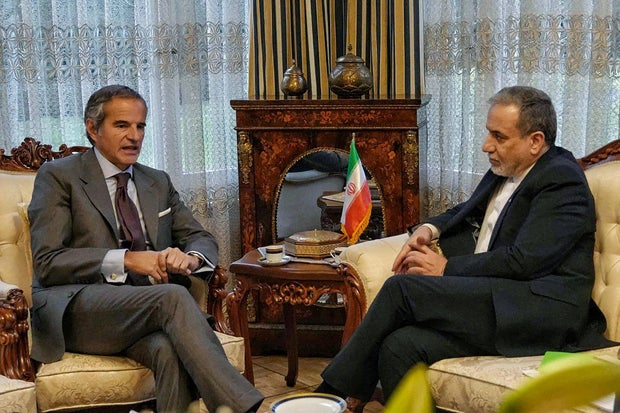
“Most of the documents that Iran had accumulated until June last year, despite the [U.S.] “Some elements may be less accessible, but the material is still there.” From a non-proliferation perspective, the matter remains. This is why there is so much interest – I would say urgency – in reaching an agreement that would prevent further military action in the region. »
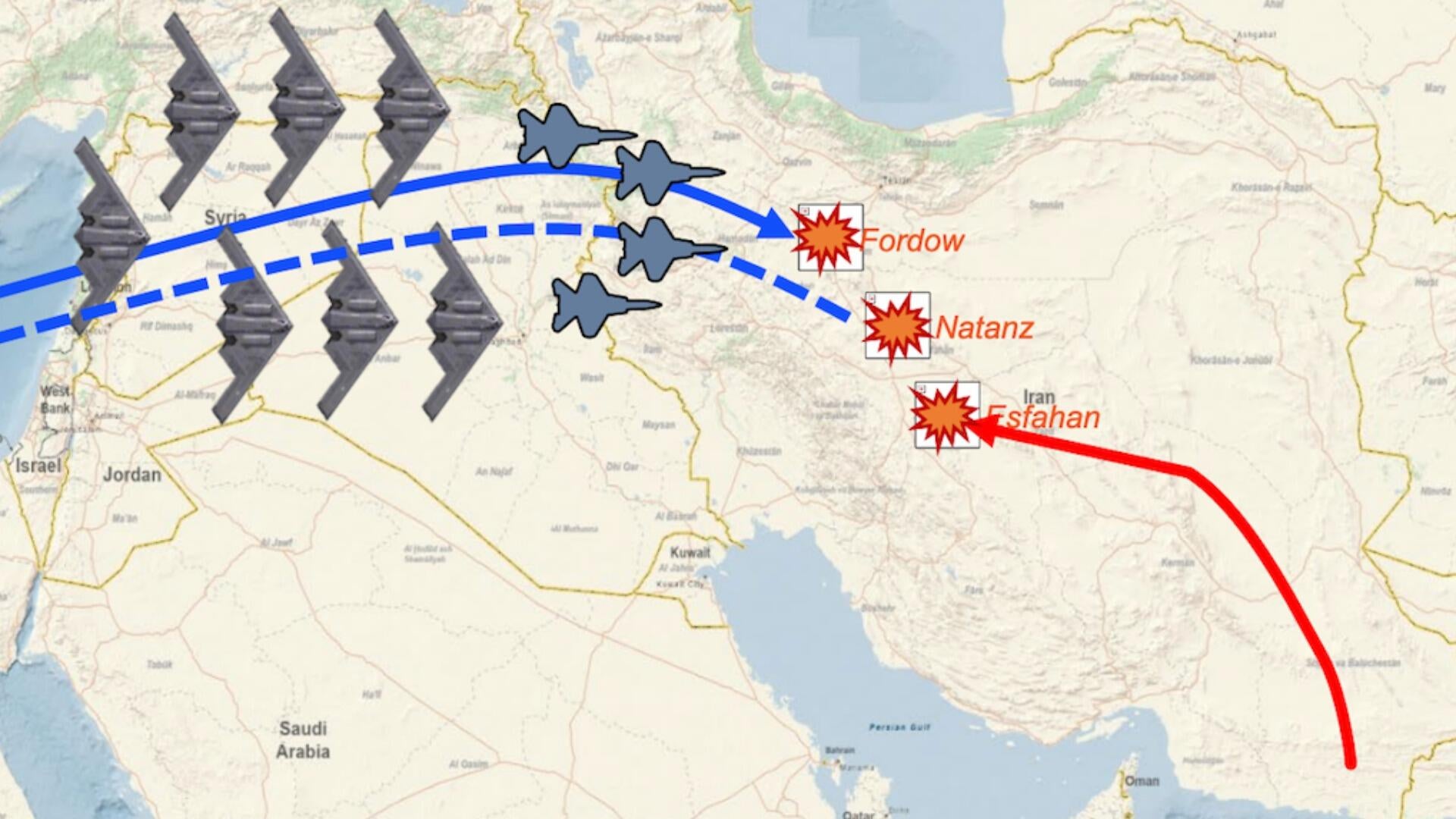
Mr. Trump and Defense Secretary Pete Hegseth said afterward:Operation Midnight Hammer” in June that the American strikes had “annihilated” the Iranian nuclear program, but questions quickly arose on the extent of the damage caused.
A initial classified US assessment found that the strikes had set back Tehran’s nuclear program by months, while Mr. Trump said the nuclear program had set back “basically decades.”
As Russian warships and aircraft joined Iranian military exercises in the Strait of Hormuz and the Gulf of Oman this week, Grossi stressed that it was vital to avoid further military confrontation between the United States and Iran, citing a “real risk of spillover and expansion to other countries.”
“Everything must be done to avoid this situation,” he told the French channel.
“This is a key moment in a long history marked by both successes and failures. It is also a pivotal moment in a long-standing impasse that has, of course, been shaped by conflict, including the ’12 Day War’ in June last year. It is now possible that a dialogue that begins in earnest, for the first time, will take shape,” the IAEA chief said. “The fact that I myself have been invited by the parties involved is a positive sign, because we are starting to discuss concrete questions, what really needs to be done.”
Mr. Trump said he would under no circumstances allow Iran to develop a nuclear capability.
When asked whether the IAEA had seen any indications that Iran might currently be working to develop such a capability, Grossi clearly said it had not.
“No,” he told TF1, adding: “On the contrary, today I see a desire on both sides to reach an agreement.”
Planète Labs PBC/AP 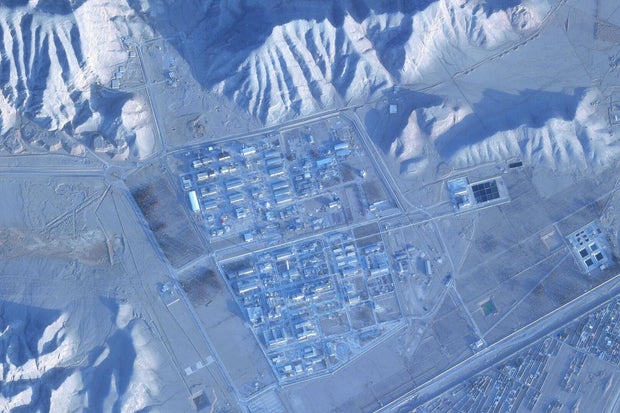
But Grossi’s cautious optimism came amid increasingly pressing rhetoric from Washington, as sources told CBS News on Wednesday that while Mr. Trump had not made a final decision, he was at least prepared to do so. considers attack on Iran this weekend.
“Now is the time for Iran to join us on a path that will complete what we are doing,” Mr. Trump said Thursday at a meeting of his Peace Council in Washington. “If it doesn’t happen, it won’t happen. But bad things will happen if it doesn’t happen.”
“Maybe we’ll make a deal,” Mr. Trump reiterated, adding: “You’ll find out in the next few days, probably 10 days.”
Polish Prime Minister Donald Tusk on Thursday urged all Polish citizens in Iran to immediately leave the country.
“Do not under any circumstances travel to this country,” he said, citing the “very real” possibility of conflict making evacuations impossible in the near future.


