Synthetic skin reveals hidden ‘Mona Lisa’ when exposed to heat


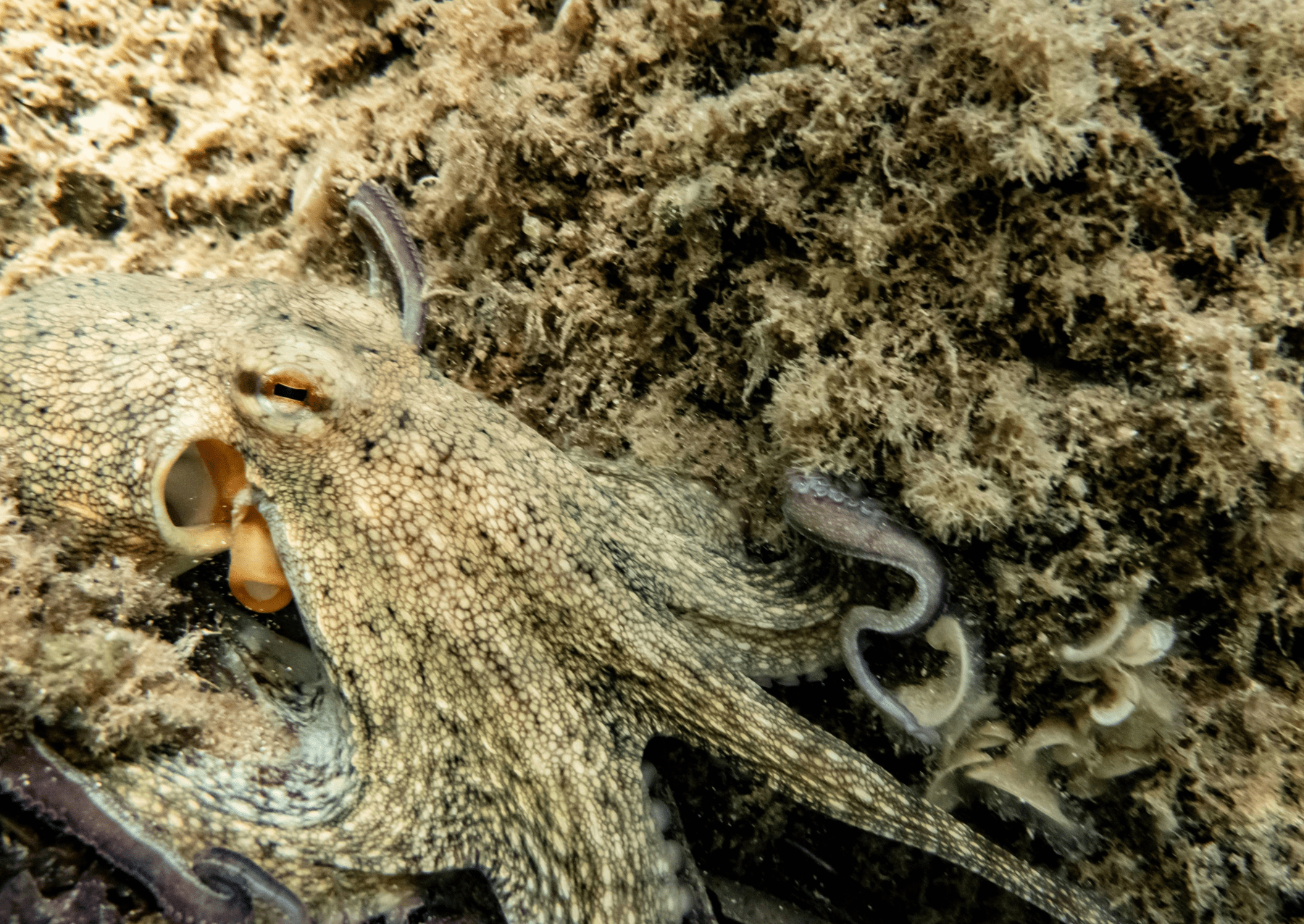
Octopuses and their cephalopod cousins have long fascinated biologists with their seemingly supernatural metamorphoses. Cephalopods quickly change color and texture, blending into their surroundings and escaping predators. This natural camouflage is a remarkable biological element that engineers have attempted to replicate, although with limited success. But that may be changing.
Penn State researchers say they have developed a new hydrogel material inspired by octopus skin that can encode images directly into its structure. The printed images then disappear and reappear when the skin is exposed to subtle temperature changes or surrounding solvent. The result is a synthetic “4D” smart skin capable of revealing hidden images and changing surface patterns.

Smart Skin
To demonstrate the technology, the team encoded a black-and-white image of Leonardo da Vinci’s “Mona Lisa” into the material. At room temperature, the image is virtually invisible. However, when heat is applied, the hidden contrast sharpens until the image becomes clear. Although still early in its development, this material could lay the foundation for adaptive synthetic camouflage, with potential military applications and beyond. The results were published this week in the journal Natural communications.
It’s an impressive feat of engineering that also highlights the elegant complexity that nature has honed over millions of years of evolution. Even with all our resources and combined might, humans still cannot surpass nature’s innate artistry.
How octopuses hide
Scientists are beginning to truly understand the complexity of octopus brains and their unique ability to solve problems. However, when it comes to shapeshifting, the process appears to be more instinctive than deliberate.
Biologically, cephalopods rely on specialized neuromuscular organs called chromatophores to perform their evolutionary magic trick. Chromatophores expand and contract in response to neuronal signals triggered by environmental cues. They also use muscle hydrostats to quickly change the texture of their skin. Together, these characteristics give octopuses an extraordinary dynamic range of appearance, allowing them to blend seamlessly into their surroundings.
“This complex system of nerves and muscles gives soft-bodied organisms the remarkable ability to simultaneously change their optical appearance, surface texture, and shape,” writes the team responsible for this new study.
Print a “newspaper” on the skin
To try to replicate the way octopuses camouflage and change shape in a lab, the Penn State team needed a way to change both appearance and shape using a single soft synthetic material. They started by 3D printing a hydrogel that would serve as their canvas. Using a process called halftone-encoded printing, the researchers first translated an image into a binary grid of pixels, where different patterns of 1s and 0s corresponded to regions of the material with distinct physical properties. Much like newspaper printing, the density and distribution of these pixels creates the illusion of light and dark areas.
Once the image was converted into a binary pattern, the team encoded it directly into the hydrogel using controlled UV light during the printing process. In other words, the image was “etched” directly onto the hydrogel canvas. Rather than adding ink or pigments like on a tattoo, UV exposure programmed subtle differences into the internal structure of the material. Under normal conditions, these differences are invisible to the naked eye.
But when the material is heated, the areas corresponding to patterns 0 and 1 react differently, gradually increasing their visual contrast. The previously hidden image then emerges as the material reacts to its environment. The process is somewhat similar to how invisible ink is exposed when a developer solution or special light is applied. Researchers describe this as a form of 4D printing because it takes a three-dimensional object and changes its appearance over time via exposure to external stimuli. They were also able to demonstrate the same effect by changing the surrounding solvent, which caused the hidden image to reappear.
“We print instructions in the material,” Hongtao Sun, a Penn State industrial engineer and co-author of the study, said in a Penn State blog post. “These instructions tell the skin how to react when something changes around it.”
To demonstrate this effect, they first encoded the letters “PSU” into the hydrogel film. After changing the temperature of the film, the letters revealed themselves. To increase the difficulty, they then repeated the process with a grayscale image of the “Mona Lisa.” In theory, they say the same approach could work with any image. It simply needs to be converted into a binary pattern and encoded on the hydrogel.
This is not the first time that scientists have taken inspiration from octopus anatomy. In 2021, engineers at Rutgers University created a 3D printed synthetic muscle that subtly changed shape when exposed to light. More recently, researchers at Stanford developed a flexible synthetic material that would swell and change size when targeted with an electron beam. Elsewhere, roboticists have even developed a slightly terrifying, octopus-like “Tentacle Bot,” equipped with mechanical armies and suction cups that help it move and grip objects.

The best new PopSci 2025 releases


:max_bytes(150000):strip_icc()/Health-GettyImages-1440005476-c63e5435f2e04158a151af266c47e508.jpg?w=390&resize=390,220&ssl=1 "6 Supplements To Avoid Taking With Coffee")


