“Declared Intention”: My Immigration Story, and Ours


Like many Americans, I may be only a generation of the citizenship of the right of birth – a concept that has defined the promise of this country for so many immigrants.
The complaint about us poets is that we make everything too complicated. When the world needs something like a simple protest song or something patriotic, we vaguely mumble on different ways to look at something.
Immigration, for example. Is it fundamentally the same today as for my grandparents, or completely different? Or if somewhere between the two, then where, exactly?
If the certainty about this question is the test, then I fail.
My grandfather Morris Eisenberg immigrated to the United States in 1908 as part of the Galveston Plan, a charitable project supported by prosperous German and Sepharsed Jewish families established in New York. These schiffs and cardozos – or who they were – were doing something for their brothers and sisters from Eastern Europe, who, in the new 20th century, came to New York en masse: too many of them, arousing sympathy, but also embarrassing. Their names, their language, their manners, their looks, their clothes, their very smells were foreign, individual, not American. How to help them, without the city of New York being overwhelmed by them?
There was a rabbi in Texas who said that his congregation could use more Jews, many of them, so that the Galveston plan provided ships such as the FrankfortWho sailed from Bremen to Galveston, with the teenager Morris Eisenberg on board, arriving on June 15, 1908. He settled in Little Rock, Arkansas. Her firstborn child, my mother, was born there in 1916. When she was in high school, the family moved to Long Branch, New Jersey, where my grandparents lived in the street of me-four doors-throughout my childhood and my years in high school and in Rutgers. I knew my Zaydee Morris well, beyond the question. For years, I saw it every day.
On an official “registration card” (apparently linked to the military project as well as citizenship) dated June 5, 1917, in Conway, Arkansas, the age of Morris is listed as 26. Line 10 of this card records its matrimonial state as “married” and its race as “Caucasian”. The card includes, on line 4, the following question:
Are you (1) a natural born citizen (2) a naturalized citizen (3) a foreigner (4) or have you declared your intention (specify which one)?
Current number

In response, Morris – or the person responsible for the Arkansas who filled the form – wrote the line 4: “Declared intention.“”
All my life, I assumed that he became an American citizen shortly after this 1917 statement. But recently, I happened to watch another document, with the title: “United States of America: declaration of intention” dated January 24, 1939, in Freehold, New Jersey. This time, 22 years later, the entry of Morris Eisenberg’s race is “Hebrew”. And in 1939 – The year before my birth, and shortly before the son of my grandfather, my uncle Julian Eisenberg would enter the army of the United States – Morris Eisenberg, now 46 years old, declares once again his intention to give up any loyalty and allegiance to any other state or manager, and (therefore I suppose!) To become a natural American citizen.
I can no longer presume that Morris Nachman Eisenberg has become a citizen. His wife, My Nana, was born in Brooklyn. It is possible that my grandfather has finished the naturalization process some time before my birth, or when Julian entered the army. Julian, my uncle Julie, fought and survived the battle of bulge. What seems most likely about the question of legal status as an immigrant is that my grandfather has never succeeded.
So there is ambiguity. As an unknown number of Hispanics, Asian and Brazilian and Irish and West Indian in various circumstances, era and places, Morris the Immigrant of Hebrew Caucasian (his official color in 1939 was “white” and his “dark” complexion) apparently not considered that his legal status was an urgent question. An old two -component survival strategy can apply here: follow the rules. Avoid official procedures.
Did he rely with confidence on the American principle of the “regular procedure”? Perhaps not with these two words, but yes, absolutely, my grandfather lived with certainty that in this country, if you obey the laws and you include decently, you will be protected. Absolutely, he loved the United States of America. Whether they were naturalized or not, it was what I would call patriotic, without a doubt.
Legally, Morris Eisenberg may or may not be a citizen of the United States. Morally and practically, in his soul, he was a citizen. He and Nana, like proud and worried parents of a GI (this old -fashioned term) gave a lot of energy, practical and emotional, to the USO. (The three letters, which meant so much in my early childhood in wartime, represent the United Service organizations, which provided local support and entertainment to the members of the armed services. My grandmother cooked each week for the parts of the USO for the soldiers on the third avenue in Long Branch.)
Popular
“Swipe on the left below to see more authors”Swipe →
In my own professional risk, in the obsessive habits of my chosen art, I find myself chicaner with the peculiarities of the word: “Natural-Ied”. The two halves are almost opposed in the direction. For me, a significant contradiction. But in terms of political arguments or editorials, perhaps not the main point. In a new personal quantum of meaning, I may not be only one generation kidnapped from the citizenship of the right of birth.
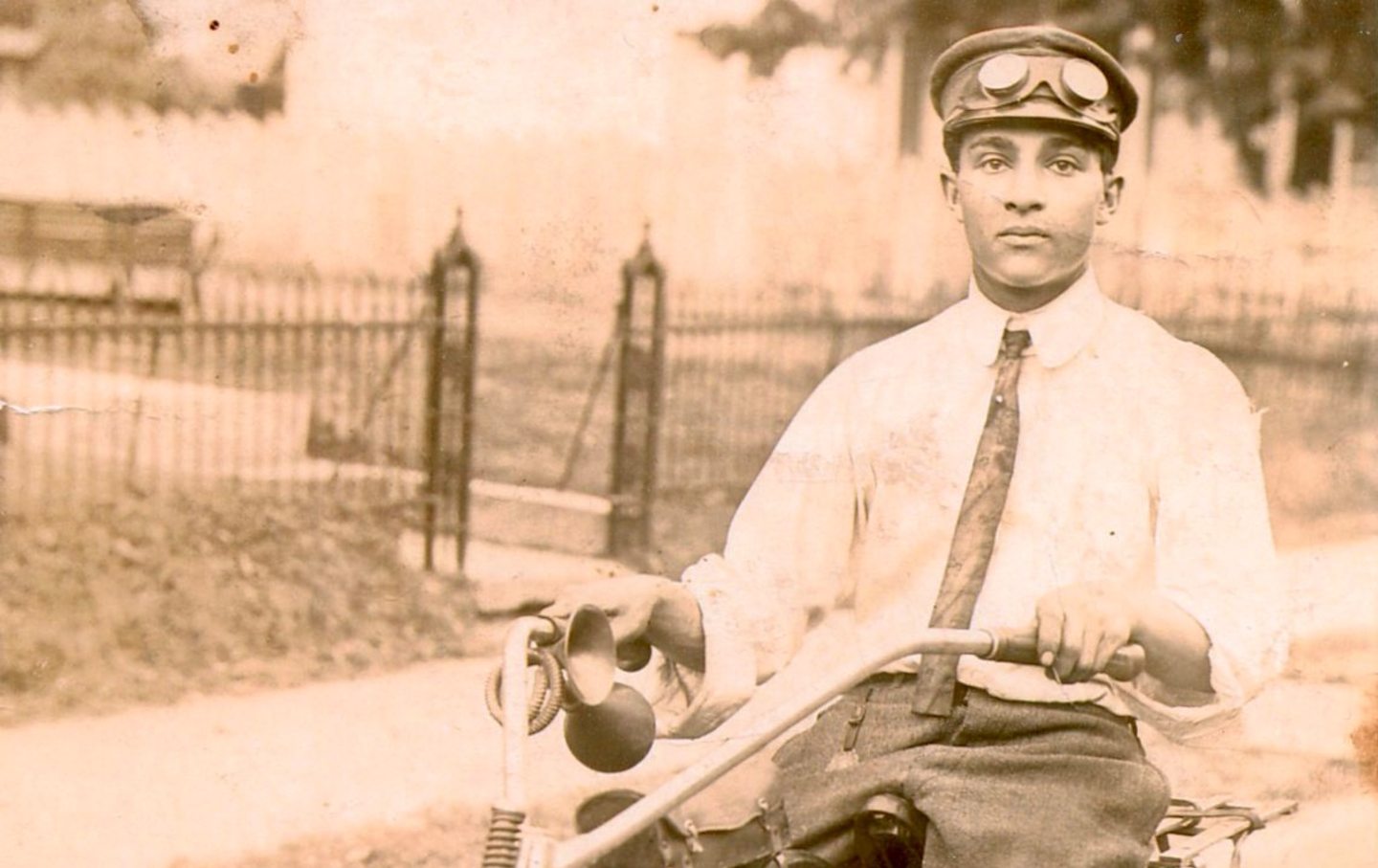
I cherish a photo of my grandfather as a young man in Little Rock, where he sits on a motorcycle and wears a tie. Three different people, seeing the photo, asked me if he was a black man. No: pure ashkenaze, born in a shtetl. Maybe the lighting makes the photo (like too much poetry?) Ambiguous? Sometimes I let myself think that there is something in facial expression: an assertion of yellowy identity, as intimidated? I do not know, and I do not know how significant this family story is, as an example of change or lasting thread in the fabric of American identity.
More than The nation

In a Washington County prison, lonely isolation is the worst, most degrading and coarse experience you can imagine.
Christopher Blackwell
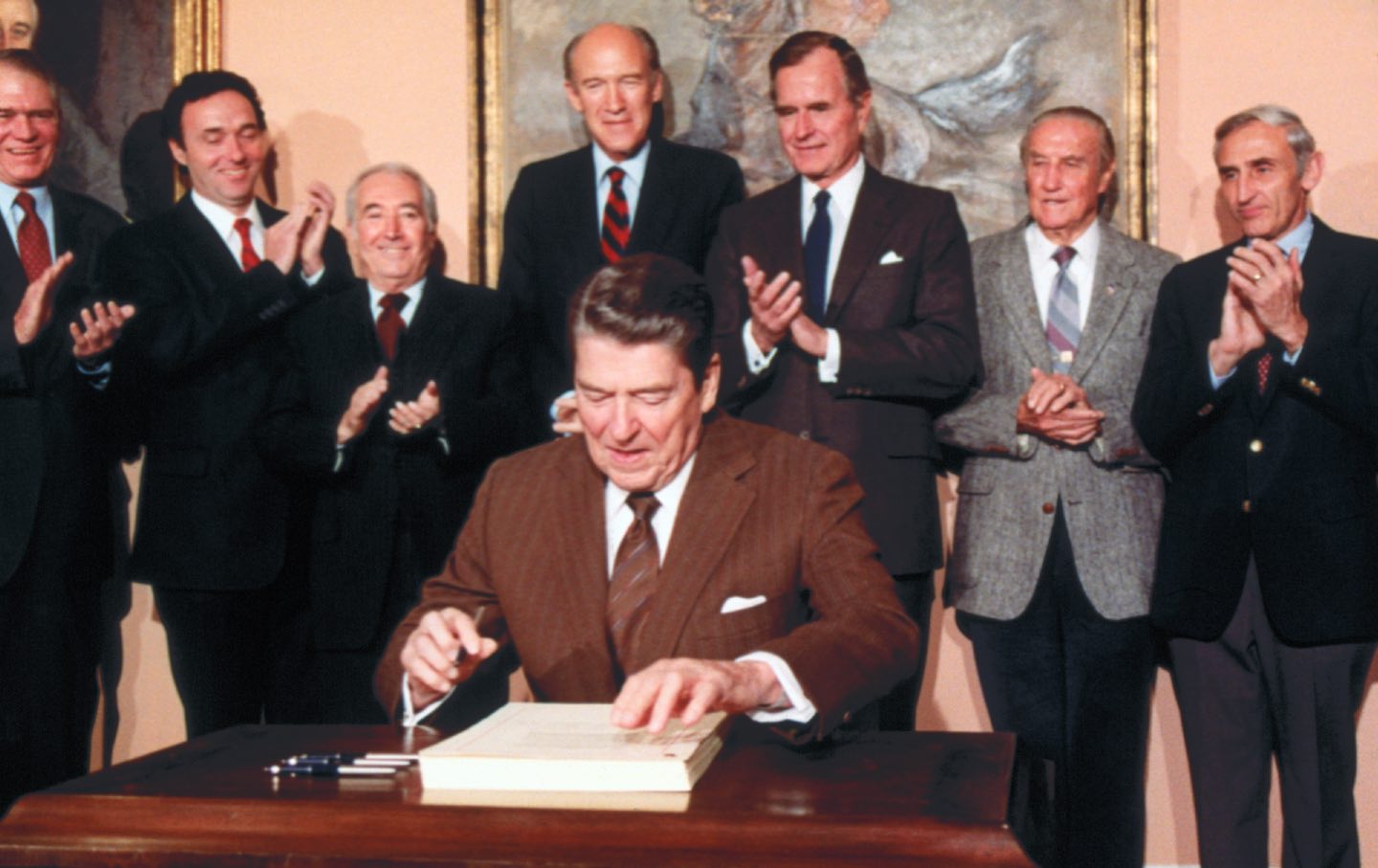
Rather than expeling millions of migrants, this republican president has opted for the opposite strategy: legalize them.
Brad Swanson
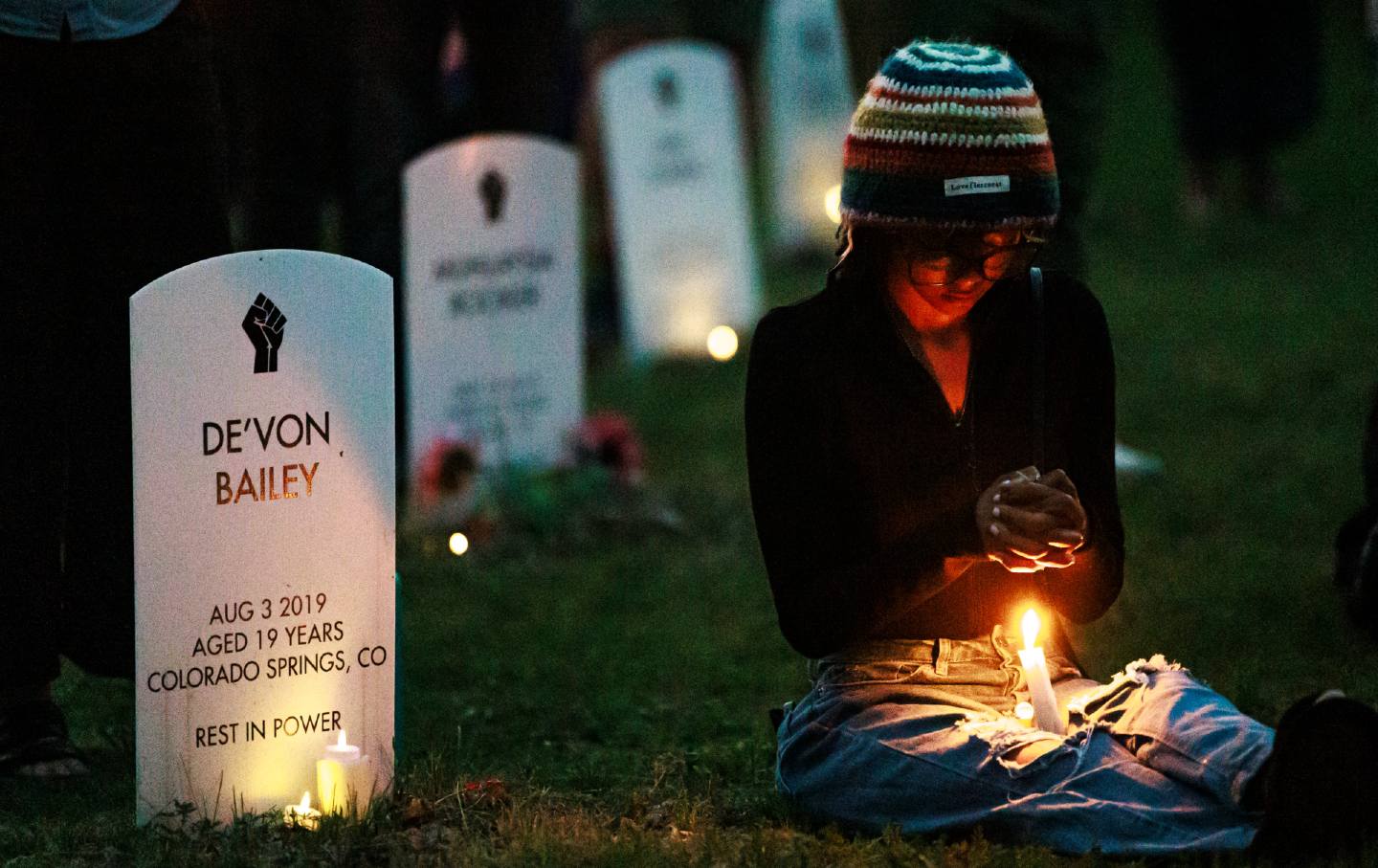
The administration knows that the submission of history as it does to keep people in color in this disunited country and disagree with each other.
Keenan Norris

During a recent trip to Tallinn, I visited the horrible manifestations of an unprecedented totalitarian regime. A similar system takes place in Trump America.
Sasha Abramsky

The university agreed with a payment of $ 221 million, tacitly conceding the theories of the right -wing plot on higher education.
Chris Lehmann

In the 1980s, the professional wrestler described himself as an American hero – but he was really a “jabroni” all the time.
Necrology
/ /
Dave Zirin


:max_bytes(150000):strip_icc()/Health-GettyImages-DietVsRegularSoda-f26e77537e8444e6885a933d16be97c5.jpg?w=390&resize=390,220&ssl=1 "Which Is Better for Your Blood Sugar and Liver?")
