The Surprising Truth About Image Quality


I am a passionate photography lover as well as an experienced smartphone user. The problem? My smartphone can never replace my real camera. Although smartphone cameras have become absolutely fantastic, there are still several reasons why I choose to transport my real camera when I go to photography.
The phone cameras have become really, really good
I am always impressed by telephone cameras. Even at the size of the ultra-small sensor that most telephone cameras have, the image quality is superb. I have an iPhone 15 pro, and I recently been able to capture a fantastic black sky image with the Milky Way, all without even using a tripod. The image below is slightly post-greedy thanks to the possibility of capturing it in Apple Proraw format.

Even if you just look at telephone cameras from a few years ago, modern smartphones are more like digital SLRs, especially with appropriate lighting. With several objectives, high -resolution sensors and even raw capabilities, smartphones can absolutely take photos that compete with professional cameras.
No matter how much the advanced smartphone cameras get, “real” cameras will always have advantages
The problem with smartphone cameras comes down to the simple laws of physics. Smaller sensors have smaller pixels, which means that low light performance can simply not correspond to those of full -size cameras. There is also the fact that the depth of field is strongly influenced by the size of the sensor. The iPhone 16 Pro has an AF / 1.78 opening, but the depth of field on the objective of the iPhone is far from the same as what you will find on an APS-C or complete sensor.
The depth of field is something that can be “corrected” by program, but will never be fully corrected unless the sensors themselves develop on smartphones. The depth of field fueled by AI (like the portrait mode of the iPhone) has improved in recent years, but it still does not replace the appropriate depth of field. In the example below, I took the same image with my iPhone 15 Pro using portrait mode, and my Sony A7iii using a natural field depth.
You can see that the iPhone cut part of the clip of the flashlight because the AI could not say whether it was part of the subject or not. However, with the ordinary camera, everything is properly blurred in the background and separated from the subject because it is optically done.
Another area that is lacking in smartphones is access to “pro” parameters. While some telephones offer access -based access to things such as shutter speed, opening and ISO, a full -size camera allows you to modify these settings with dials and dedicated buttons.
On my Sony A7iii, I have a set of dials for the opening, one for the shutter speed and one for ISO every time I am in full manual mode. I can look at my viewfinder or on my camera and quickly change one of the camera settings with a simple dial tour. I don’t have to touch a screen, then slide a bar, or even try to press a specific parameter. I just turn a physical dial a few clicks.

The iPhone 16 started working on it with the camera button on the side, allowing you to change the camera settings (like the zoom) by sliding your finger and using the carriage engine. However, it is still not an excellent substitute for several dials.
The parameter zone, in general, is the place where the real cameras are shining. With a physical trigger, I can mid-click to lock the focus and the exhibition, then take the photo when I am ready to do it.
On a phone, you can press to concentrate and define exposure or tap to lock the focus and exposure. But it doesn’t always hold properly. I made it reset at random on me while trying to frame a blow. The exhibition does not always balance well. It’s just a headache when you try to use a camera for professional style photos this way.
I like to have more than three focal lengths to choose
The iPhone 16 Pro has three focal lengths: 24 mm, 13 mm and 120 mm. Any other focal distance available on the phone is digital zoom or harvest. There are only three physical lenses on the camera, and you cannot get around this. The 2x zoom, or the 48 mm focal length, available on the iPhone 16 Pro simply takes the 24 mm 48MP sensor and shorten it at 24MP.
The cropping is not zooming, and it will never be. Yes, you can always get an effective 24MP or 12MP image instead of 48MP, but this does not make it an appropriate zoom. You will get the same result by taking the photo at 24 mm with the 48MP sensor and cropping afterwards.

Using a real camera, you have a wide range of lens options to choose from. Even for fixed lens cameras, the zoom range always goes between large and tightest fashion options using the same sensor and the same optics – not digital zoom.
With my Sony A7iii, I have two objectives: a 17-24 mm and a 24-75 mm. I have a full range of zooms that I can cross without entering the digital zoom. If I want to enter the digital field, I have even more range with which I can play. But the important thing to remember is that I can zoom in at 35 mm, 50 mm or even 71.5 mm if I want, everything without losing quality. It is simply not possible on a phone.
If these two objectives are not enough for me, I can rent or buy another lens for my camera. There are 10 mm ultra-large angle lenses and 600 mm super-telephoto lenses that can completely change the way my camera takes photos. Although there are spare lenses for phones, you essentially add an objective in front of an objective, which does not give the same quality result as the entire modification of the objective. Perhaps a phone manufacturer will make a device with swapple lenses in the future. We can dream.
With a real camera, I don’t have to worry if I receive a digital zoom or an appropriate zoom
From the iPhone 13 Pro, Apple has had a fairly big problem in the hands: AI determines if you get a real zoom or a digital zoom. On my iPhone 15 pro, if I go to 3x zoom, I will sometimes get the real 3x lens, and sometimes I will get a referred photo of the main 48 Mp sensor.
It is not at all acceptable, in my opinion. If I tell my phone that I want a 3X photo, then I should get the 3X lens – no other solution is good enough. There was never a time when I clicked 3x on my iPhone 15 pro and I wanted a cropped image of the main sensor. If I wanted to, I had just taken the photo 1x and zoom.
I understand where Apple comes from. The telephoto lens sensor on my phone is 12 Mp, and they are accompanied by a 48 MP sensor, so it is “more” than 12MP technically. However, the digital zoom never holds a candle for an optical zoom, this is what the 3X objective should to use.
With a good camera, I never have to worry about whether I’m in digital zoom or optical zoom. Some cameras offer an optional digital zoom when you reach the end of the focal length of the lens, but it is very obvious when you are in digital zoom instead of physical zoom. You can even completely avoid digital zoom if you wish.
The iPhone does not give you such a choice. Apple makes the sensor decision to be used in the background, and its decision is final. The only way to get around this is to use third -party cameras applications, such as the Pro Camera App (one of my personal favorites).
I just used my iPhone for fast photos these days. The fact that I have so little control over the sensor he uses at any time is frustrating enough for me to take my large camera on my phone any day of the week.
It is not a scourge of each phone, but it always underlines a deeper problem with smartphone photography: you do not have total control over the image as you do with a good camera.
I just have more control over my photographic style with a real camera
At the end of the day, I just have more control over the appearance of an image when using a real camera. I love my iPhone, but it does not hold a candle for the quality that an appropriate camera comes out.

I can have a real depth of shallow field if I want, instead of false vagueness generated by AI. I can get a good lens compression instead of a false zoom. I can add filters to the lens if I want to take long exhibitions during the day, or even change the shape of the lights in the background bokeh.
With a real camera, I control the artistic style of the photo. There are ways to do it on a phone, of course, but that will never compare itself to a full -size camera. This is why I probably never gave my real camera in favor of a smartphone to take photos that really take my heart.
I mentioned the astrophotography photos that I took with my iPhone from the start of this article. They came out well, but my Sony A7iii photos have just been released so much better. It is difficult to compare the photos, even if they were taken in the same place at the same time.
The creativity I have of a real camera is so much wider than what I receive from a smartphone.
However, I will never completely be fully camera the camera of my smartphone. I took a lot of good shots with my iPhone 15 pro that I would not have obtained otherwise. My Sony A7iii is an excellent camera, but it is bulky and heavy, which does something that I don’t always have on me. My iPhone, however, is still on me.
The best camera is the one you have with you. If I take pictures that I really want, then I want this camera to be my Sony A7iii. If I just need to capture the moment, my iPhone is more than capable.
- Brand
-
Sony
- Sensor size
-
Frame
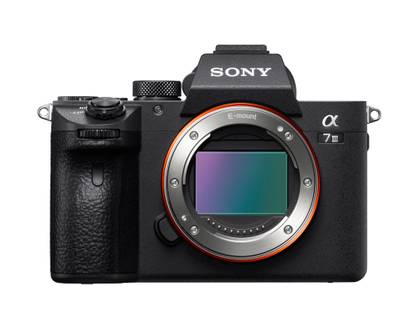
The Sony A7 III DSLR without mirror camera has a complete 24.2 MP sensor capable of capturing uncompressed raw images 14 bit or record 4K30 8 bits 4: 2: 0, as well as a 1080p120 video. Launched in 2018, the Sony A7 III quickly became one of the best -selling Sony cameras of all time and still holds its place as one of the best cameras, even several years later.
At the end of the day, smartphones take fantastic photos; There is no doubt about it. They just can’t follow full -size cameras in more tiny photography areas. I love my iPhone, but I will not define my real camera anytime soon.