The 4,000-year-old mystery of a shepherd’s arrow to the back


Grisly, medical-legal evidence aged 4,000 years found in a cave of the Pyrenees mountains indicate a serious disagreement between members of the first shepherds of the region. According to archaeologists from the Catalan Institute of Human Paleocology and Social Evolution (CARCA) and the University of Spain Autònoma in Barcelona, a flint arrow tip integrated into a bone of the human coast on the prehistoric tomb indicates a case of unfair play. But despite the serious injury, additional signs reveal that the injury was not necessarily fatal – at least not immediately.
Archaeologists discovered the coast and its arrow tip which accompanies it to the archaeological site of the Roc de Les Oretes. Located 79 miles north of Barcelona at an altitude of more than 5,900 feet, Roc de Les Oretes was discovered for the first time in the late 1960s. The researchers have spent the last six years painting through the remarkable treasure of old skeletal remains in the Catalan mountains. So far, the project has given more than 6,000 bone fragments of more than 60 people, mainly adult men. However, the serious site was not used by only one or two generations. Instead, local breeders buried their deceased in the cave for two or three centuries.
An anterior bone analysis has shown that the Pyrenan community was well suited to their environment, with strong skeletal structures, notable muscle insertions and evidence of intense physical activity. Experts believe that these signs all indicate a culture linked to grazing and cultivation of high altitude resources.
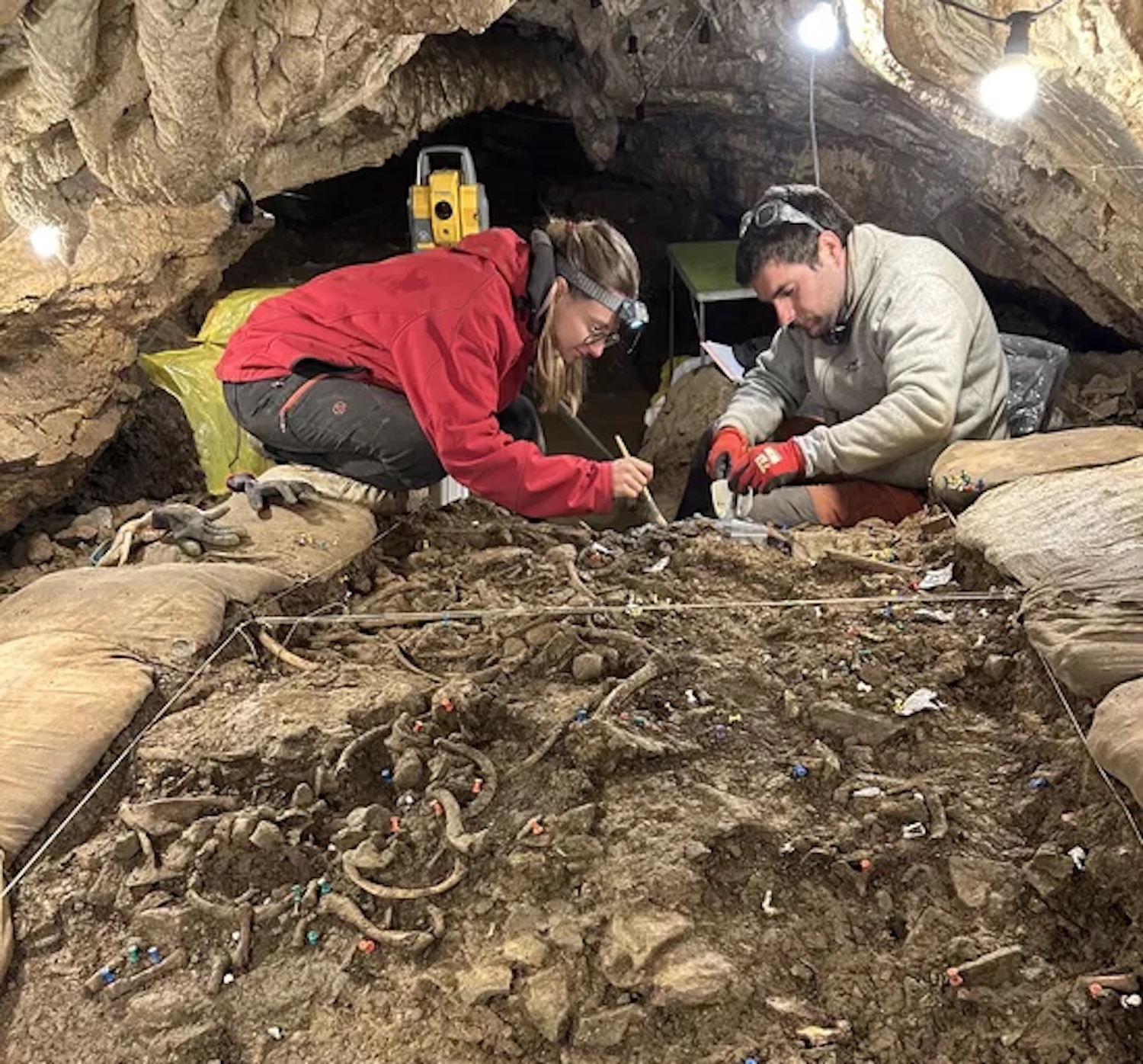
But as the CARCA explained, additional bone examinations have also highlighted significant trauma, in particular the brands cut of axes and daggers and intentional fractures. The neighboring arrow tips also suggest evidence of altercations, but it is always possible that members of the community simply buried the articles with the deceased during the funeral rites.
Their most recent find entirely, but more optimistic funeral theory. According to the team, the excavators have located a flint arrow point identical to the others of Roc de Les Oretes, this time, integrated into a fragment of ribs. Although the entrance angle shows that the victim was killed at the rear, he seems to have survived the assault – at least a little.
“Given the position and trajectory of the arrow, he could have killed the person at two times: either at the time of the impact, due to bleeding or pulmonary damage (for example, a pneumothorax), or shortly after, due to an infection,” said the director of excavations Carlos Tornero in a press release.
Tornero added that if the shot was clean and the victim managed to fight the infections that followed, they may have survived the meeting entirely. Since the bone regenerated around the arrow tip, this last result seems even more plausible. Tornero and his colleagues plan to conduct more analyzes of their discovery to potentially confirm the cause of the death of the individual, as well as to learn more about the attack itself.
“Now we can study the strength of the impact, the type of weapon used and the position of the attacker and the victim,” added the collaborator Miguel ángel Moreno.
Combined with current excavations and laboratory work, archaeologists like Tornero and Moreno hope to contextualize the way in which the communities of southern Europe of the third advantageous millennium lived with each other. And as their new discovery shows graphically, how they sometimes fought.

More offers, reviews and purchasing guides