Bees have thousands of eyes


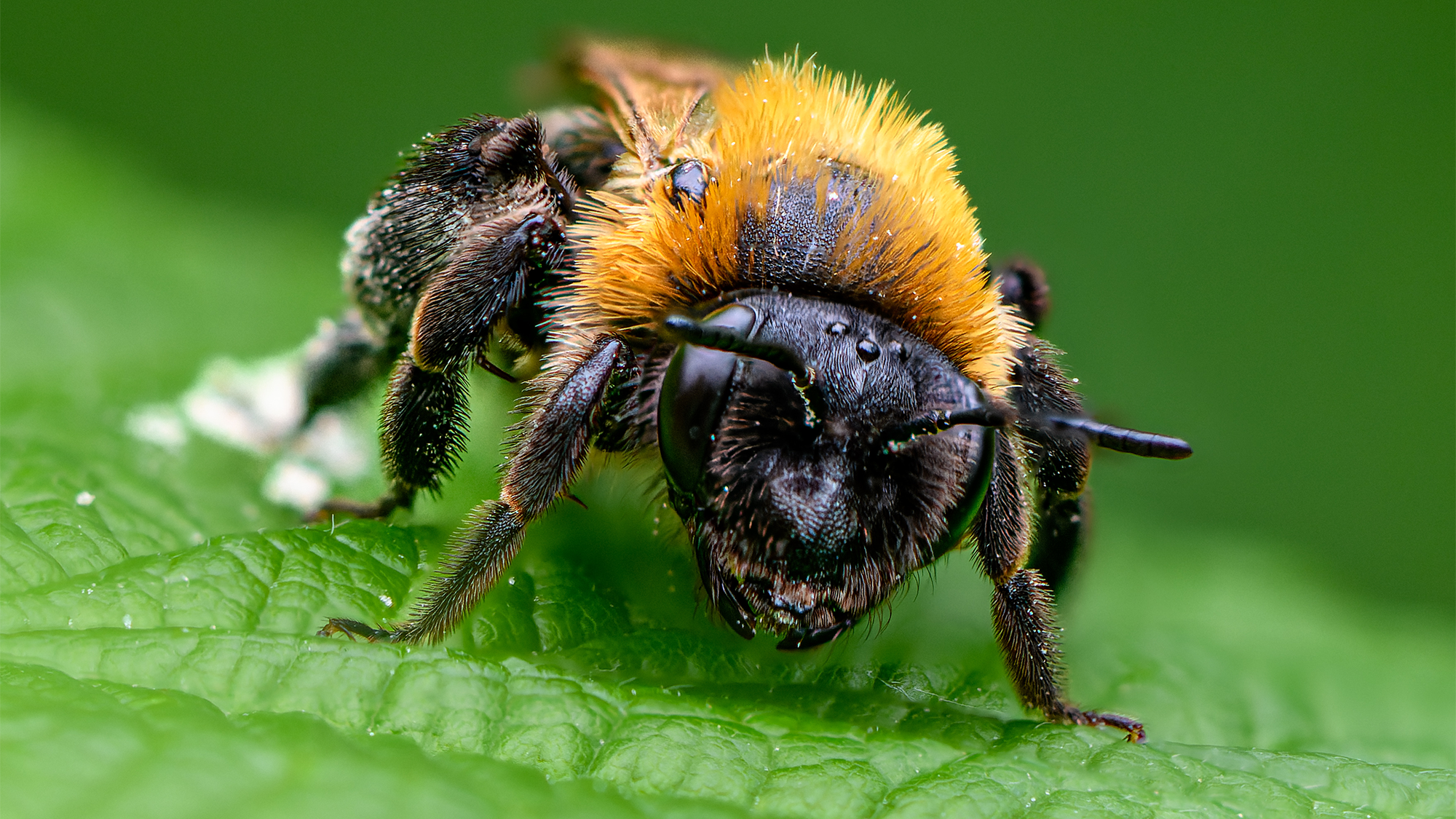
It is not uncommon to wonder how animals see the world around them – a dog while he takes his head out the car window, or a horse sailing above a jump. But what about insects like bees, which can travel for kilometers from their hive? How do they know where they are going, can go home?
It turns out that bees have not only two eyes – they have thousands.
“The eyes of bees are very different from human eyes,” explains George Kolyfetis, a student graduated from the Biology Department of the University of Konstanz Popular science. “They consist of thousands of small simple eyes, called ommatidia, and are therefore called complex or compound eyes.”
In a study recently published in Biology lettersKolyfetis and his colleagues investigated the ommitidia in bees and bumblebees. The dorsal ommatidia of the bees are at the top of their eyes and always pointed out in the sky. They perceive the differences in the polarization of light in the sky that humans cannot see. Bees and other insects use these patterns in the sky to sail effectively, says Kolyfetis.
Interestingly, the light detection cells of the dorsal ommitidia are less sensitive than the other ommatidia, protecting the bees from the blinding sunlight of the sky, but also hiding its details. In other words, they specialize in the perception of large -scale polarization models.
[ Related: How do animals see the world? ]
The team noted that “some of these sky -oriented ommutia are connected in a way that each time is responded to a visual signal, its neighbors also receive this information,” explains Kolyfetis. “Our suggestion is that in” summary “of information on several ommitides, the bee can smooth the disturbances (for example due to the clouds) and obtain a more precise representation of the pattern of polarization of the light well.”
In other words, this connection gives bees a less detailed but more precise view of the polarized light of the sky.
Understanding the functioning of bee vision could be applied to drones and autonomous cars. In the future, human manufacturing bee eyes could even strengthen autonomous navigation systems. According to researchers, some scientists “actively try to imitate and optimize the properties of their visual systems to improve current technologies”.
In addition to highlighting – once again – the potential of technologies inspired by nature, Kolyfetis stresses that the study of the vision of insects highlights the vision of the world of the “most abundant and successful animal group that has ever experienced”.


