The Dark History of Space Medicine



Explore
IIf we ever send humans to Mars, a crew would have to spend several years traveling back and forth. This far-reaching ambition would require a deep understanding of how space affects the human body, something scientists don’t yet fully understand.
Researchers have been asking this question for more than 70 years, more than a decade before humans even reached space. This week in 1949, the world’s first department of space medicine was launched at the US Air Force School of Aviation Medicine in Texas.
The founder, Air Force Major General Harry Armstrong, had held a meeting the previous year at which he brought together scientists, doctors and military officers. This crowd heard about the grueling details of spaceflight, including the extreme speeds required to stay in orbit: more than 24,000 miles per hour, according to estimates at the time. The public found this information “exotic and often confusing,” according to Green Payton, a historian at the U.S. Air Force School of Aerospace Medicine.
ADVERTISEMENT
Nautilus members enjoy an ad-free experience. Log in or register now.
After discussing the many possible dangers of space travel — from cosmic radiation to potential meteor collisions — Armstrong decided the topic required “a solid foundation to ensure the safety of future astronauts,” according to an Air Force Medical Service article.
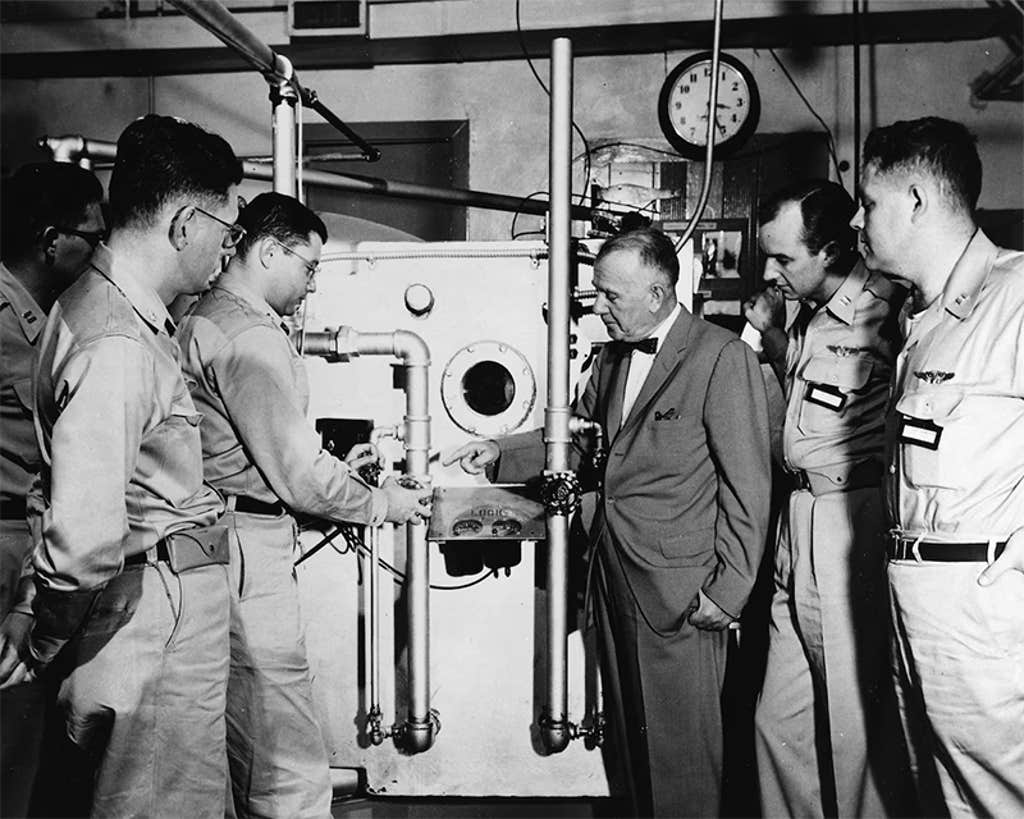
Armstrong enlisted doctors who had worked in the German Air Force, including Hubertus Strughold, known as the father of space medicine. Strughold, like several other German scientists involved in early research in space medicine, came to the United States through Operation Paperclip, a secret and controversial program that was instrumental in the development of the country’s space program.
ADVERTISEMENT
Nautilus members enjoy an ad-free experience. Log in or register now.
Although Strughold reportedly refused to join the Nazi Party, his work as a civilian was still funded and supervised by the German Air Force. In fact, he began his research into space medicine in Nazi Germany. “Under his supervision, researchers locked the prisoners of the Dachau concentration camp in low-pressure chambers. » THE New York Times reported in 2020. This experiment was conducted to reveal the impacts of high altitude flight.
With Strughold as its leader, the first-ever Department of Space Medicine became an influential center for research into the behavioral and physiological impacts of spaceflight. There, scientists created the first “Space Cabin Simulator,” in which study subjects experienced pressure equivalent to an altitude of 18,000 to 25,000 feet. In 1958, when aviator Donald F. Farrell stayed in the room for a week, he showed “a seemingly abrupt onset of frank hostility.” According to a report from the time, “the psychological problems posed by the exposure of man to an isolated and uncomfortable void seem more formidable than the physiological problems.”
Read more: “How does blood splatter in space? »
ADVERTISEMENT
Nautilus members enjoy an ad-free experience. Log in or register now.
Strughold also helped develop the pressure suits worn by America’s first astronauts, a crucial invention. Because space is a vacuum without any pressure from air molecules, the liquid in the human body would boil without them.
Since humans began launching into space in 1961, astronauts have revealed myriad insights about the mental and physical impacts of these trips. The last few years have brought particularly detailed results.
For example, a NASA study conducted between 2015 and 2016 examined how retired astronaut Scott Kelly fared during a year in low Earth orbit aboard the International Space Station. Scott’s results were compared to those of his identical twin and former astronaut Mark Kelly, who spent that year on our planet. This experiment revealed that Scott’s body mass had decreased by 7 percent, for example, and that he had undergone some changes in the expression of his genes. But more than 90 percent of these changes were reversed within six months of returning to Earth.
ADVERTISEMENT
Nautilus members enjoy an ad-free experience. Log in or register now.
Recent missions have also shown that spaceflight can affect people’s vision, heart function and immune systems, among other things. Ultimately, it appears that spending time in space accelerates aging, but most of these changes seem to reverse once they return to Earth.
There is still much to learn, and scientists continue to study how people respond during long stays aboard the International Space Station. And on the upcoming Artemis II mission, the crew plans to break the record for the longest human space trip, providing a unique chance to explore how humans will respond to increasingly distant cosmic conditions – a test that could inform future visits to Mars.
Enjoy Nautilus? Subscribe for free to our newsletter.
ADVERTISEMENT
Nautilus members enjoy an ad-free experience. Log in or register now.
Main image: Butusova Elena / Shutterstock


