The day my power strip almost killed my PC


Well, it finally happened.
I was in the middle of a complex edit when I heard a crackling sound. It was weak at first…then it got stronger. It didn’t take long before an unpleasant burning smell invaded my office.
The power strip under my desk was failing and, in a panic, I shut down my PC and unplugged all the outlets. My power strip didn’t have surge protection, so I knew my electronics were in immediate danger. Luckily, I was there when this happened and was able to intervene before my electronics failed.
But what happens if you’re not at home? How can you spot the warning signs of a faulty power strip before disaster strikes? Let’s go.
Warning signs
The most obvious signs are the ones I’ve encountered myself (a strange sound and an unpleasant smell). You should also take a close look at the power strip itself. If you notice damage to the tape, it’s usually bad news. Other signs include appliances randomly losing power or a light that refuses to turn on.
Anker
And whatever you do, don’t test a suspicious power strip on an electrical appliance that you can’t afford to lose. You could risk destroying said electrical device.
Further reading: 42 Incredible Tech Accessories for a Furnished Home Office
Power strips and surge protectors: the real difference
I think it’s important to give a little more context here and explain the difference between surge protectors and power strips since they seem the same.
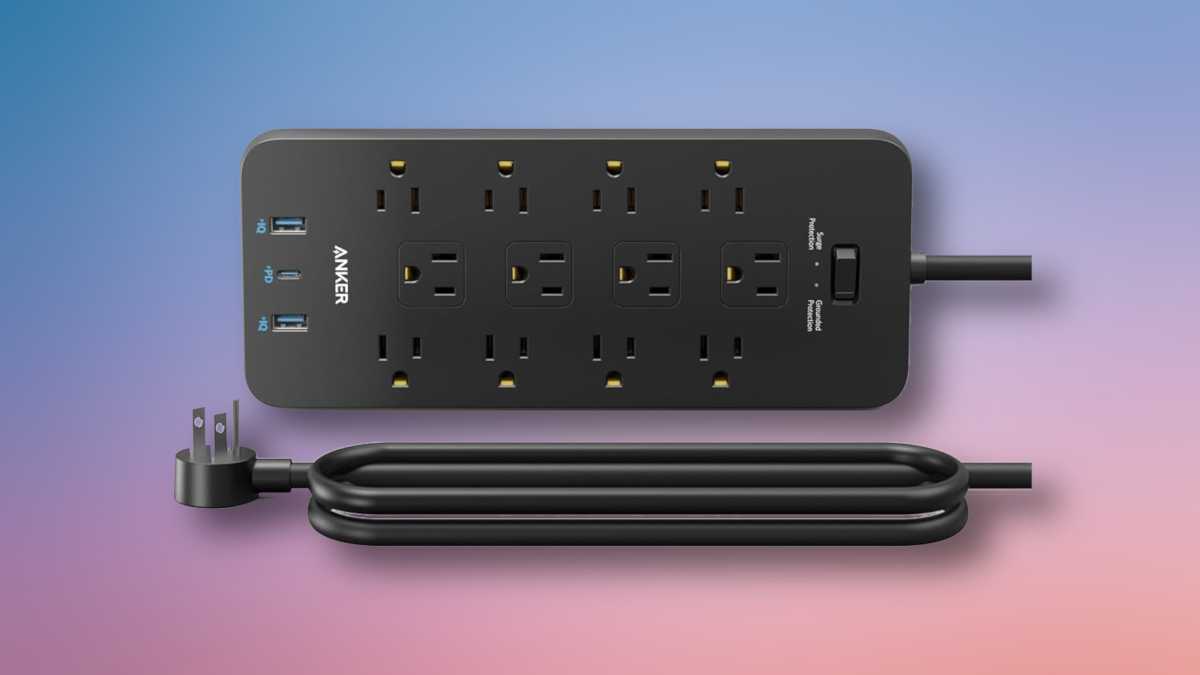
A basic power strip is really just an extension cord with many outlets. It’s absolutely convenient, but it doesn’t protect your stuff from an unexpected power surge. That’s fine for things like lamps and fans, but for computers and games consoles? Yes, you will need a surge protector.
A $10 surge protector is a tiny expense in the grand scheme of things. I’d rather pay $10 for peace of mind than replace my entire computer setup, which costs a lot more.
Surge protectors, on the other hand, look like power strips, at least on the outside! Inside, they contain special parts that absorb the extra strain in the event of a power surge. Basically, it protects your electronic devices by taking the hit for them. Power surges usually occur during thunderstorms or when something major trips in your home, such as an air conditioning unit.
Okay, so what should you do now?
If the power strip is hot or seems weird, just pull the plug…literally. Unplug your devices first, then unplug the power strip from the wall outlet it is connected to.
The next thing is to keep it away from anything flammable. I know this sounds dramatic, but it can escalate into a very dangerous situation, so it’s better to be overly cautious.

Anker
If you are unsure whether the problem is with your device or the power strip itself, try plugging your device into a new power strip. If it turns out that the power strip is the problem child, you’ll want to get rid of it safely.
You can drop it off at a local recycling center as long as it accepts electronics, or you can call your nearest Best Buy and see if they’ll take it off your hands. Some retailers accept small electronic devices for free.
When to reset a test strip (and when to throw it away)
If you have a power strip with surge protection, it should have a small circuit breaker button that pops out in case of a problem (usually an overload). If the button appears, unplug a few devices and reset it. If it comes out again, the tape is probably finished and you should probably replace it.
If the strip is hotter than it should be or produces a bad odor, skip the reset and simply replace the element.
Choosing a replacement without thinking too much about it
A power strip should have many outlets, period. That said, the number of points of sale is not everything. What really matters is whether it offers surge protection. The first thing to do is check the joule level. The higher the number, the more protection it offers.
Lesson learned
I was really lucky to be sitting at my desk when my power strip decided to jump ship. Most of the time, you may not notice the warnings.
A $10 surge protector is a tiny expense in the grand scheme of things. I’d rather pay $10 for peace of mind than replace my entire computer setup, which costs a lot more. Even advanced surge protectors with tons of outlets and ports can be found for around $20. It’s money well spent.