The FBI seizure of Georgia ballots relies on debunked claims : NPR

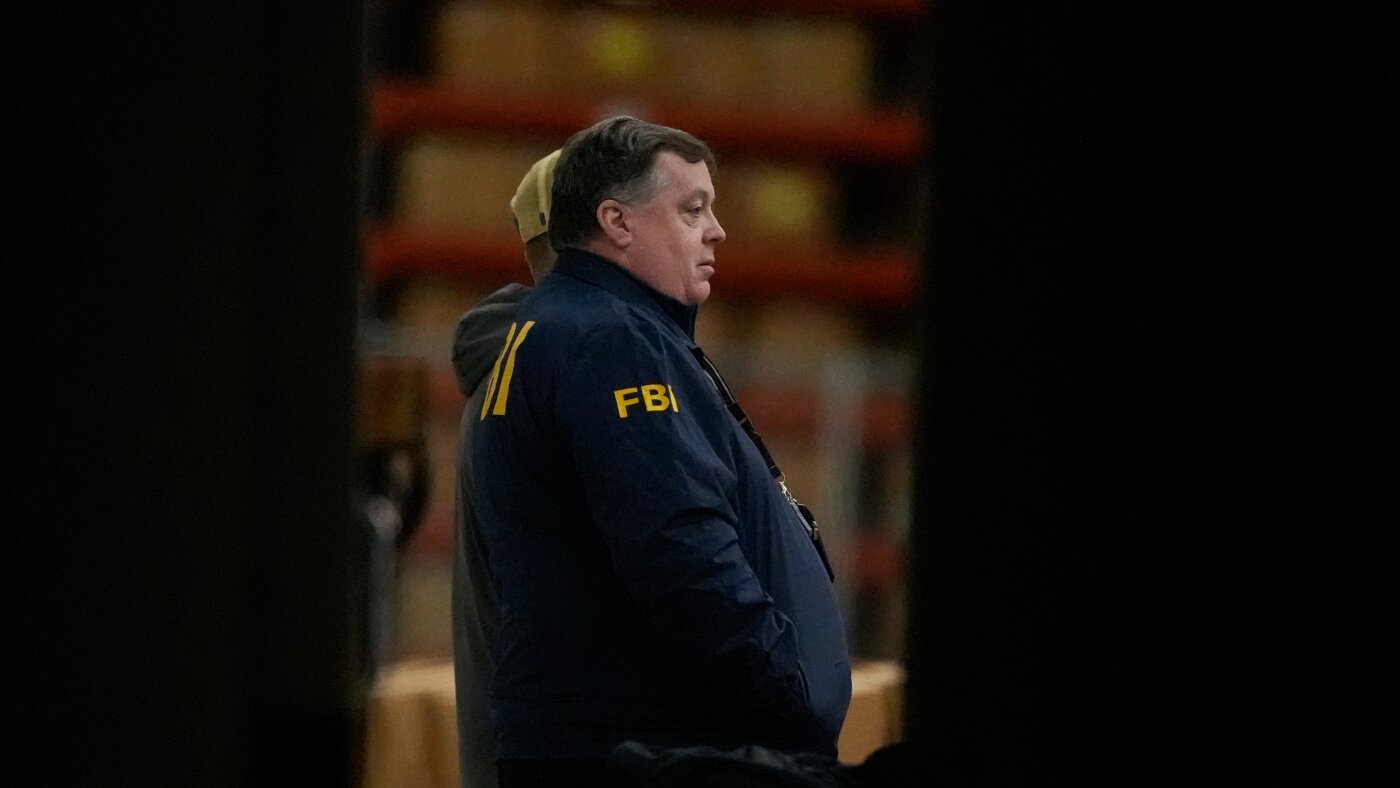

An FBI employee stands inside the election center in Fulton County near Atlanta as the FBI executes a search warrant for 2020 election materials on January 28.
Mike Stewart/AP
hide caption
toggle caption
Mike Stewart/AP
ATLANTA — An FBI investigation into the 2020 election in Georgia’s Fulton County was opened by an attorney working for the Trump administration who also helped President Trump try to overturn that election years ago, according to an affidavit unsealed Tuesday.
The affidavit, written by FBI Special Agent Hugh Raymond Evans, led a judge to approve a search warrant in the Fulton County election center, just outside Atlanta. The FBI executed that search warrant on Jan. 28, seizing more than 650 boxes containing ballots and other 2020 election materials.
The affidavit relies on misleading and previously debunked claims about the 2020 election. Fulton County’s 2020 ballots were counted three times and the results were upheld.
“This warrant request is part of an FBI criminal investigation to determine whether any of the irregularities were intentional acts violating federal criminal laws,” the affidavit states. “The FBI’s criminal investigation originated in a referral from Kurt Olsen, the President’s appointed Director of Election Security and Integrity.”

Olsen played a critical role in Trump’s unsuccessful effort to overturn his narrow 2020 election defeat by challenging the results in Georgia and other swing states.
The White House did not respond to NPR’s questions Tuesday about Olsen’s role in the administration.
The FBI investigation, according to the affidavit, focuses on five “gaps or defects” in the election and subsequent counting.
But those claims include allegations that were investigated and unsubstantiated by state officials, including allegations about missing scanned images of ballots, although state law at the time did not require counties to keep them as records.
Republican Brad Raffensperger, the Georgia secretary of state who resisted Trump’s efforts to overturn his 2020 election defeat in the state, criticized the investigation. Raffensperger is now running for governor.
“As secretary of state, I made Georgia the safest and most secure place to vote,” he said in a statement. “Instead of wasting time and taxpayer dollars trying to change the past with baseless, repackaged claims, let’s focus our efforts on building a safer, more affordable future for all hard-working Georgians.”
In a statement, David Becker, a former Justice Department official and now executive director of the Center for Election Information & Research, called the affidavit “much weaker than I thought.”
“After more than five years, dozens of lawsuits and more than a year under complete control of the federal government, this is all they have?” he said. “If taken at face value, this entire affidavit alleges at most human error after a late night during a global pandemic, which had no impact on the outcome of the race.”
The affidavit also mentions no evidence or suspicion of foreign interference in the election, raising further questions about Director of National Intelligence Tulsi Gabbard’s presence at the raid site.
In a letter to Democratic lawmakers last week after the search, Gabbard defended her role in the election security investigation. She also confirmed that she “facilitated a brief phone call for the President to thank the [Atlanta-area FBI] agents personally for their work.” The call was first reported by The New York Times. Gabbard said Trump “asked no questions, and he or I issued no directives.”
Trump and his allies continued to focus on the 2020 election and falsely claim he was victorious, while taking extraordinary steps to exert federal control over future votes, including suing states to try to obtain unredacted voter rolls and suggesting Republicans “nationalize” the election.


