Humanity is on path toward ‘climate chaos,’ scientists warn


Credit: Pixabay/CC0 Public domain
Industries and people around the world burned record amounts of oil, gas and coal last year, releasing more greenhouse gases than ever before, a group of leading scientists said in a new report, warning that humanity is heading toward “climate chaos.”
The increase in global use of fossil fuels in 2024 has contributed to extreme weather and devastating disasters, including heat waves, storms, floods and wildfires.
“The planet’s vital signs are flashing red,” the scientists write in their annual report on the state of the climate. “The window to avoid the worst consequences is closing quickly.”
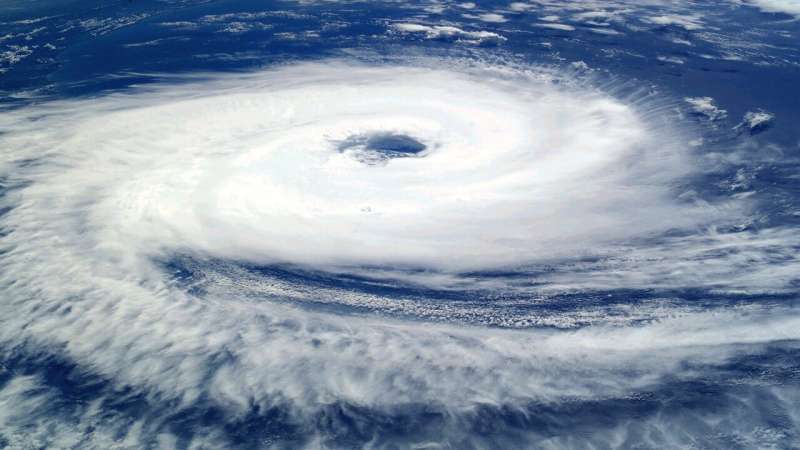
Some of Earth’s most alarming “vital signs,” researchers say, include record heat in the oceans that is ravaging coral reefs, rapidly shrinking ice sheets and increasing losses of forests burned by fires around the world. They said the extreme intensity of Hurricane Melissa this week is another sign of how climate change threatens lives and communities on an unprecedented scale.
“The climate crisis has reached a really dangerous point,” said William Ripple, co-lead author of the report and a professor at Oregon State University. “It is vital that we limit future warming as quickly as possible.”
There is still time to limit the damage, Ripple said. This means switching to cleanly produced electricity, clean transportation, fewer beef and dairy cows, and other sources of harmful gases. These transitions are happening in some places, but not quickly enough.
For example, fossil fuel consumption actually declined in China in the first half of this year, a remarkable change for a country that remains the world’s largest climate polluter. Renewable energies are developing there at a breakneck pace, eclipsing installations in the rest of the world. And in California, clean energy provided two-thirds of electricity in 2023.
Still, total fossil fuel consumption increased by 1.5% in 2024, the researchers said, citing Energy Institute data. Energy-related emissions of carbon dioxide and other gases linked to global heating have also reached a record high – exactly the opposite of what needs to happen to combat climate change.
The report notes that higher temperatures are contributing to increased electricity demand.
“It is extremely important to avoid every fraction of a degree of warming,” the scientists write. “We are entering a period where only bold and coordinated action can avoid catastrophic consequences.”

Credit: Unsplash/CC0 Public domain
The report, published in the journal Biosciencesis the sixth annual assessment that Ripple and his colleagues have compiled since they wrote a 2020 paper declaring a climate emergency — a declaration that more than 15,800 scientists signed in support of.
Scientists said the current pace of warming significantly increases the risks of crossing dangerous climate tipping points, including vicious cycles such as collapsing ice sheets, thawing of carbon-rich permafrost and widespread dieback of forests.
Ripple and his colleagues emphasized that adopting solutions now to reduce emissions can quickly bring benefits and that these solutions will be much less costly than dealing with the consequences of uncontrolled climate change.
Efforts by President Donald Trump and his administration to boost oil, gas and coal production seriously threaten to slow the transition to clean energy, said Michael Mann, a climate scientist and professor at the University of Pennsylvania.
He and co-author Peter Hotez argue in the recent book “Science Under Siege” that other nations must take greater leadership now that the United States and other oil-promoting governments work to block action on climate change.
Other scientists who helped write the report said the Trump administration is turning a blind eye to threats like rising sea levels, worsening droughts and wildfires, and diminishing agricultural production.
“It’s a scandal that the United States is abandoning any effort to address environmental challenges,” said Peter Gleick, co-founder and senior fellow at the Pacific Institute, an Oakland think tank. “The rest of the world should ignore U.S. efforts to delay progress on these issues…and I hope other countries continue to step up their efforts.”
The upcoming United Nations climate conference in Brazil in November could be a turning point if countries commit to bold, transformative changes, Ripple said.
Solutions must not only involve phasing out fossil fuels, scientists say, but also take into account that people are using resources faster than nature can replenish them. The researchers, they note, have estimated that two-thirds of the warming since 1990 is attributable to the richest 10 percent of the world’s population due to “high-consumption lifestyles, high per capita use of fossil fuels, and investment.”
Scientists have called for changes, including “reducing overconsumption” among the wealthy, protecting and restoring ecosystems, and abandoning meat-heavy diets in favor of more plant-based foods.
“It’s not just about reducing emissions. Addressing climate change requires more,” Ripple said. “This calls for a profound systemic shift in the way societies value nature, design their economies, consume resources and define progress.”
More information:
William J Ripple et al, The state of the 2025 climate report: a planet on the brink, Biosciences (2025). DOI: 10.1093/biosci/biaf149
2025 Los Angeles Times. Distributed by Tribune Content Agency, LLC.
Quote: Humanity on path to ‘climate chaos,’ scientists warn (November 1, 2025) retrieved November 2, 2025 from https://phys.org/news/2025-10-humanity-path-climate-chaos-scientists.html
This document is subject to copyright. Except for fair use for private study or research purposes, no part may be reproduced without written permission. The content is provided for informational purposes only.

:max_bytes(150000):strip_icc()/Health-GettyImages-2154006182-a868e8561ce54cbbb6ba6a5106a651e3.jpg?w=390&resize=390,220&ssl=1 "5 Everyday Foods That Could Be Raising Your Blood Pressure")


