Northern Ireland children’s cancer unit staff shortages ‘left me broken’


Healthy correspondent, BBC News or

 Bbc
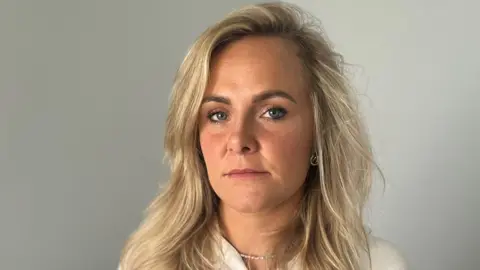
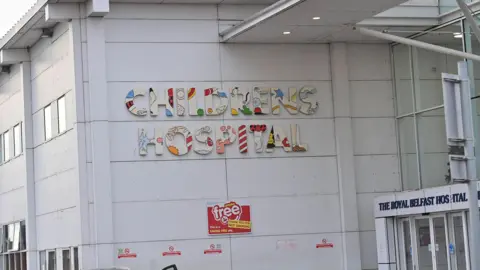
BbcA denunciator who resigned from the Royal Belfast Hospital for children sick for staff shortages said that the system had left it broken, disillusioned and exhausted.
Hannah Farrell, who left the children’s cancer unit in 2019, said that the lack of support and management of listening failure and other nurses have led him to resign.
Parents of sick children and former staff members contacted BBC News or after being revealed that more than half of the team of specialized nursing in the cancer is currently on leave, a problem which, according to Ms. Farrell, was not new.
In a press release, the Belfast Health Trust said there had been “important investments” in the development of unit services in the past decade.
He added that this included “an increase in all nursing groups and the development of specialized nursing roles”.
The trust said that she wanted to thank the “nurses who work hard” and the wider staff of the unit for their work “in particular during pressure, to ensure the safe and timely care of our patients and the support they provide to families”.
Farrell said that for years maternity leave, long -term illnesses and unit career breaks were not padded, which means that the rooms were insufficiently in staff.
She said it increased pressure on colleagues and had the potential to have an impact on patients, but the problems were not resolved.
“When a room gets into crisis as it did a few weeks ago, the trust takes nurses from other neighborhoods, which just puts a band of aid,” she said.
“This is a quick solution, everything we have done is impacting the other negative districts and we have not resolved the problem.”
 Pacemaker
During her five years as a unit, dealing with some of the most sick children in Northern Ireland, Ms. Farrell has often had to face the pain of the death of a patient – however, he was not offered by advice and had to pay himself.
Belfast Health Trust said he had specialized occupational health that offers “individualized support for staff” and that staff can also “benefit from a certain number of services providing physical and psychological support”.
“We encourage staff to raise concerns within their teams and with line managers,” he added.
Ms. Farrell, who still works as a nurse in the health service, said that she was speaking in the hope that this will help the nurses who feel that their voice is “silenced” by management.
“The system took my fight, my joy, my empathy and my compassion – I had nothing left to give.
“I feared every quarter of work because I did not know what I was going to, in terms of staff or what would be the mixture of skills.
“Obviously, nothing has changed since I gave my resignation five years ago, so the nurses have no choice but to go sick.”
The nurses took place – the parents
The children’s cancer unit is the regional center where children from Northern Ireland are treated for cancer or a diagnosis of complex blood disorder.
Cancer specialized nurses are specially trained to administer treatments, including chemotherapy.
Seven out of 12 specialized nurses are currently not working, which means that a treatment was postponed earlier in August.
According to the trust, around five children have been affected and have since received their treatment.
However, the parents of patients treated in hematology and oncology services said BBC News in the past years or that they had seen nurses regularly under pressure due to endowment problems.
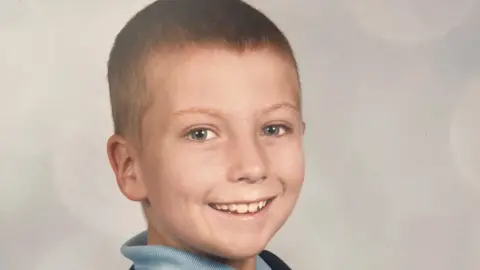
David’s son and Sara Watson, Adam, underwent treatment for acute myeloid leukemia in the children’s cancer unit between 2019 and 2022.
Adam, who died in 2022, was nine years old when he helped to set up the positive B chain bin to support families and specifically to provide advice to nurses in the room.
David Watson said that the clinical service is world class, but often the districts are in sub-employed and that nurses remain regularly after their quarter of work.
“This is not a new problem – the staff is disappointed by the Belfast Trust, by the Ministry of Health and, finally, by the Minister of Health.
“He is the boss at the end of the day.
“People need to sit down and study statistics-why are nurses sick and why do they leave?”
A declaration from the Ministry of Health said that the Minister fully recognizes the challenges of the endowment to which Belfast Trust and the wider system.
“He recognizes the efforts made by Belfast Trust to manage and resolve recent nursing staff problems in pediatric hematology and oncology, and notes the assurances given by the trust that the provision of services is closely monitored.”
 Watson family
Sara Watson said it was “no way to manage a hospital” and that any other company provided, especially around the coverage of maternity leave.
“Powers that do not seem to understand the skills necessary for this service to work.”
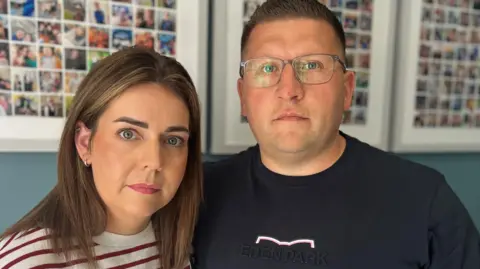
Caroline and Martin Smyth, whose son Theo was treated with the cancer unit in 2020, told BBC News or that they had also seen the first -hand how the staff shortages had affected hematology and oncology services.
“The nurses are common and they are dealing with some of the most sick children in Northern Ireland.
“The 10 -bed district was always full – but there was still no full quota of staff, especially on weekends.”
The Belfast Trust told BBC News or that there were currently “no vacancies in nursing care” in the children’s hematology unit.
He added that all nursing roles in hematology and oncology services had been examined “which allows the trust to use wider team staff in other neighborhood areas and banking staff to safely cover the service in the event of need and to protect most of the time critical time”.
 Smyth family
‘We expect you to pick yourself up’ ‘
Ms. Farrell, who remains in contact with the staff who still work there, said that the unit worked on the “fumes” of the good nature of the nurses.
She said that her last three quarter -nights in the neighborhood were “horrible” because too much responsibilities were placed on her shoulders.
“I supervised a full district of children seriously, some were dying and I was supported by a bank and a junior nurse – it just broke me.”
She said that children and families “deserved the highest level of care and the best” but that she did not feel that she “had the capacity or support” to deliver it.
Farrell said the NHS had promoted an attitude “ It is normal not to be ok ” in the face of mental health, but expected her nurses to give more than they can.
She said that she could still remember the names and faces of the 56 children who died at her, but who did not say at any time that she had offered advice.
“We expect you to collect yourself and enter the neighboring room – the impact is massive.”


