Report highlights UK meat smuggling crisis


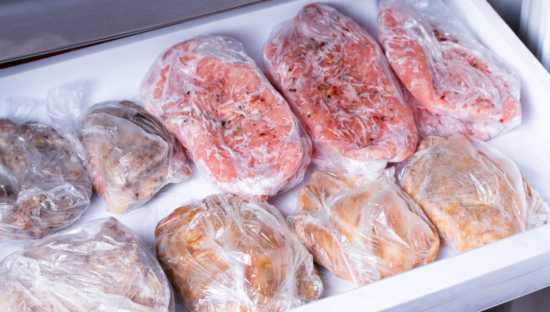
Great Britain is sleepwalker in its greatest food security crisis since the horse meat scandal, according to a report on smuggling meat.
The Environment, Food and Rural Affairs Committee said it was unacceptable that there is no data accessible to the public showing the scale and nature of illegal meat entering the country and its destination.
Irlegal imported meat has a serious health risk for consumers, because the conditions of slaughter, handling and storage are unknown and unregulated, which means that it is more likely to transport bacteria, viruses and parasites that cause disease.
Committee members warned this meat to find its way in the high streets, farms, markets, restaurants and kitchen tables. They said that the United Kingdom had avoided an epidemic of major diseases by luck rather than by design.
Reality on the ground
According to the report, imports of illegal meat has increased for several years under different governments. In 2024, 235 tonnes of animal products were blocked against 2,600 crises. The demand is made by a low price and culturally preferred products.
In March, the committee visited the port of Dover. They found inadequate conditions in the facilities of the border force with a limited capacity to decontaminate the inspection zones and no dedicated installation of hand washing. The members witnessed a van containing meat excavated by the officers of the Port Health Authority in Dover. The van was Moldavan and its Romanian driver, indicating that the meat had potentially traveled for more than 1,000 miles from Eastern Europe.
The investigation received 169 elements of written evidence and held four sessions.
The Ministry of the Environment, Food and Rural Affairs (DEFRA) affirms that intelligence checks are made at the border, but the committee has declared that reality in the field shows a limited and incomplete intelligence network, a tense capacity and port facilities unsuitable for the seizure of significantly contaminated meat volumes.
National working group
Alistair Carmichael, chairman of the EFRA committee, said: “Every day, vans loaded with unsuccessful, non-hygienic and non-refrigerated meat cross our ports for distribution and sale in Great Britain.
“It would not be an exaggeration to say that Britain Somnalie its greatest food security crisis since the scandal of horse meat. We call on this government to grasp what has become a crisis, by creating a national working group with appropriate leadership and a strategy, to stimulate need. “
The Committee said there was no identifiable or effective property of the issue and called for Defra to create an animal product strategy (POAO) of smuggling with the National Food Crime Unit, the Scottish Unity of Food and Incidents, the Port Health Authorities, Local Authorities and Border Force by January 2026.
DEFRA was invited to create a plan to start inflicting a fine and pursuing the repeat offenders to act as a means of deterrence.
The Charterred Institute of Environmental Health (CIEH) said that he was willing to join any working group to combat illegal imports.
Tony Baldock, member of the CIEH Advisory Panel on Port Health and president of the Association of Port Health Authorities (APHA), said: “Environmental health professionals are only placed to identify, investigate and help prevent these illicit activities thanks to their expertise in food security, border control and the application of regulations.
“We also need action now to help tackle the labor problems that continue to put significant challenges with the lack of professionals appropriately trained in the pipeline capable of carrying out this work at our borders, but also of providing food security inspections in our communities.”
(To register for a free subscription to Food Safety News,Click here))


