The Middle of the Milky Way Is Home to a Supermassive Black Hole – Here’s What we Know


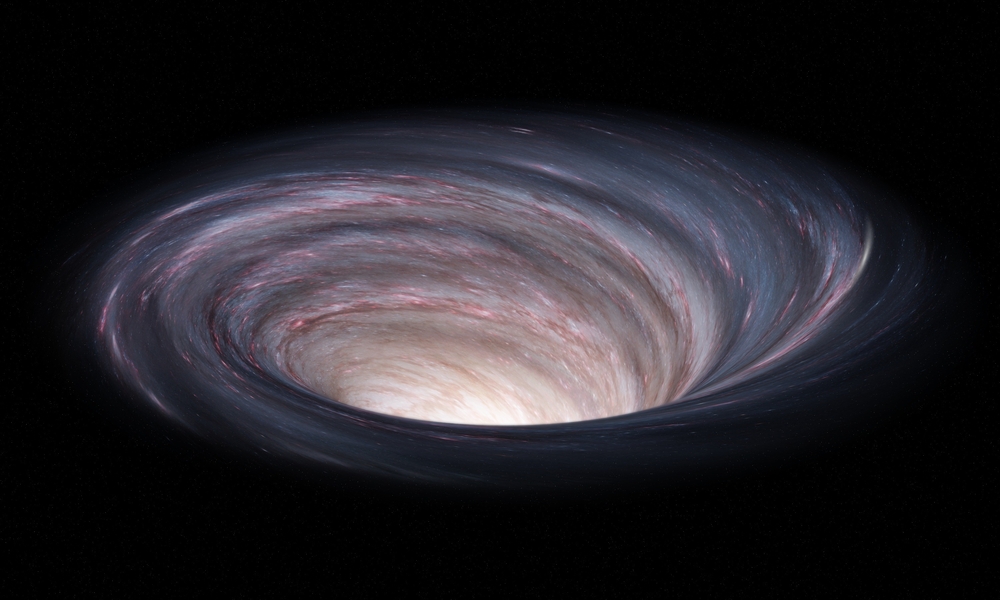
The main dishes to remember in the middle of the Milky Way
-
The black supermassive hole named Sagittarius has resides in the middle of the Milky Way.
-
The observations of S2 and other stars have also helped astronomers to calculate the extraordinary size and mass of Sagittarius A * and it weighs approximately 4.3 million solar masses.
-
Although the whole milky way – our solar system included – the Sagittarius orbits A *, we are not in danger of being sucked.
If you point a telescope in the right sector of the night sky, in the constellation of Sagittarius near the place where he borders the scorpion, you will look at the heart of the Milky Way. At 26,000 light years, it takes a lot of telescope to distinguish something distinct.
But there, slamming in the middle of our galaxy, is one of the most impressive objects of the universe: a supermassive black hole, or Smbh, named Sagittarius A * (pronounced “sagittarius a star”).
The Center of the Miller Way
Of course, there is an essential challenge for anyone who wants to probe his mysteries. “The problem of trying to understand the black supermassive holes is that we cannot see them,” explains Brian McNamara, astronomer from the University of Waterloo.
The gravitational attraction of sagittarius A * is too strong for light to escape and reach us – it is invisible by definition. What you can see is his accretion disc, a swirling ring of gas, dust and plasma that goes around the central vacuum.
In May 2022, the collaboration of the event telescope released The first image of sagittarius has *which strangely resembles a fuzzy eye of Sauron.
Find out more: Here is what would happen if you were going through a black hole
How we know there is a black hole
Nevertheless, the scientific community knew our SMBH sympathetic district long before they got this visual confirmation. Sagittarius was indirectly discovered in 1974, when astronomers Bruce Balick and Robert L. Brown detected an unusually very high radio signal from this area of space.
During the following two decades, scientists deduced its existence The behavior of neighboring stars – especially that called S2, which whips the Sagittarius has * at astonishing speeds.
How far is the Sagittarius A *?
To put things in perspective with an example of our own solar system: Jupiter is about 5 times further from the sun than the earth, and its orbit takes about 12 years of earth. S2, on the other hand, is 120 times further from Sagittarius has * than the earth of the sun. However, he completed his orbit in 16 years, only a little longer than Jupiter.
At his approach closest to Sagittarius A *, S2 takes place at almost 5,000 miles per second, almost 3% of the speed of light (the earth moves to a meager 18.5 miles per second). Long before the horizon telescope of the event provided evidence, almost everyone was convinced that S2 orbit – the fastest known – could be due to the enormous gravitational traction of a SMBH.
The size of the supermassive black holes
The observations of S2 and other stars have also helped astronomers to calculate the extraordinary size and mass of Sagittarius A *. Most black holes are formed when huge stars – several times the size of our sun – collapse. But even these giants are honored by the SMBH, which form when the black holes of the variety of garden slip into each other.
After many iterations, these mergers can lead to a giant like the Sagittarius A *, weighing roughly 4.3 million solar masses.
In terms of volume, the SMBH are still tiny compared to the galaxies they inhabit – “similar to an object the size of a grape […] Compared to an object the size of the earth, ”explains McNamara.
But they are incredibly massive, representing about a thousandth of the total mass of their galaxy. As such, these cosmic heavyweights exert a huge force on everything around them, their sphere of influence extending thousands of light years.
Find out more: This is what a black hole looks like
Could we be pulled in the black hole?
When the material falls into orbit around a SMBH, friction increases its temperature to billions of degrees. The energy generated in this process sometimes launches overheated jets of plasma outwards in the galaxy, where they circulate, preventing the clouds of hydrogen and helium from cooling enough to collapse in stars.
In this way, a SMBH is like the dark suzerain in the center of its domain. Although the whole milky way – our solar system included – the Sagittarius orbits A *, we are not in danger of being sucked.
Despite the immense power of a supermassive black hole, objects can maintain a stable orbit around it, just as the earth does around the sun. That said, the black holes have the reputation of the encompassing matter which is too close, and the Sagittarius has been no exception.
For years, scientists have called it “sleeping”, but A Nature Document published in 2023 have shown that it is, on occasion, to wake up to swallow a cloud of unhappy gas and dust. “Imagine a bear in hibernation after devouring everything,” said the main author Frederic Marin at the time.
An active sagittarius has *
When enough material enters the accretion disc of a SMBH, it becomes, rather paradoxically, one of the most dazzling sites in the universe – a quasar.
In contempt for the severity of the black hole, these hyperactive objects emit flamboyant plasma jets which can surpass whole galaxies.
Currently, the Sagittarius A * is darker than a Quasar by many orders of magnitude. But the sailor’s team found that only 200 years ago – not at all at an astronomical scale – it was shiny enough to compete with some of the brightest galaxies. Who knows when will his current sleep end?
Find out more: The oldest black hole could wreak havoc on a distant galaxy
Article Sources
Our writers at Discovermagazine.com Use studies evaluated by high -quality peers and sources for our articles, and our publishers examine scientific precision and editorial standards. Review the sources used below for this article:
Cody Cottier is a writer contributing to Discover who likes to explore great questions about the universe and our native planet, the nature of consciousness, the ethical implications of science and more. He holds a baccalaureate in journalism and media production of the Washington State University.


