The neurons that let us see what isn’t there


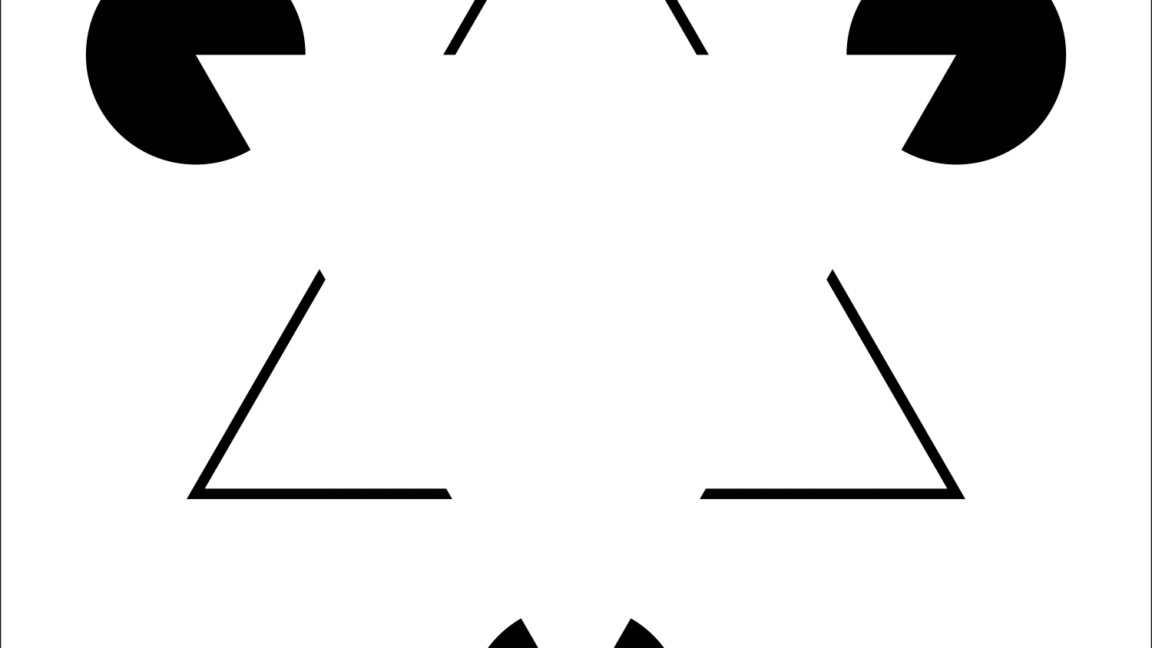
Previous work had hinted at such cells, but Shin and his colleagues systematically show that they are not rare bidomouttes – they are a well -defined and functionally important sub -population. “What we did not know is that these neurons stimulate the completion of the local model in the primary visual cortex,” explains Shin. “We have shown that these cells are causally involved in this model completion process that we probably suppose in the perceptual process of illusory contours,” adds Adesnik.
Upcoming behavioral tests
This does not mean that mice “saw” the illusory contours when the neurons were artificially activated. “We haven’t really measured behavior in this study,” says Adesnik. “It was the neuronal representation.” All we can say at this stage is that IC encoders could induce models of neuronal activity that corresponded to what imagery shows during the normal perception of illusory contours.
“It is possible that the mice did not see them,” admits Shin, “because the technique has involved a relatively low number of neurons, for technical limitations. But in the future, we could extend the number of neurons and also introduce behavioral tests. ”
This is the next border, Adesnik says: “What we would do is stimulate the photo-stimulating these neurons and see if we can generate a behavioral response of an animal even without any stimulus on the screen.” Currently, optogenetics can only lead a small number of neurons and IC encoders are relatively rare and dispersed. “For the moment, we have stimulated only a small number of these detectors, mainly due to technical limitations. [of the visual system]But we could imagine an experience where we recruit three, four, five, perhaps even 10 times more neurons, “he said.” In this case, I think we could start obtaining behavioral answers. We would certainly like to do this test. »»
Nature Neuroscience, 2025. Doi: 10.1038 / S41593-025-02055-5
Federica Sgorbissa is a scientific journalist; She writes on neuroscience and cognitive sciences for Italian and international outlets.


