The number of new orphans has dropped dramatically in Uganda : NPR

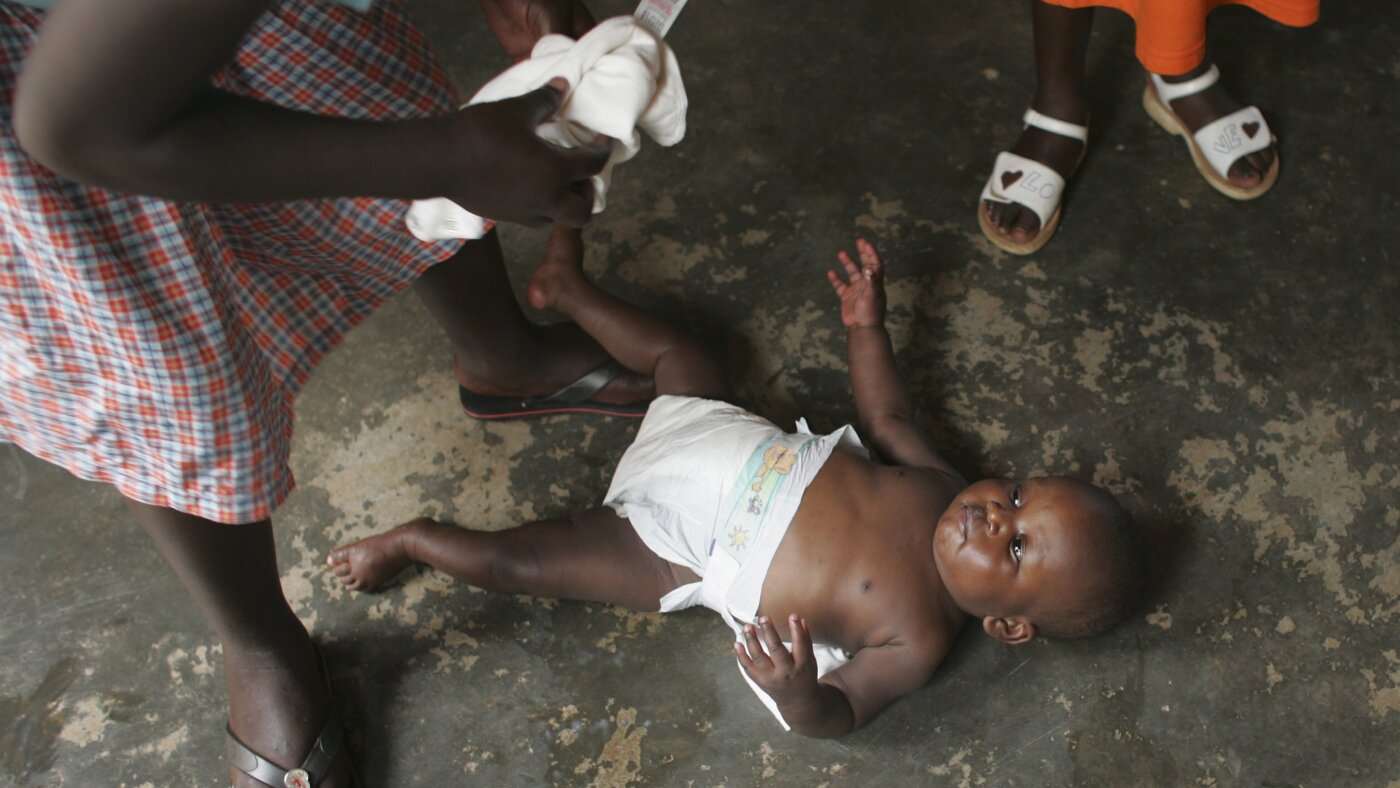

A nurse changes an 18-month-old child at a facility that cares for orphans living with AIDS who lack support from their extended family.
Marco Di Lauro/Getty Images
hide caption
toggle caption
Marco Di Lauro/Getty Images
Over the past few decades, a hopeful story has unfolded in southern Uganda.
The number of children who have lost a parent has fallen from almost one in four in the early 2000s to just 6% in 2022.
New research suggests that the decline in the number of orphans – defined as the loss of at least one parent – is due to HIV-related foreign aid programs.
“I’m about 70 years old now,” says study co-author Dr. David Serwadda of Makerere University in Uganda. “I have never seen a program intervention that has had such a huge impact.”
Serwadda was working in Uganda in the mid-1990s, when the HIV pandemic was claiming more than 100,000 lives each year.
“I remember visiting what looked like an abandoned house, we kept shouting ‘there’s someone at home’,” he says. Three children came out, aged 9, 7 and 6. “We asked, ‘Where are the parents?’ The parents were gone.”
At the time, a child whose mother was HIV-positive was about 20 times more likely to be an orphan than a child whose mother was HIV-negative. Children orphaned by AIDS suffer many consequences, says Aleya Khalifa, an epidemiologist at Columbia University and co-author of the study. They are more likely to face stigma, drop out of school or live in poverty, she says. “You start to see a cycle of vulnerability.”
U.S.-funded aid programs, primarily the President’s Emergency Plan for AIDS Relief, or PEPFAR, broke this cycle for many children, according to the study by Khalifa and Serwadda published in The Lancet Global Health. Today, children living with HIV-positive mothers are twice as likely to become orphans, compared to 20 times more likely.
“The results are so clear,” says Rachel Kidmansocial epidemiologist at Stony Brook University who was not involved in the research. Although she says the study cannot establish a definitive causal link, “this decline in the number of HIV orphans is absolutely due to adults having access to life-saving antiretroviral drugs.”
The findings also highlight what is now at risk due to the The Trump administration’s budget cuts to foreign aid and uncertainty about the future of HIV funding, Kidman says.
“National governments and charitable foundations have limited resources to fill these holes, and I don’t see other high-income countries stepping up,” Kidman says. “I think the consequences for the children are going to be very dire.”
Orphanage monitoring
To understand how HIV treatments affected orphan status, Khalifa and his colleagues turned to a long-term study in Rakai district, a rural region in southern Uganda bordering Lake Victoria. Since 1995, researchers have been collecting data on births, deaths and HIV status within households. In total, the team followed more than 90,000 children, tracking the number of new orphans through 2022.
Before 2004, these HIV treatments were not available and the number of orphans in the region was very high. Subsequently, these drugs began to spread in communities, but only to very sick people. In 2014, the World Health Organization expanded eligibility to all people living with HIV.
“This sharp, steep decline was actually quite impressive to see after ART became universally available starting in 2014,” says Khalifa.
Of course, parents can die from causes other than HIV. But around 70% of new orphans had HIV-positive parents before 2004. This figure fell to around 11% after 2015.
“This exceptional article is a testament to the incredible impacts of PEPFAR, the Global Fund and the global HIV response,” says Lucie Cluvera social scientist from the University of Oxford who was not involved in the study. Over the past two decades, PEPFAR has invested 3 billion dollars in Uganda – and more than $100 billion worldwide.
But PEPFAR’s future is uncertain after the Trump administration’s dismantling of foreign aid.
“Protecting PEPFAR now will protect millions of children from orphanage,” she said.
The future of PEPFAR
The Trump administration’s abrupt and drastic foreign aid cuts last year disrupted many HIV treatment programs in Africa, including in Uganda.
“The speed with which this happened completely took us by surprise,” says Serwadda. Health workers participating in these programs could no longer deliver medicines because they were not paid, he says. “The medicines were in stock, but the people were not available.”
This means many have gone untreated, he says. Eventually, many programs resumed, he said, but with tighter budgets. Some programs have been shut down completely, he said. He and other researchers are weighing the consequences.
“I would be very surprised if we don’t see the impact, mainly from patients losing treatment,” he says, leading to an HIV rebound that can increase transmission and mortality.
In a statement, the State Department told NPR that “PEPFAR continues to provide vital HIV testing, care, and treatment services to everyone living with HIV, and anyone already receiving treatment through PEPFAR can continue their treatment.”
The statement added: “The most effective way to prevent HIV-related orphans is to keep the parents alive. [agreements] do just that by prioritizing life-saving HIV drugs – including antiretroviral therapies like lenacapavir – and the frontline workers who deliver them.
The United States is currently negotiating health agreements with individual countries that transfer responsibility for funding HIV programs to national governments. In December, it signed an agreement with Uganda to invest up to $1.7 billion over the next five years to fight infectious diseases.
In dollar terms, that represents a reduction of about 25 to 30 percent compared to PEPFAR funding, Serwadda says. Major questions remain about how the transition might play out, but he remains hopeful.
“If, and it is important if, this project is actually implemented according to the memorandum, it will be very good for Uganda,” he says, because national ownership of the program would make it more sustainable.
But he is worried. “Our Death Valley is in transition,” he says. “There are so many things that can go wrong. Things might not happen at the speed they should be, or with the attention, the resources, the political support and the leadership that it will require. Many things need to be well aligned for us to get there.”


