The Red Sea experienced ‘one of the most extreme environmental events on Earth’ 6 million years ago


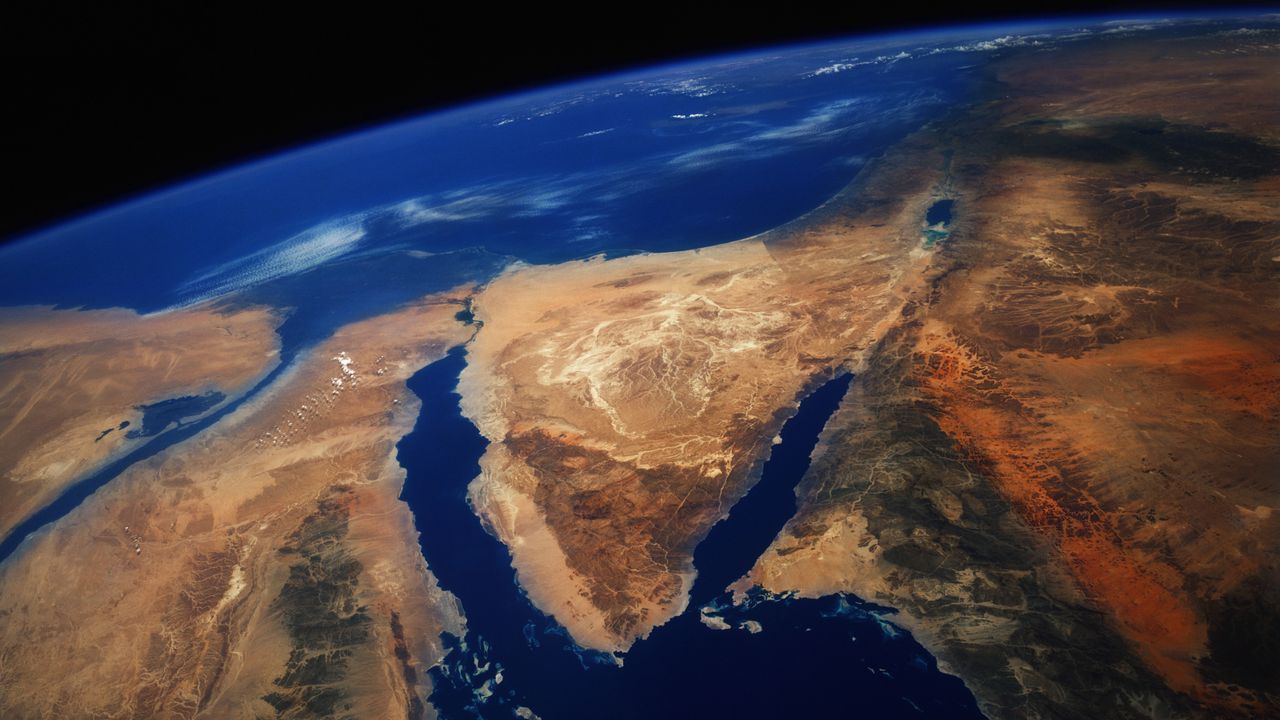
The book of Exodus recounts a miraculous separation of the Red Sea which allowed Moses and the Israelites to escape Egypt. Now science has an older and more extreme history to tell: about 6.2 million years ago, the Red Sea was completely dried up.
A few millennia later, the dried seabed went back to a cataclysmic flood which could have sculpted a deep underwater canyon of almost 200 miles (320 kilometers) in the ground of the Red Sea.
The Red Sea began to train 30 million years ago as an African and Arabic tectonic plates separated or rifted. It was a deep valley dotted with lakes until the Mediterranean Sea flooded it 23 million years ago. But just before 6 million years, the Red Sea suffered a “salinity crisis” of 640,000 years. The sea level has dropped and the salt levels have skyrocketed, leading to salt deposits up to 1.2 mile (2 km) deep in certain places. Marine life has died.
Now, a new study of the seabed reveals that the Red Sea fully dried up during this crisis, becoming a dry and salty desert. This sterile period ended with a flood of the Indian Ocean, which violated a volcanic ridge which separated the Red Sea from the Gulf of Aden, Pensa and its colleagues reported in their study, published on August 9 in the journal Earth & Environment Communications.
The researchers combined data on the rocky layers under the Red Sea with seismic data that can delimit the sediment and salt layers established during the history of the sea. They found a discrepancy throughout the seabed – a place where older and tilted sedimentary layers were suddenly covered by a horizontal layer of rock. The consistency of this layer indicates that the whole sea dried up during this period.
To date the events, the researchers have followed the changes in the radioactive strontium which varies at a rate known in the oceans. They also studied microfossils, which were largely absent between 14 million and 6.2 million years, when the Red Sea was extraordinarily salty or completely dry. After 6.2 million years, the fossils of sea creatures such as sea snails and bivalves return.
Researchers argue that water – and life – returned because the Indian Ocean has pierced a crest of volcanoes and submarines in the Gulf of Aden known as Hanish Sill.
This would have occurred quickly, in less than 100,000 years, and could have been energetic enough to cover an underwater canyon 200 miles 5 miles wide (8 km) which still extends from the Gulf of Aden to the Red Sea today.


