NEWYou can now listen to Fox News articles!
A Georgia man shot a pair of police officers who were questioning him at a hotel after he invited them into his room on Sunday, killing one and seriously wounding the other, according to officials.
The shooting suspect, identified as 35-year-old Kevin Andrews of Decatur, was also shot by one of the officers during the incident, Gwinnett County Police Chief J.D. McClure said during a news conference.
Andrews was transported to a hospital for medical treatment and is expected to survive. He will be transferred to the county jail once he is released from the hospital.
The shootout happened on Sunday morning near Stone Mountain, located about 25 miles northeast of Atlanta.
GEORGIA TEEN ARRESTED AFTER FATHER TURNS HIM IN FOLLOWING PAIR OF SHOOTINGS, POLICE SAY
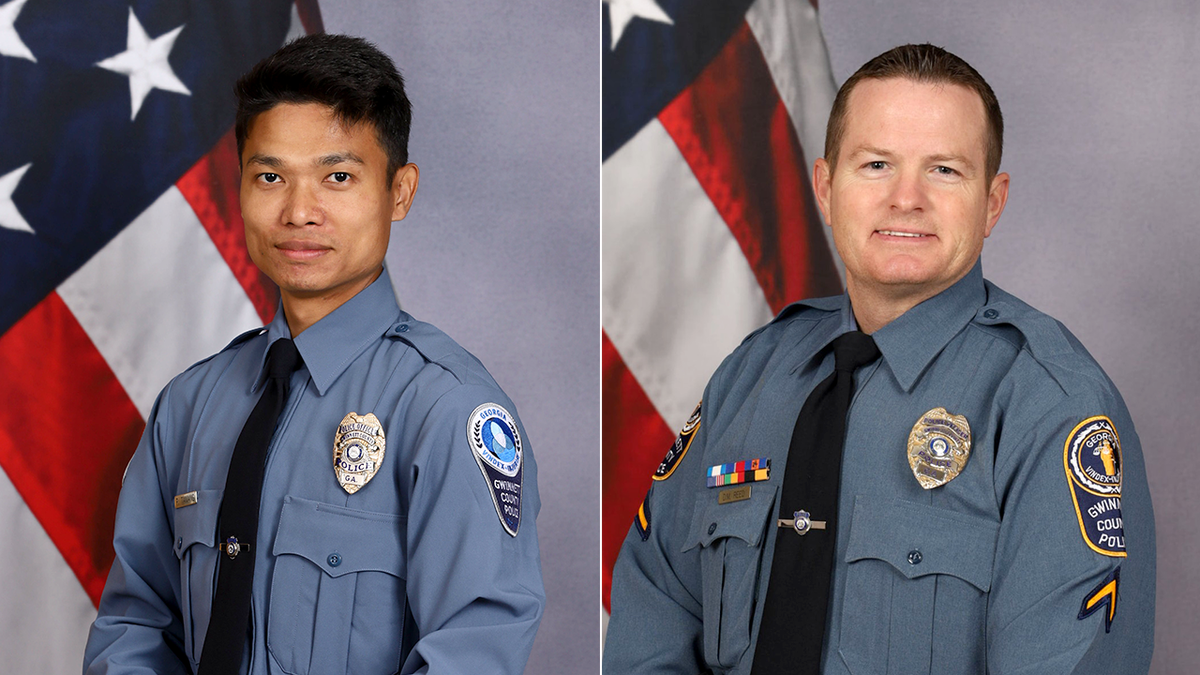
Officer Pradeep Tamang was killed in the shooting and officer David Reed was seriously wounded. (Gwinnett County Police)
The two officers responded to a Holiday Inn Express after a person in South Carolina reported that someone had fraudulently used their credit card at the hotel, the Georgia Bureau of Investigation said in a statement. The agency said the officers spoke with the front desk clerk, who informed them that the room was being rented by Andrews.
After learning that Andrews had an active warrant out of DeKalb County for failure to appear, the officers went to the hotel room to arrest him, according to the agency.
McClure said the suspect greeted the officers at the door to his room and invited them inside.
“They began discussing the scenario or the incident with him,” McClure said. “And at some point the suspect produced a handgun and, in an unprovoked attack, fired at our Gwinnett County police officers.”
OFFICER CLINGS TO LIFE AFTER HOMICIDE SUSPECT ALLEGEDLY UNLOADS GUN ON POLICE DURING HIGH-RISK ARREST
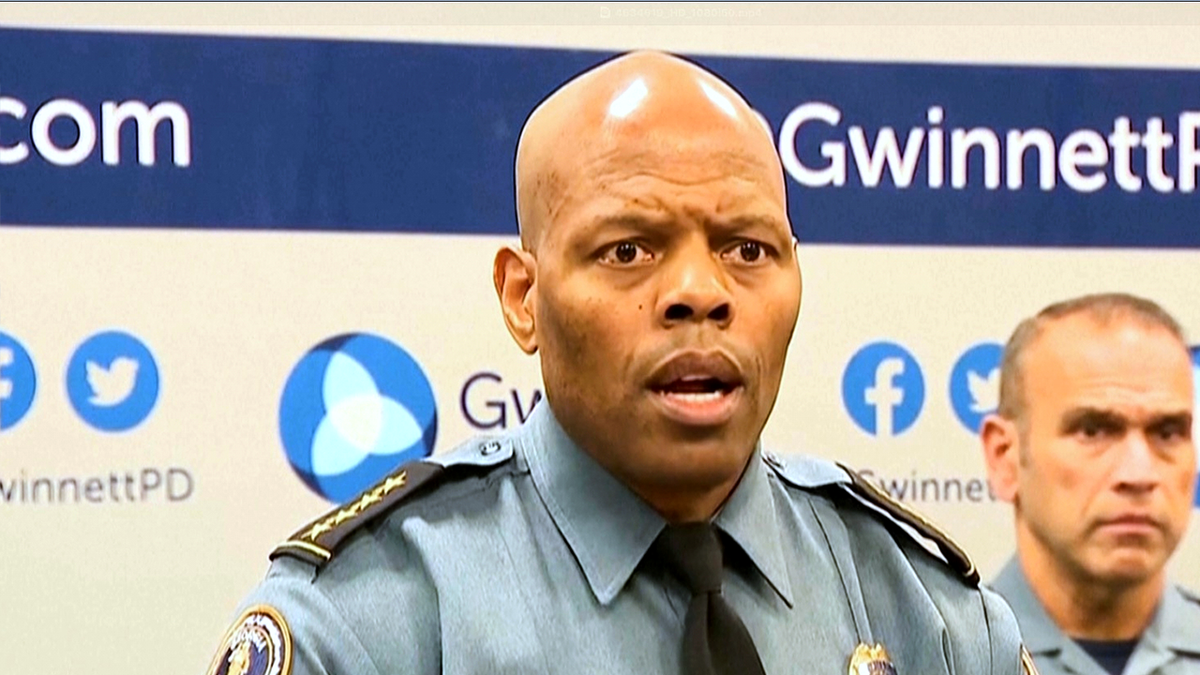
Gwinnett County Police Chief J.D. McClure speaks at a news conference on Sunday, Feb. 1, 2026. (WSB via AP)
The chief identified the officers as Pradeep Tamang and David Reed.
Tamang, 25, died from his injuries at a hospital. He joined the police department in 2024.
Reed was hospitalized in serious but stable condition on Sunday afternoon. He joined the department in 2015.
Gov. Brian Kemp said he was “mourning the loss of a brave officer” and “praying for the swift recovery of another.”
“This is the latest reminder of the dangers law enforcement face on a daily basis, and we are grateful for every one that puts themselves in harm’s way to protect their fellow Georgians,” Kemp said on X.
The shooting suspect, Kevin Andrews, was shot by one of the officers and transported to a hospital for treatment. (Gwinnett County Police)
CLICK HERE TO DOWNLOAD THE FOX NEWS APP
Andrews has been charged with one count of malice murder, one count of felony murder, two counts of aggravated assault upon a public safety officer and one count of possession of a firearm by a convicted felon.
The Georgia Bureau of Investigation, which customarily handles shootings involving officers in the Peach State, is handling the investigation, which remains ongoing.
The agency said the case will be handed over to the Gwinnett County District Attorney’s Office for review once the probe is complete.
The Associated Press contributed to this report.