The science behind the heat dome — ‘a mosh pit’ of molecules


From Texas Clear to Georgia, from the Gulf Coast to the Canadian border, a dangerous heat of heat began to spread like an atmospheric plague. In the days and perhaps even weeks in advance, a high pressure system, known as the heat dome, will lead to temperatures of more than 100 degrees Fahrenheit in certain places, which has an impact on some 160 million Americans. The extra -elevated humidity will make this time even more perilous – while the thermometer can read 100, it could actually look like 110.
So, what is a heat dome and why does it last so long? And what gives with all additional humidity?
A heat dome is a self-reinforced misery machine. It is a high -pressure air system, which sinks from a few thousand feet and compresses as it approaches the ground. When the molecules in the air have less space, they bang and warm up. “I think about it as a mosh pit,” said Shel Winkley, specialist in meteorological and climatic commitment to the Central Climate Research Group. “Everyone moves and bumps, and it’s warmer.”
But these booming temperatures do not occur alone with this heat dome. High pressure also discourages the formation of clouds, which generally require growing air. “There will be very little disorder, so it will be a lot of sun which, in turn, will warm the atmosphere even more,” said the senior meteorologist of Accuweather Tom Kines. “You are just in a way trapping this warm air on a part of the country.”
At the beginning, a heat dome evaporates the humidity from the soil, which offers a little cooling. But then, evaporation will considerably increase humidity. (A major contributor during the heat of this month will be the corn crop bands through the center of the United States, which could help increase humidity in states such as Minnesota, Iowa and Indiana above that of Florida.) This type of high pressure system also seizes the humidity of the Atlantic Ocean and the Gulf of Mexico, which evaporate more and more water. And in general, the more the atmosphere heats up, the more it can contain humidity. Once this humidity in the landscape has disappeared, more heat accumulates – and more and more. A dome of heat therefore feeds essentially by itself, potentially for weeks, a kind of giant drying pointed on the landscape.
In themselves, temperatures that amount to more than 100 are bad for human health. Such high humidity makes it even more difficult for the human body to cool, because it is more difficult for sweat to evaporate. Consequently, 100 degrees on the thermometer feeling more like 110. The elderly and very young people cannot cool their body so effectively, putting them at higher risks. Those who suffer from heart disease are also vulnerable because the human body tries to cool by pumping more blood. And those who have outdoor jobs – construction workers, garbage collectors, delivery drivers on bikes or scooters – have no choice but to work in heat, with few laws to protect them.
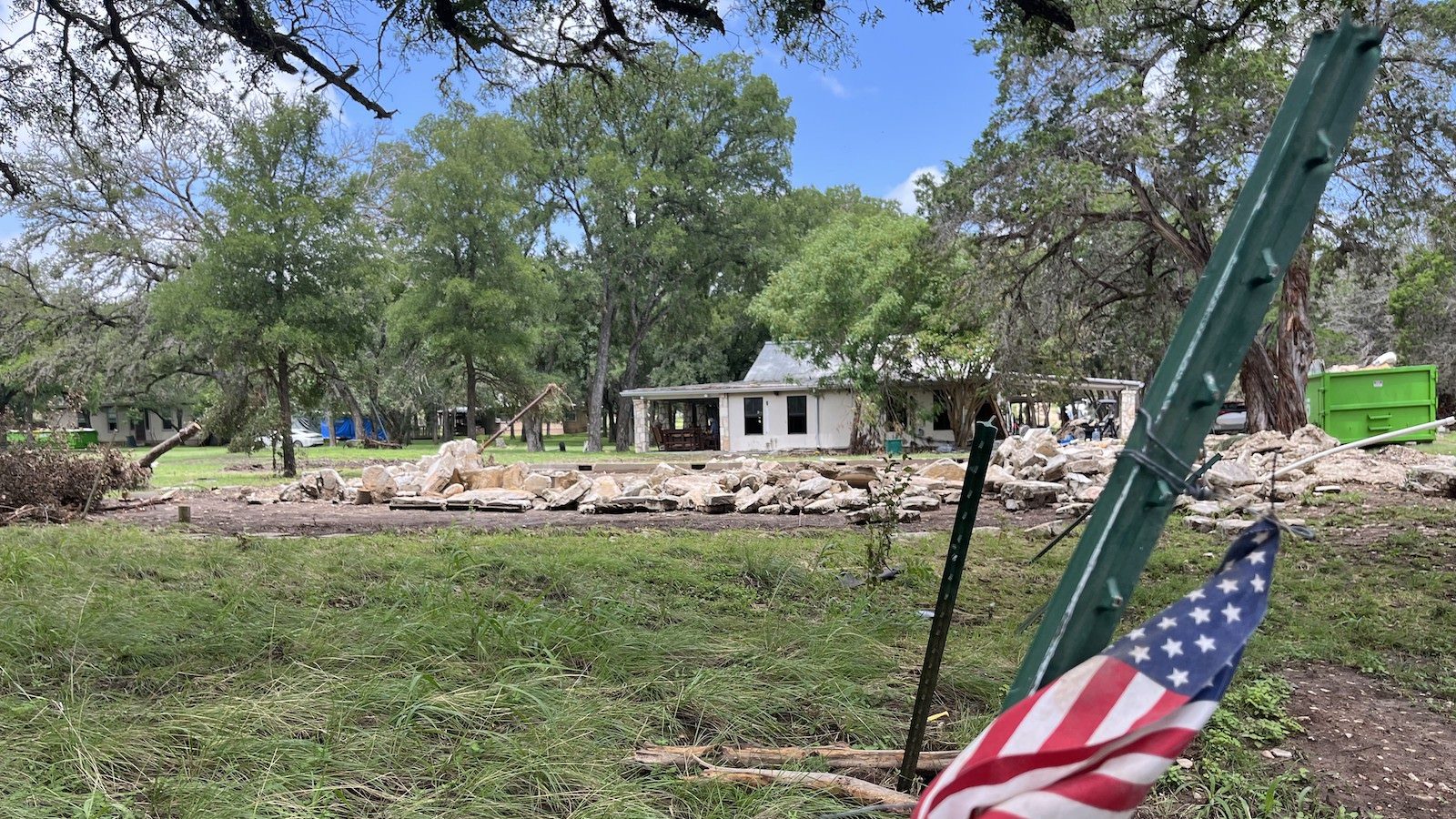
After sudden deadly floods, a city in Texas takes steps and painful in recovery
The humidity effect is particularly pronounced in areas whose soils are soaked with recent precipitation, such as center of Texas, which earlier this month has suffered catastrophic floods. There is the potential for “compound disasters” here: emergency efforts in flooded areas like Kerr County must now count with arrow temperatures. The Gulf of Mexico provided the humidity that made the floods so bad, and now it provides additional humidity during the heat dome.
A heat of heat becomes all the more dangerous, the longer it stagnates on the landscape. And unfortunately, climate change makes these types of heat waves longer and more intense. According to Central Climate, climate change has made this heat dome at least five times more likely. “These temperatures are not necessarily impossible, but they would be very difficult to occur without a fingerprint of climate change,” said Winkley.
Summer nights warm up almost twice as fast as summer days, adds Winkley, making heat waves all the more dangerous. As this heat dome sets in, low night temperatures can increase by 15 degrees above average. For those who do not have air conditioning – or who cannot afford to execute it even if they have ac – their houses will be stifling overnight, when the temperatures are supposed to go down and give a respite. Without this, stress is built and built, especially for these vulnerable groups.
“When you look at this heat wave, yes, it will be uncomfortable during the day,” said Winkley. “But it is above all these night temperatures which are the large red flashing light that it is a boosted event on climate change.”
Grist has a complete guide to help you stay ready and informed before, during and after a disaster.


