The ‘Sell America’ market returns after DOJ’s criminal probe of the Fed spooks investors


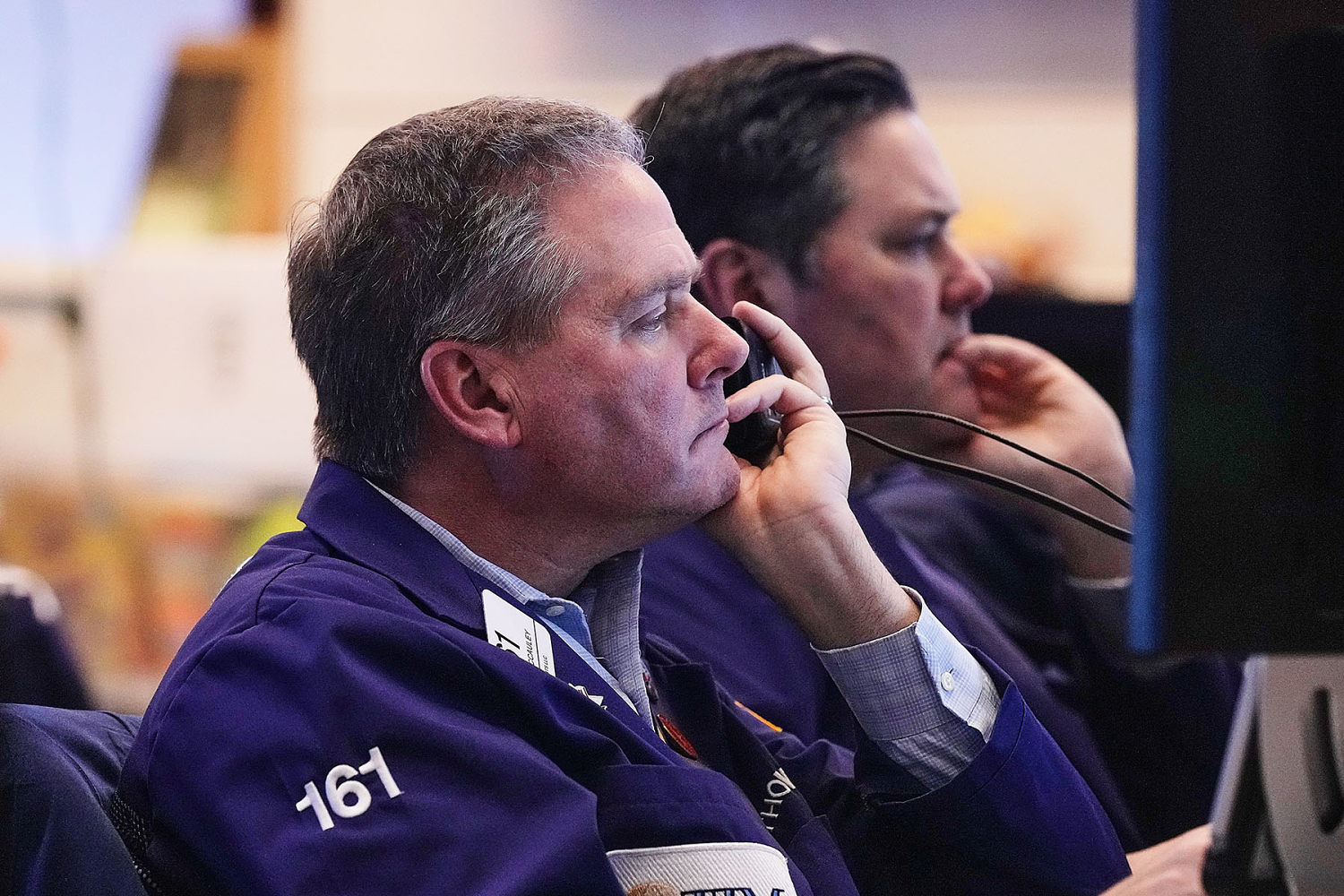
When investors around the world woke up Monday to news that the U.S. Justice Department had subpoenaed the Federal Reserve in a criminal investigation, it reignited fears about whether America was still the gold standard for investing.
The result has been the return of what’s known as a “Sell America” market, which first emerged last April after President Donald Trump’s surprise tariff announcement.
Fed Chairman Jerome Powell said the criminal investigation was an intimidation tactic by the Trump administration because the president was frustrated with the central bank’s independent interest rate decisions and its refusal to comply with Trump’s demands for ultra-low rates.
Powell’s statement immediately raised alarms among investors and trading desks around the world. The S&P 500 and Nasdaq opened slightly lower before trading mixed.
Yields on U.S. government bonds rose to their highest levels since September 2025, a sign of market concern that a less independent Federal Reserve may not be able to control inflation. Yields on 10-year Treasury notes, which mortgage rates closely track, rose above 4.2%. The 30-year Treasury yield, which is often seen as a barometer of future inflation fears, rose above 4.8%.
The US dollar has also weakened against all major currencies. As of 10:40 a.m. ET, the ICE U.S. Dollar Index, which measures the dollar’s performance against a basket of foreign currencies such as the euro, pound sterling and yen, was down 0.3%, near its lowest level since early December.
A falling dollar directly makes it more expensive for American companies to import products from abroad and for consumers to travel or study abroad. It also decreases the value of U.S. exports, because products paid for in foreign currencies are worth less in dollars than they were a few days ago.
Rising interest rates and a falling dollar also run directly counter to the government’s recent affordability measures.
“The independence of the Federal Reserve and the public’s perception of that independence are essential to economic performance, including achieving the goals Congress established for the Federal Reserve of stable prices, maximum employment, and moderate long-term interest rates,” former Fed Chairs Ben Bernanke, Janet Yellen and Alan Greenspan said in a statement alongside several former Treasury secretaries.
“Powell explicitly called this an attack on the Fed’s independence from the Trump administration,” ING strategists wrote in a client note Monday.
“The combined decline in the dollar, stocks and Treasuries is a throwback to America’s sell-off days last spring,” they said.
In April 2025, stocks fell precipitously and Treasury and precious metals yields soared after Trump’s “Liberation Day” tariffs were implemented.
Precious metals soared again on Monday. The price of gold rose 2.6% and silver rose more than 7% by mid-morning.
After this episode last spring, the rating agency Moody’s lowered the credit rating of the United States, while affirming that it nevertheless maintained a “stable outlook” for the American economy.
“The United States maintains exceptional credit strengths, such as the size, resilience and dynamism of its economy and the role of the U.S. dollar as the global reserve currency,” Moody’s wrote in May. “Furthermore, although recent months have been characterized by a degree of policy uncertainty, we expect the United States to continue its long history of highly effective monetary policy led by an independent Federal Reserve.”
Eight months later, investors gave a clear signal Monday that the future of the Fed’s independence was once again in question.
“The willingness to use subpoenas to pressure the Fed will make it even more difficult for the next president to convince markets and the public of his own technocratic independence, making it more difficult to control inflation and inflation expectations,” Krishna Guha of Evercore ISI wrote to clients Monday.
“We hope that Bessent and Republicans in Congress will recognize this and find a way out,” Guha said, referring to Treasury Secretary Scott Bessent.
Monday’s market moves also came amid a surprise rollout of Trump’s policy plans in recent days, targeting private industries.
The president caught Wall Street off-guard on Wednesday when he posted on social media that he was “taking immediate action to ban large institutional investors from purchasing more single-family homes.” Trump said he would discuss the issue further at the World Economic Forum in Switzerland later this month.
While institutional investors own a very small percentage of homes nationwide, shares of companies such as Blackstone and Invitation Homes fell sharply after Trump took office.
On Wednesday, Trump said he would not allow major defense companies to pay dividends or buy back their own stock, which would send those companies’ stocks tumbling.
Yet just hours after the dividend was released, Trump said he would seek a massive increase in the annual U.S. defense budget, sending shares of those same companies soaring.
In an article published Thursday, Trump called for the purchase of $200 billion in mortgage bonds, which rattled the mortgage market but triggered sharp declines in typically slow mortgage rates.
Over the weekend, the White House held up falling mortgage rates as an example of how Trump’s policies were making everyday life more affordable.
The rise in Treasury yields on Monday, however, could be a sign that these rates are about to rise again.
Trump hit American businesses with another intervention on Friday, demanding that credit card issuers cap interest rates at 10% for a year. Banks have been reluctant to meet Trump’s demand, saying through an industry lobbying group that a cap “would reduce access to credit and be devastating for millions of American families and small businesses.”
On Sunday, Trump hit back at the businesses. “We set a cap of 10% over one year and that’s it,” he said on Air Force One. Trump said the card companies would be “in violation of the law” if they did not comply.
It’s unclear exactly what legal mechanism Trump would use to force card issuers to lower their interest rates.
Shares of the nation’s major credit card issuers plunged Monday. Capital One slipped more than 7%, while American Express and Citigroup fell about 4%.
Major banks, such as JPMorgan Chase, Bank of America and Wells Fargo, fell about 2% early Monday.
Trump also demanded that oil companies invest in Venezuela, after his administration removed Venezuelan President Nicolás Maduro from power on January 3.
At a White House roundtable on Friday, ExxonMobil CEO Darren Woods called Venezuela “uninvestable.” Trump threatened to retaliate against the oil giant over the remark.
“I didn’t like Exxon’s response,” Trump told reporters on Air Force One Sunday evening. Speaking about Venezuela’s oil, Trump said “so many of us want it” before adding that he “would be inclined to leave Exxon out.”
The operation to remove Maduro has sent oil prices tumbling, which fell in the days following the January 3 operation but were up more than 2.5% on the year as of Monday morning.


