The species at risk of extinction in Wales named in first of its kind report


 Getty Images
Thousands of species at risk of extinction in Wales have been revealed in a new study.
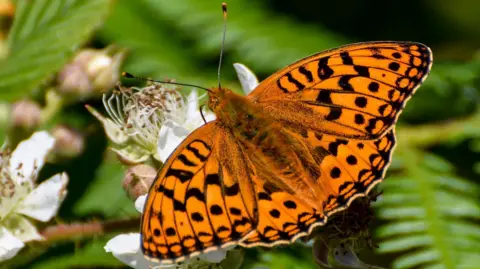
The “first of its kind in the UK” report identified the country’s rarest species, including the brown fritillary butterfly and Snowden’s leaf beetle, based on their geographical restriction, Natural Resources Wales (NRW) said.
Three thousand species now exist in five or fewer locations, making them highly vulnerable to habitat loss, climate change and sudden catastrophic incidents like storms, according to the report.
The Welsh government body, responsible for conservation and environmental protection, hopes the findings will help it focus its resources on areas most at risk of losing species forever.
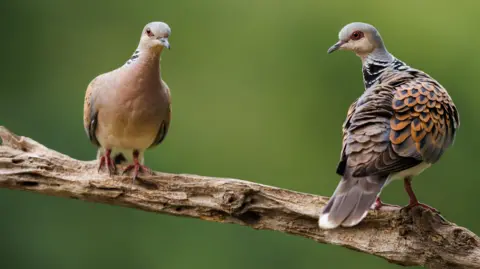
Since the turn of the millennium, Wales has already seen the disappearance of 11 species, with the European dove and the ringed beauty moth facing geographic extinction.
The endangered species report warns that other species could meet a similar fate, including the large brown fritillary butterfly and Snowdon’s rainbow leaf beetle, arctic-alpine spotted mussel, woolly moss and chestnut wrinkled lichen.
 Dom William, Butterfly Conservation
But saving them may not cost the Earth much, say NRW specialists.
“Some of the solutions for these species are incredibly simple,” said Mannon Lewis, strategic projects manager for the organization.
“It’s about changing the grazing regime, changing when we cut our grass, not felling, and looking at different ways of trimming our hedges.
“These are simple, inexpensive measures and we now know exactly where we need to implement them.”
The report highlights the role nature reserves and Sites of Special Scientific Interest (SSSI) play in ensuring the survival of plants and animals.
It highlights places such as Newborough Warren on Anglesey, which is home to 130 endangered species.
It is a designated national nature reserve, made up of sand dunes and forests, where projects are already underway to improve the environment.
Measures already taken include the introduction of ponies for grazing and the opening of some dunes to the elements.
“We’ve already accomplished a lot,” said Mike Howe, one of the ecologists who helped develop the new study.
“Within a few months of opening some of these bare areas, we saw species of beetles, which had not been seen in Newborough for around 10 years, suddenly appearing in large numbers.”
 Getty Images
Conservationist Tyler Hallman said NRW’s approach – particularly linking networks of special sites and nature reserves – offered a positive path forward and could even lead to the return of currently extinct species to Wales.
“I think there are huge conservation success stories,” he said.
“The European dove is extinct in Wales but, in recent years, its population in Europe has increased significantly, so who knows, it could come back.
“You might see things come back as conditions improve and the species as a whole does better. I guess that’s a huge positive – there are things we can do.”


