The Two Faces of American Greatness


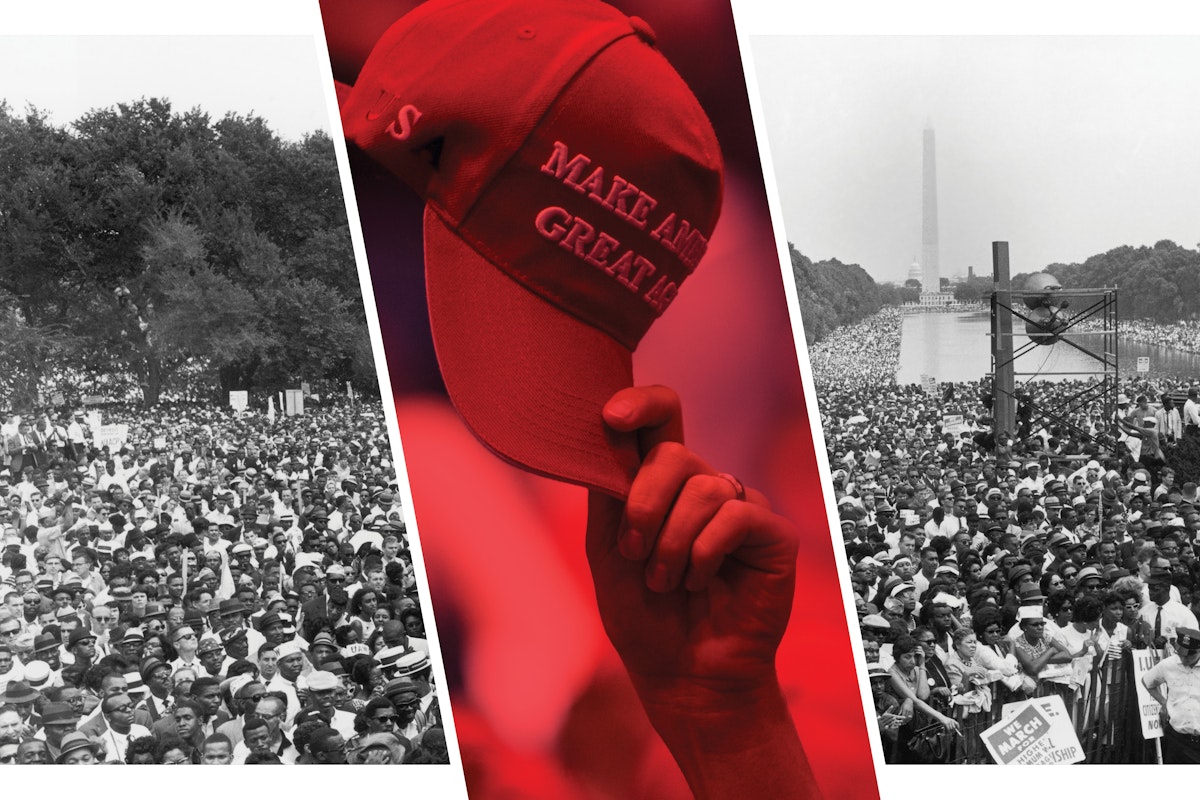
However, historians judge Donald Trump after leaving the White House, we will have to give him credit for having transformed a slogan of eight syllables at the same time in the aim of his campaigns and the movement that has helped the president twice. “Make America Great Again” manages to evoke a better, but clever, past, past as well as the desire for a powerful nation whose government does exceptionally good for its citizens. All this, and it adapts perfectly to a baseball cap.
Most progressives, historians or not, creak teeth in the slogan and believe that it captures something vital and malicious that drives Trump’s words and policies. Maga would have looked kindly on the routine brutality of the Jim Crow era and a moment when women had to rely on men and queer people had to keep the door of the closed closet. However, I always believe that it is essential to take the desire behind the master of Trump. Liberals and leftists know that the nation is seriously in difficulty – broken by bitter cultural and partisan divisions, generalized fears for the future of jobs in an AI -focused economy and a despotic leader who gives no legitimacy to his adversaries. In this environment, the desire for better times should not be condemned as a simple desire to return to an era when hetero white men have run everything.
Historians can browse the debate by explaining what “grandeur” has mean in the American past and could mean again. This would be empathy for our fellow citizens to whom the slogan appeals, even if we do not agree with Trump’s policies and we do not like his selfish behavior. It is also a task par excellence of historians to seriously try to fight against the power of a key concept in the past of the country.
I doubt that Trump, despite all his boastful, could offer a coherent answer if someone asked him: “So when America was great and what did this?” After all, Chef Maga plans to spend $ 34 million on a national garden of American heroes filled with classic statues of what he calls “our greatest Americans to live”. The list includes the Cy Young baseball launcher, Alex Trebek – the Canadian host of Sweet!– And Christopher Columbus, who has never set foot on any ground that would become the United States three centuries later.
One could start a serious examination of grandeur by distinguishing its sense of material power – economic and military – and as the desire to make America a society which will be up to the ideals that most citizens say for a long time, social equality, individual freedom and a solid democracy. In the address of Gettysburg, Lincoln spoke of the “great” war waged and the “great battlefield” on which he spoke. But it ended with an appeal to take “the great task that remains before us” – to ensure that “the government of the people, by the people, for the people, does not perish the earth”.