Aliro wants to fix the smart lock’s dumbest problem


Summary created by Smart Answers AI
In summary:
- PCWorld reports that Aliro, a new smart lock standard from the Connectivity Standards Alliance, aims to eliminate fragmented applications by creating universal digital keys that work on any compatible phone and lock.
- The technology uses NFC for unlocking and UWB for hands-free entry, operating locally without reliance on the Internet, although it requires new hardware since existing smart locks are incompatible.
- The first Aliro-compatible locks are expected in 2026, which could bring smart locks into the mainstream by solving reliability issues that have hampered their widespread adoption beyond early adopters.
You come home late. You’re juggling groceries, a backpack, and a dying phone. At the door, you try to find the app that controls that particular smart lock: Yale? Schlage? Kwikset? You open the wrong one, the lock doesn’t respond, and you search your home screen again, cursing under your breath.
This is an all too common scenario for homeowners. Smart locks have come a long way, but the user experience still seems stuck in the past. Each brand wants you to use their own app. Your modern lock may have replaced that messy bunch of keys, but now you’re digging through apps — one for the front door, another for the back, maybe even a third for the garage — because there’s no common language between them.
The same goes for digital keys. Apple’s Home Key works well, but only with Apple devices. Android users face more fragmented solutions, with support depending on the phone, wallet app, and specific lock used.
Aliro, a new smart lock standard developed by the Connectivity Standards Alliance (CSA), aims to solve this problem by enabling a system that works with any phone, any lock, no special apps required.
“Today, digital keys often seem fragile, tied to a specific app, requiring reinstallation when the phone changes, or incompatible with other household members’ devices,” said Raj Sundar, senior product manager at XThings. “With Aliro, owners can expect digital keys to behave more like universal identifiers. »
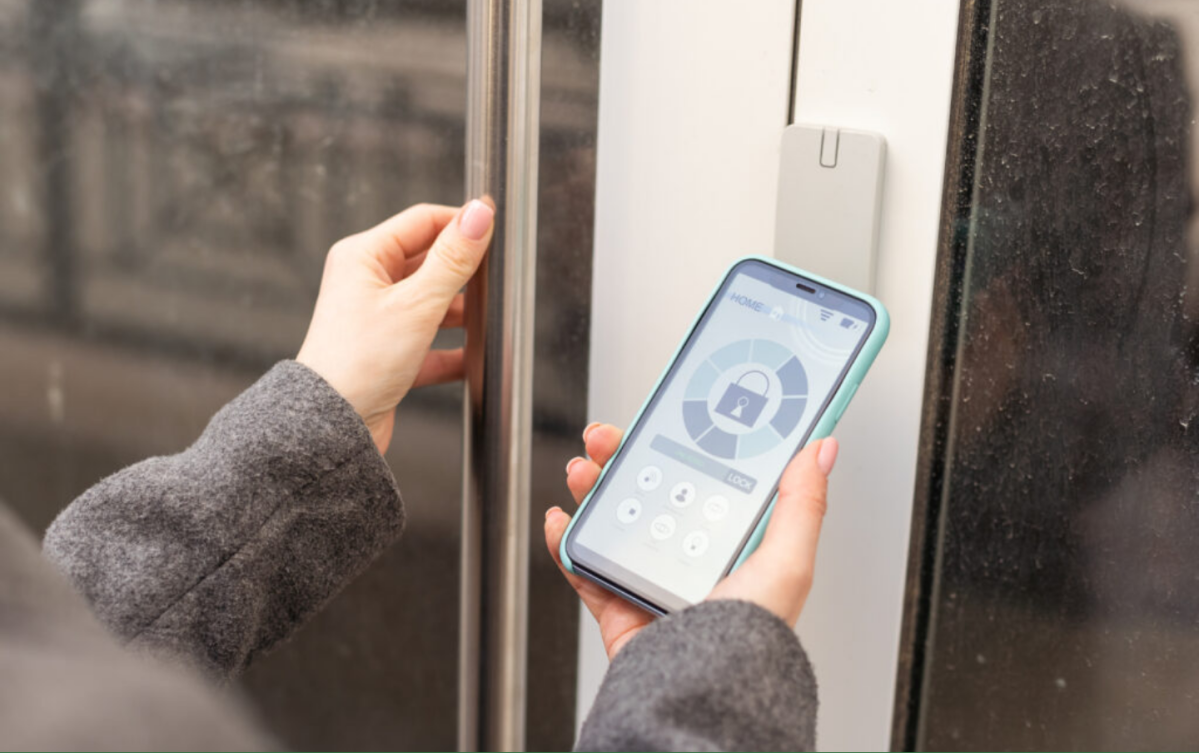
Aliro allows your phone or watch to store an ID that works with compatible locks, regardless of brand.
ASC
What Aliro does
To understand Aliro’s promise, we need to look at how we got here. Early smart locks used PIN codes, which did not identify the person unlocking the door and were difficult to manage securely. App-based systems brought digital keys, but made things more complicated: Shared users often had to download a brand-specific app, create an account, and find a new interface just to access it. Access became tied to the lock manufacturer, not the individual user.
“Aliro solves this problem by standardizing the digital credentials themselves, not just controlling devices,” Sundar said. “With Aliro, a digital key resides in the user’s wallet and can move securely between devices, wallets and platforms, instead of being trapped within a single manufacturer’s application. »
Aliro also supports push-to-unlock and hands-free entry. The standard defines how your device’s credentials communicate securely with locking hardware, using a common set of rules that manufacturers can implement across platforms. Garrett Lovejoy, senior vice president and general manager of connected security at Fortune Brands Innovations, owner of Yale Locks, described the appeal as walking up to your door, hands full, and unlocking it without touching anything — what he called a “Jetsons-like unlock and open experience.
Core Technologies in Aliro
Aliro leverages three wireless technologies already built into most phones and wearable devices:
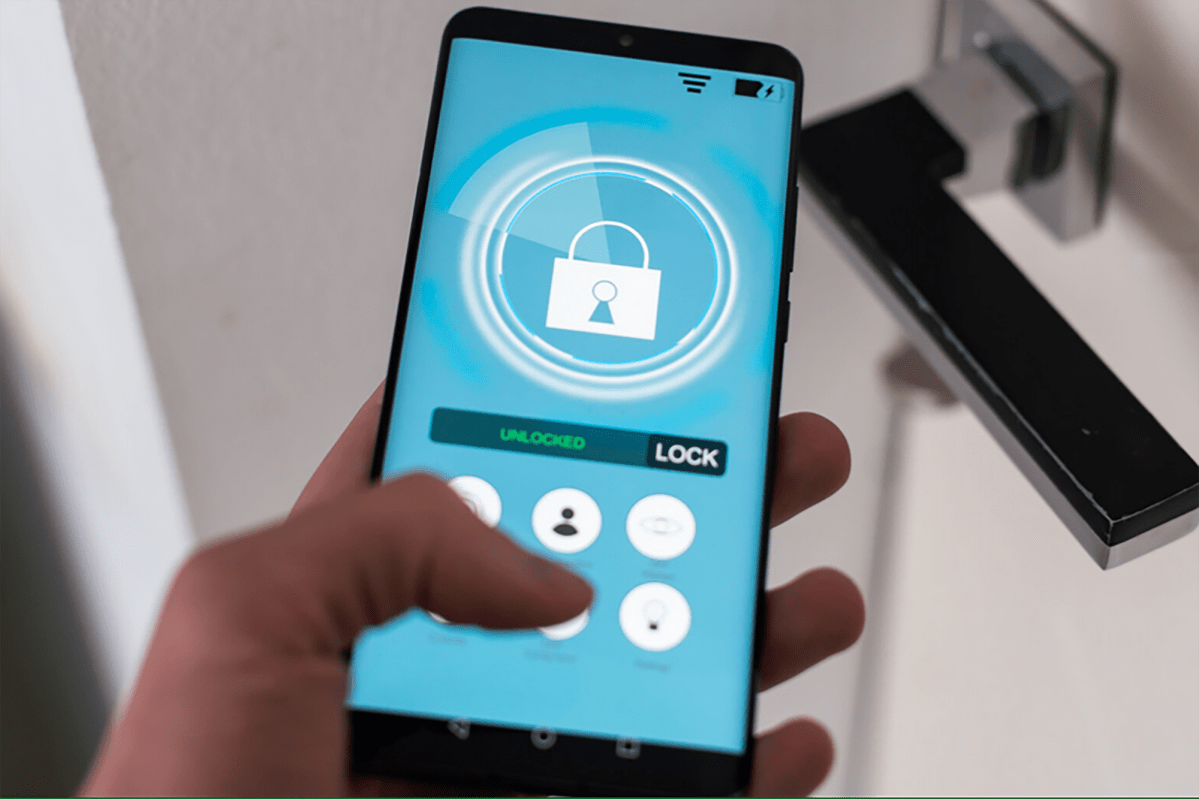
NFC (near field communication): Allows one-touch unlocking, similar to contactless payments. Hold your phone near the lock and it opens, no internet connection required.
UWB (ultra wideband): Adds precise distance sensing, allowing hands-free unlocking. When you approach the door with your device in your pocket or bag, the lock can detect your proximity and unlock automatically.
BLE (Bluetooth low consumption): Acts as a support layer, helping with setup or serving as a backup if NFC or UWB are not available.
Because Aliro is built around local communication, the system does not rely on cloud services or a constant internet connection. You can unlock your door even if your Wi-Fi network is down, your cell signal is weak, or your lock brand’s app is malfunctioning.
ASC
Aliro vs Matter: Why a separate standard?
The CSA is the same organization that developed Matter. At first glance, Aliro may seem like something that belongs to this standard. But even though both are created by the CSA, they fulfill very different roles.
Matter was developed to unify smart home devices. It handles tasks like turning on lights, adjusting thermostats, and making sure your connected devices can communicate with each other, regardless of brand. Its job is to manage connectivity and control on a local network. Aliro, on the other hand, speaks of access.
This difference matters. Access control raises the bar for security and reliability than most other smart home features. If a light doesn’t turn on, it’s an inconvenience. If a door unlocks when it shouldn’t – or doesn’t unlock when it should – it’s a serious problem.
“For the same reason that we have mobile payment standards, there are also access standards that need to be distinct and different,” Lovejoy said. “I don’t know if you would trust Matter to [make] a banking transaction for you. Probably not.
Aliro was designed separately to be able to meet these higher requirements. It is specifically designed for secure, real-time identification, something that cannot be layered on top of Matter without compromise.
What to watch for
For all its promises, Aliro won’t be a plug-and-play upgrade for every home or every lock.
One of the biggest obstacles is hardware. Because Aliro relies on technologies like NFC and UWB, most existing smart locks on the market won’t be able to support the standard without new radios. This means that homeowners looking to adopt Aliro may need to replace their locks entirely, rather than updating firmware or adding accessories.
Battery life is another factor. Both UWB and NFC are relatively power efficient, but adding more radios and more frequent wireless communications can still impact how long a lock lasts between battery changes. Manufacturers will need to balance performance and convenience without forcing users to change batteries every few months.
Security is also a moving target. Aliro is designed with strong encryption and local storage of credentials, but any system involving mobile credentials introduces new risks: how keys are provided, how devices are authenticated, and what happens if a phone is lost or stolen. Implementation is important, and it’s up to manufacturers to get it right.
Finally, even though Aliro is platform agnostic, its clean integration into existing smart home ecosystems, especially those already running on Matter or proprietary hubs, will take time. Users will expect a seamless experience across devices and platforms, and any friction could slow adoption.
From specifications to smart locks
Aliro’s technical specifications are complete and the standard now moves to the next phase: certification and implementation. The first Aliro-compatible smart locks are expected to hit the market in 2026, giving manufacturers time to design new hardware that meets the standard’s requirements. This includes adding support for technologies like NFC and UWB, as well as integrating wallet-based identification systems.
On the platform side, mobile OS vendors appear to be laying the groundwork for Aliro-like functionality. Apple’s Home Key already works in a way that reflects what Aliro aims to universally enable: digital credentials stored in the wallet, unlocked with a tap or close proximity. On Android, support is expected to come through Google Wallet, which has started adding digital ID APIs for access apps, Sundar said. When deploying Aliro, users should be able to store and use digital keys natively, without the need for a separate app tied to a specific lock brand.
Reliability is the real asset
Aliro offers a solution to break out of the fragmented mess of brand-specific apps, incompatible digital keys, and uneven user experiences. It promises a future in which unlocking your door will be as easy as tapping to pay, no matter what phone you’re using or the lock on your door.
But Aliro’s real potential isn’t just standardization: it’s trust. “We end up with a product or experience that is so standard and so developed that we have high reliability,” Lovejoy said.
This reliability, he argued, is what finally opens the door to wider adoption. Early adopters have tolerated smart locks that don’t always work perfectly. But most users won’t. When even the least competent person can walk up to a door, leave their phone in their pocket, and see it unlock reliably every time, that’s when smart locks become mainstream.
Lovejoy compared it to the rise of the video doorbell. “That was the moment when Ring showed up [with their doorbell] and they got this mass market,” he said. “They had this beautiful thing that anyone could click a button and they would always be able to see who’s at the front door.”
Aliro could be the perfect time for the smart lock. This is not a small step forward, but a big step that will provide reliable digital access for all.


