The year’s first meteor shower and supermoon clash in January skies

NEW YORK — The first supermoon and first meteor shower of the year will synchronize in the January sky, but the light from one could obscure the other.
The Quadrantid meteor shower peaks Friday evening through Saturday morning, according to the American Meteor Society. In the dark skies at peak activity, skywatchers typically see about 25 meteors per hour, but this time they will likely spot fewer than 10 per hour due to the light of Saturday’s supermoon.
“The biggest enemy to enjoying a meteor shower is the full moon,” said Mike Shanahan, director of the planetarium at the Liberty Science Center in New Jersey.
Meteor showers occur when fast-moving space rocks collide with Earth’s atmosphere, burning up and leaving fiery tails in their wake – the end of a “shooting star.” A handful of meteors are visible each night, but predictable showers appear each year as Earth passes through dense streams of cosmic debris.
Supermoons occur when a full moon is closer to Earth in its orbit. This makes it appear up to 14% larger and 30% brighter than the faintest moon of the year, according to NASA. This difference may be difficult to notice with the naked eye.
Supermoons, like all full moons, are visible in clear skies wherever it is dark. The Quadrantids, on the other hand, are visible mainly from the Northern Hemisphere. Both can be seen without any special equipment.
To spot the Quadrantids, venture out in the early evening away from city lights and watch for fireballs before the moon interrupts the party, said Jacque Benitez of the California Academy of Sciences’ Morrison Planetarium. Sky watchers can also try watching early on Sunday at dawn.
Wait for your eyes to adjust to the darkness and don’t look at your phone. Space rocks will look like fast-moving white dots and appear all over the sky.
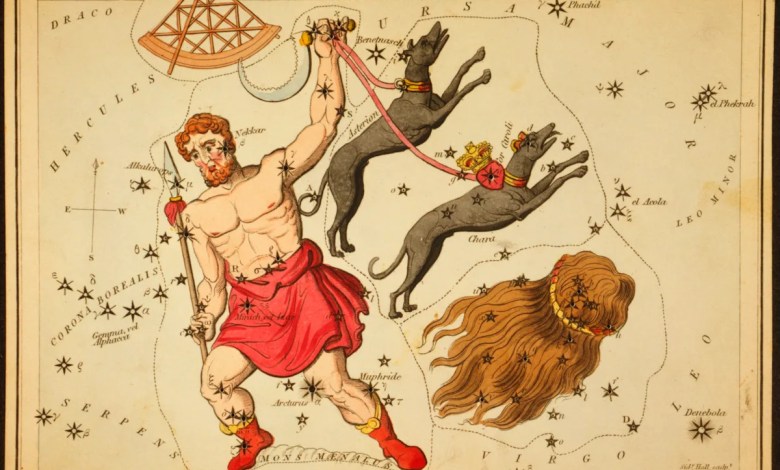
Meteor showers are named after the constellation from which the fireballs appear to originate. The Quadrantids – space debris from asteroid 2003 EH1 – are named after a constellation that is no longer recognized.
The next big meteor shower, called the Lyrids, is scheduled for April.
Supermoons occur several times a year and occur in groups, taking advantage of the ideal position in the moon’s elliptical orbit. Saturday night’s event ends a four-month streak that began in October. There won’t be a supermoon until the end of 2026.
___
The Associated Press Health and Science Department receives support from the Howard Hughes Medical Institute’s Department of Science Education and the Robert Wood Johnson Foundation. The AP is solely responsible for all content.


