These 5 Linux desktop environments solve problems GNOME won’t


Most people switching to Linux naturally land on GNOME, not because it was their choice, but because it’s the default on most popular distributions. I’ve been using Linux for over 10 years and tested all major desktop environments (DE). While GNOME does some things well, it leaves some real gaps in workflow flexibility, resource efficiency, and built-in features. If you’ve ever encountered any of these limitations, these five DEs will be a better fit for your workflow.
Cinnamon makes it easy with a familiar Windows-style workflow
A taskbar, a Start menu, and a surprising amount of power underneath
If you’re used to Windows, GNOME’s activity-based workflow feels like relearning how to use a computer. Cinnamon removes that friction with a traditional Windows-style desktop: taskbar at the bottom, a Start menu for launching apps, and a desktop where you can save files and keep app shortcuts. It’s better optimized for Linux newcomers, but I wouldn’t call it “just beginner DE”: there’s some serious depth once you start exploring.
Best experience on: Linux Mint (flagship product), Ubuntu Cinnamon or Fedora Cinnamon spin.

Why a Cinnamon Desktop Environment is Best for Linux Newcomers
The Cinnamon desktop makes switching to Linux easy!
Pantheon offers a better macOS-like presentation
GNOME flirts with the minimalism of macOS: Pantheon is really committed
If what attracted you to GNOME was the macOS-inspired minimalism, Pantheon does that job with more conviction. You get a clean top panel, a lower dock for your apps, and a desktop philosophy centered around staying out of the way. Virtual offices are there, but they don’t put on a show. The DE also deliberately limits customization to keep the experience clean and consistent. If you really value quiet over personalization, Pantheon is the place to be, which also makes it a surprisingly kid-friendly choice.
Best experience on: Elementary OS (Pantheon’s in-house distribution), openSUSE.

What is elementary operating system? Practical with Mac-like Linux distribution
Are we going back to school with this one?
XFCE breezes on GNOME hardware would choke
Your old laptop deserves better than GNOME’s resource appetite
Linux has a reputation for bringing old hardware back to life, but if that’s what you’re looking for, avoid GNOME-based distributions. This is one of, if not the heaviest desktop environments in Linux, with well over 1.5 GB of RAM. It’s fine if your hardware can handle it, but if you’re using an older machine or just want your resources to actually work, XFCE is the answer. It consumes just 500MB at idle while still covering everything you’d expect from a full desktop environment. You get panels, workspaces, a file manager, and solid theme support without the clutter.
Best experience on: Xubuntu, Linux Mint XFCE Edition or Manjaro XFCE.

Xfce vs LXQt: Comparison of Lightweight Linux Environments
Which lightweight Linux desktop might be right for you?
MATE revives the beloved GNOME 2 experience
GNOME killed it. MATE brought him back to life
GNOME 2 ran for nearly a decade and defined what a Linux desktop looked like for an entire generation. Then GNOME 3 came along and threw that beloved workflow out the window. MATE exists because a community refused to let it die, creating the GNOME 2 codebase and maintaining it with modern security updates, HiDPI scaling, and continued development. Now, because of the legacy of GNOME 2, some people see it as a retro novelty, but I can assure you that it is daily driver hardware.
Best experience on: Ubuntu MATE, Linux Mint MATE Edition or Fedora MATE-Compiz.

GNOME 1.0 versus GNOME 50: the 26-year evolution of the world’s most controversial desktop
I revisited each major milestone to see how a “Windows 95 clone” became the most unique interface in computing.
KDE Plasma delivers the ultimate DE experience
GNOME vs. KDE Plasma proves that “popular” doesn’t mean “best”
By default, GNOME is very clean and minimal. If you want additional features or customizations, you’ll need to install them using extensions, which, by the way, can break after major updates. KDE Plasma doesn’t have this problem: everything you could possibly need is built into the system. Mosaic, activities, desktop widgets, window rulers, animated effects, deep shortcut customization: everything is ready to use and stable in all versions. You don’t assemble a DE from parts; you get one that was designed to be complete. It’s also lighter than GNOME, which is remarkable given how many extra features it contains.
Best experience on: Kubuntu, Fedora KDE spin or Garuda Linux Mokka edition.
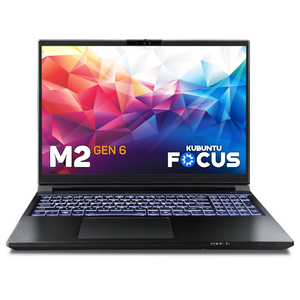

8/10
- Operating system
-
Kubuntu 24.04 LTS
- Processor
-
Intel Core Ultra 9 275HX (2.7 GHz up to 5.4 GHz)
- GPU
-
NVIDIA GeForce RTX 5070 Ti (dGPU), Intel Graphics (iGPU)
- RAM
-
32 GB 262-pin dual-channel DDR5 SODIMM (5600 MHz)
The right DE is the one that fits your workflow
GNOME works well for many people, but “good” is not the same as “good.” Each of these five desktop environments exists because GNOME left a void, and each fills it convincingly. If something about your current setup is quietly bothering you, chances are one of these DEs already has the answer.


