
NEWYou can now listen to Fox News articles!
“The Late Show” host Stephen Colbert claimed Monday that CBS barred him from interviewing a Democratic hopeful amid the recent crackdown by the Federal Communications Commission (FCC).
Colbert said CBS lawyers told his show “in no uncertain terms” that he could not interview Texas Senate candidate James Talarico and then “in some uncertain terms” that he couldn’t mention to viewers that he couldn’t interview Talarico.
The liberal comedian tied the move to the FCC’s enforcement of the longstanding equal time rule that allows all legally qualified candidates, regardless of party to receive equal airtime on the broadcast networks. In the announcement last month, FCC Chairman Brendan Carr claimed the liberal talk shows, which had long been exempted by the rule, have been “motivated by partisan purposes.”
“Well, sir, you’re chairman of the FCC, so FCC you,” Colbert quipped. “Because I think you’re motivated by partisan purposes yourself.”
FCC CHAIR BRUSHES OFF KIMMEL, COLBERT OUTRAGE OVER LATEST POLICY PUSH
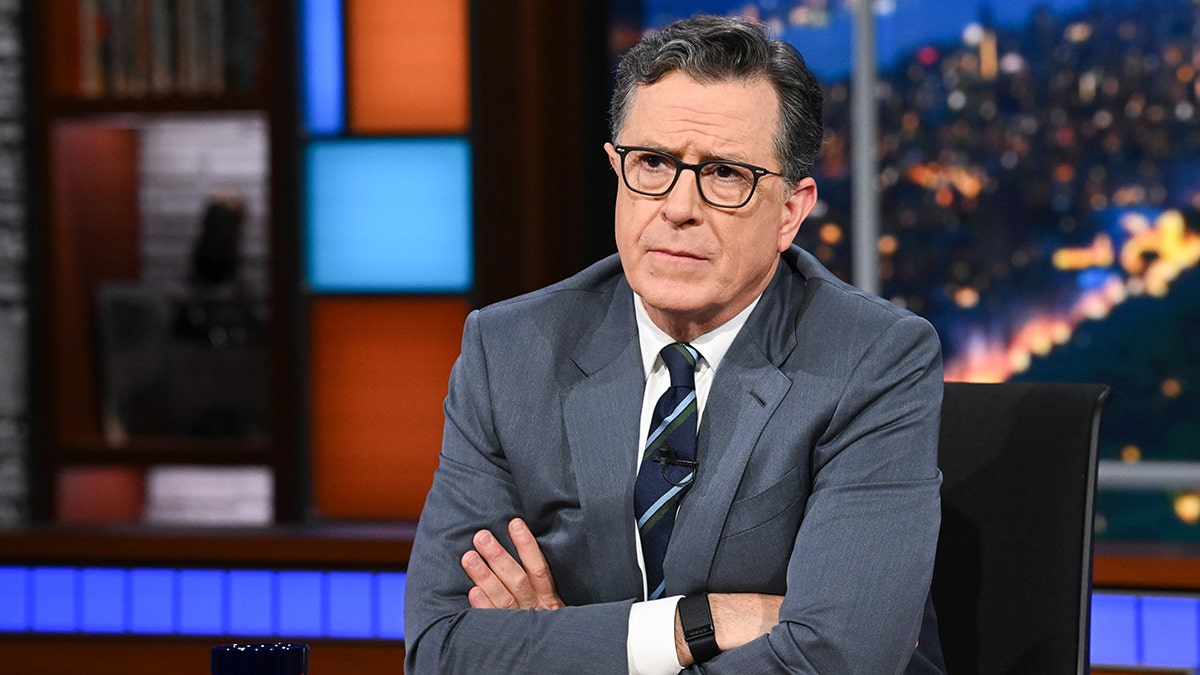
“Late Show” host Stephen Colbert said CBS barred him from interviewing Democratic Texas Senate hopeful James Talarico amid the FCC’s crackdown of the broadcast network talk shows. (Scott Kowalchyk/CBS via Getty Images)
“Let’s just call this what it is — Donald Trump’s administration wants to silence anyone who says anything bad about Trump on TV because all Trump does is watch TV, OK? He’s like a toddler who has had too much screen time,” Colbert continued.
As Colbert later noted, Talarico’s recent appearance on ABC’s “The View” triggered an FCC probe, suggesting that prompted the furor at CBS. He then revealed to his viewers that his own Talarico interview would be featured on his show’s YouTube page, which is beyond the FCC’s purview.
FCC CHAIR HAS NO REGRETS OVER THE DRAMATIC JIMMY KIMMEL SAGA LAST YEAR
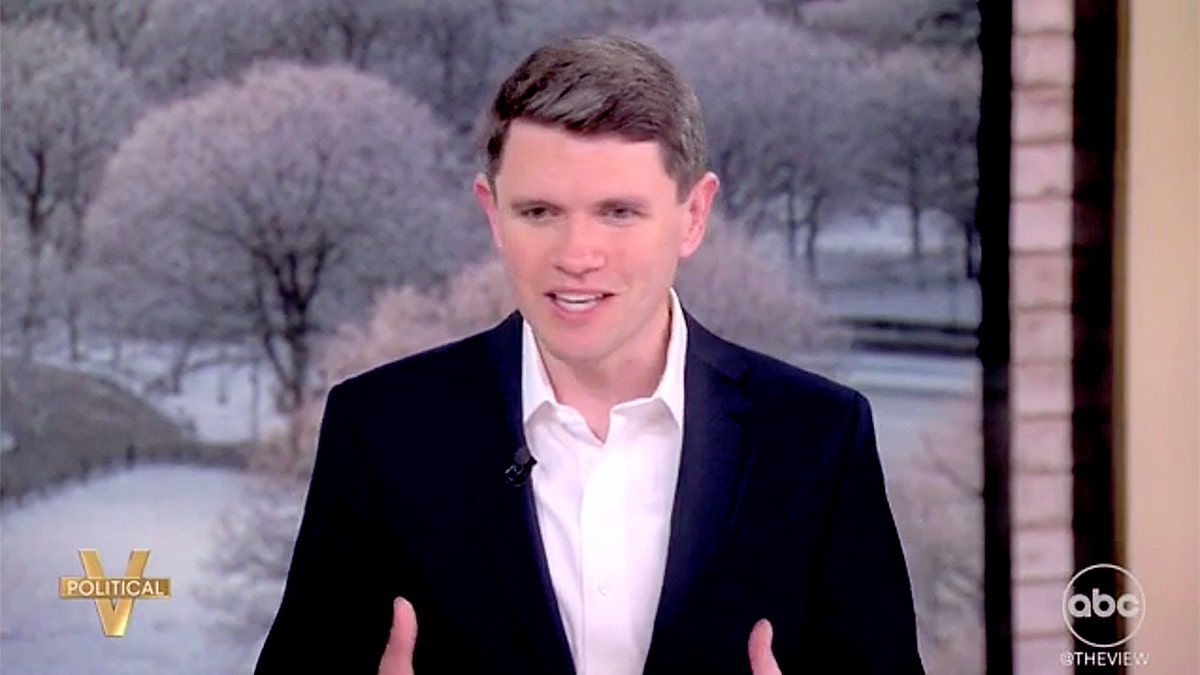
Democratic Texas Senate candidate James Talarico’s appearance on “The View” triggered an FCC probe into the ABC daytime talk show. (ABC/TheView)
He also poked fun at how he wasn’t even allowed to show Talarico’s image on TV, admitting the photo he kept showing during the segment wasn’t actually him.
“At this point, [Carr has] just released a letter that says he’s thinking about doing away with the exception for late night. He hasn’t done away with it yet, but my network is unilaterally enforcing it as if he had. But I want to assure you, this decision was purely for financial reasons,” Colbert joked.
Representatives for CBS, Paramount and the FCC did not immediately respond to Fox News Digital’s requests for comment.
REPUBLICANS VIRTUALLY SHUT OUT OF DEM-DOMINATED TALK SHOWS AS FCC AIMS TO REFORM NETWORK BIAS
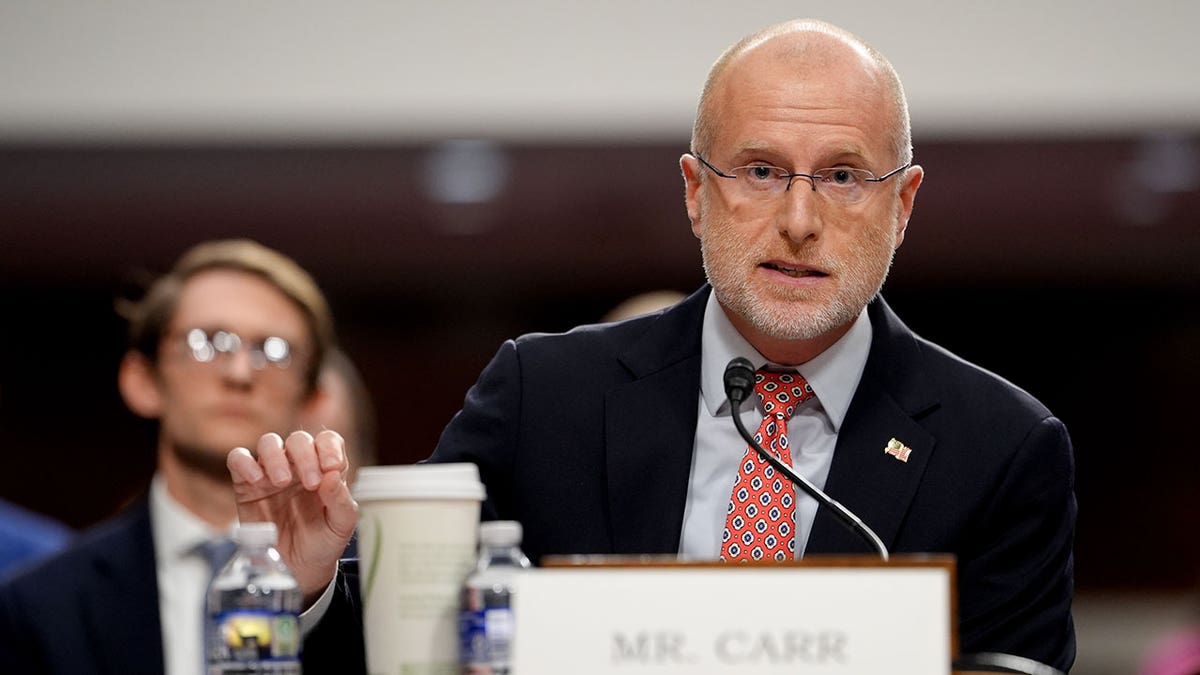
Federal Communications Commission Chairman Brendan Carr announced last month his agency was cracking down on the equal time candidate rule on the broadcast network talk shows. (Kent Nishimura/Bloomberg via Getty Images)
In an interview with Fox News Digital earlier this month, Carr shrugged off criticisms from Colbert and fellow late-night host Jimmy Kimmel who lashed out over the FCC policy push, stressing the agency is enforcing a rule that “goes back to the 1950s” and that if Colbert and Kimmel don’t like the law, they should urge Congress to change it.
“On my watch, we’re going to enforce this regulation,” Carr said. “There’s lots of ways of distributing programming these days that you don’t need to comply with this regulation. If you’re a cable channel, it largely doesn’t apply. If you’re a podcaster, no. If you are a streamer, no.”
CLICK HERE TO GET THE FOX NEWS APP
He continued, “So if Kimmel or Colbert want to continue to do their programming, and they don’t want to have to comply with this requirement or other public interest obligations like prohibitions on broadcast hoax or news distortion, then they can go to a cable channel or a podcast or a streaming service and that’s fine. But if you want that privilege of that wide distribution on this public resource of broadcast TV spectrum, then that’s something that they’re going to have to comply with.”
Fox News Digital’s Alba Cuebas-Fantauzzi contributed to this report.


