These Charcoal-Eating Fungi Flourish After Fires. Uncovering Their Genetic Secrets Could Help Rebuild Burned Ecosystems

/https://tf-cmsv2-smithsonianmag-media.s3.amazonaws.com/filer_public/c5/67/c567b298-d3fa-44a4-b4cf-06085037d0ec/monika_fischer_fire_fungi_photo.png?w=780&resize=780,470&ssl=1 "These Charcoal-Eating Fungi Flourish After Fires. Uncovering Their Genetic Secrets Could Help Rebuild Burned Ecosystems")
Mycologists cultivated fungi they found in post-wildfire landscapes to understand the evolutionary traits behind their ability to thrive in the wake of flames
/https://tf-cmsv2-smithsonianmag-media.s3.amazonaws.com/accounts/headshot/Kunjal_Headshot-edit.png)
:focal(990x542:991x543)/https://tf-cmsv2-smithsonianmag-media.s3.amazonaws.com/filer_public/c5/67/c567b298-d3fa-44a4-b4cf-06085037d0ec/monika_fischer_fire_fungi_photo.png)
The fire-loving fungus Geopyxis, seen here in 2022, after California’s Caldor Fire, has distinctive brown cups with white rims.
Monika Fischer / UBC
When people think of fungi, most tend to picture mushrooms, the spore-bearing bodies of some fungi that are typically found growing in soil or on trees. However, the whole fungal kingdom is so much more than that: Our planet hosts an estimated 2.2 million to 3.8 million species of fungi, which are essential to life on Earth, acting as primary decomposers and nutrient recyclers.
Yeasts, for instance, act as rising agents for bread, and molds add flavors to certain smelly cheeses. Lichens—unique organisms created from a symbiotic relationship between a fungus and algae or cyanobacteria—are important indicators of environmental health. In vast networks beneath forest floors, mycorrhizal fungi interlace throughout the soil, forming symbiotic relationships with plants and even, some research has suggested, helping trees communicate.
And in the charred aftermath of a forest fire, some strange fungi pop up on soil and wood as bright patches of color—like pink or white crusts or little orange cups—for only a few ephemeral weeks.
Sydney Glassman, a microbial ecologist at the University of California, Riverside, who has been studying mycorrhizal fungi for more than a decade, stumbled upon this post-fire occurrence by accident. “Not once, but twice during my PhD, my plots burned down in catastrophic mega fires,” she says. “So I ended up having the situation where I had sampling pre- and post- a mega fire. … And what we found was that certain fungi are really increased in abundance after a fire.”
These hardy organisms are known as pyrophilous fungi—also called fire-loving or burn fungi—because of their fascinating ability to thrive in the aftermath of conflagrations. While other fungi, plants and bacteria might die after a blaze, these species flourish. They degrade pyrogenic matter—the carbon-rich residue left behind by a fire, such as charcoal, soot and ash—and help rebuild the forest.
Neurospora discreta, a type of fungus, forms pale patches on the charred bark of dead Joshua trees after the 2020 Dome Fire, in California. Sydney Glassman / UC Riverside/https://tf-cmsv2-smithsonianmag-media.s3.amazonaws.com/filer_public/d0/e1/d0e19874-c591-40c9-a97c-fb414d0b48b9/fungi_on_dead_joshua_trees.jpeg)
By breaking down the compounds in charcoal, “they play this really important functional role in releasing nutrients that plants can use, improving the structure, or recreating the original soil structure, and allowing water to filter through the soil,” says Erin Spear, a mycologist at the Smithsonian Tropical Research Institute.
For this reason, scientists are hoping to leverage certain abilities of pyrophilous fungi to help forest ecosystems recover after a wildfire. But although mycologists have been researching and publishing work on pyrophilous fungi since as early as 1909, exactly how these organisms are able to grow in abundance post-fire remains a mystery. To begin to unlock the answer, Glassman’s team looked at their genes.
In a study published in January in the Proceedings of the National Academy of Sciences, Glassman and her colleagues sequenced the genomes of 18 species of pyrophilous fungi that they had collected from seven different burn sites across California and cultivated in the lab over five years. The team exposed some of the fungi to charcoal, then monitored their growth rates—and tracked which genes became active as the fungi responded.
“We know a lot about plant adaptations to fire, but all these plants are associated with microbes, and we don’t know a whole lot about how the microbes”—such as some fungi—“are adapted to fire. Fire is natural in California and other Mediterranean climates, so it makes sense that there’d be adaptations,” says Glassman. The area sees so many fires that “it seemed like a really important thing to study.”
Thriving after flames
Fire-loving fungi—from left, Pyronema, Geopyxis and Peziza—are often colorful. Monika Fischer / UBC/https://tf-cmsv2-smithsonianmag-media.s3.amazonaws.com/filer_public/1d/98/1d98a951-013a-448e-8e28-e538aaf9e208/monika-3.jpg)
As a fire scorches a forest, pyrophilous fungi can endure the heat and flames. Some produce heat-resistant structures, called sclerotia, and survive inside until ideal, postfire conditions arrive. Others withstand the blaze by living deeper in the soil, then emerge when the forest has been razed, growing into an ecosystem with far fewer competitors.
At the center of burn fungi’s ability to remediate devastated forests is their ability to absorb charcoal. “Fungi have to eat like animals. They can’t make their own food,” says John Taylor, a mycologist at the University of California, Berkeley, who was not involved in the study. So the charcoal is “a resource, and fungi have evolved to take advantage of it.”
Glassman and her team examined the fungal genes responsible for encoding enzymes that help break down carbon compounds in charcoal, as well as genes that were crucial to acquiring nitrogen released by the fire. They found that these genes have evolved in three main ways.
The first is gene duplication, which is essentially a “copy-paste mechanism,” Glassman says. It allows the fungi to replicate the genes necessary to degrade charcoal, resulting in more total enzymes that can break down the residue. Second, some fungi use sexual reproduction, which can produce new charcoal-metabolizing traits as genes are recombined in the offspring.
But perhaps the most exciting way these fungi were able to obtain the genes, and Glassman’s personal favorite, is a mechanism called horizontal gene transfer. Genes are typically transferred through vertical transmission, such as when parents pass genes down to their offspring. Horizontal gene transfer, however, would be “as if you’re transferring genes between other people in the room with you,” says Glassman.
“Bacteria can do that, and that enables them to be really diverse,” she adds. The team’s findings indicate that the genes originally came from bacteria and were transferred to the ancestral lineage of certain pyrophilous fungi during their evolutionary history. “So there’s this cross-kingdom horizontal gene transfer,” Glassman notes, “which is really rare.”
Quick fact: What is bioremediation?
Bioremediation refers to using living organisms—whether plants, fungi or other microbes—to break down pollutants in a landscape. For instance, after the Los Angeles fires in January 2025, residents tested using native plants and fungi to improve contaminated soils.
Monika Fischer, a mycologist at the University of British Columbia in Canada who was not involved in the study, says the massive amount of data behind this paper is a huge contribution to the scientific community. Taylor adds that this study provides strong evidence that, through natural selection, pyrophilous fungi have adapted to metabolize charcoal. Work like this, he says, “opens the field” to further research into the traits that allow fire-loving fungi to prosper.
Spear, of the Smithsonian Tropical Research Institute, who was not involved in the study, emphasizes that the team’s culture-based approach is one of the paper’s strengths. Cultivating and maintaining a living fungal collection over time allows researchers to begin to showcase the complexity of these organisms, she adds.
“A single snapshot in time is exactly that, and we can’t draw these big conclusions about microbial communities from that one time point,” says Spear. One moment alone does not reveal “how dynamic these communities are.”
Restoring burned forests
Pyronema mycelium grows over soil and charcoal in the laboratory. Maria Ordonez / UCR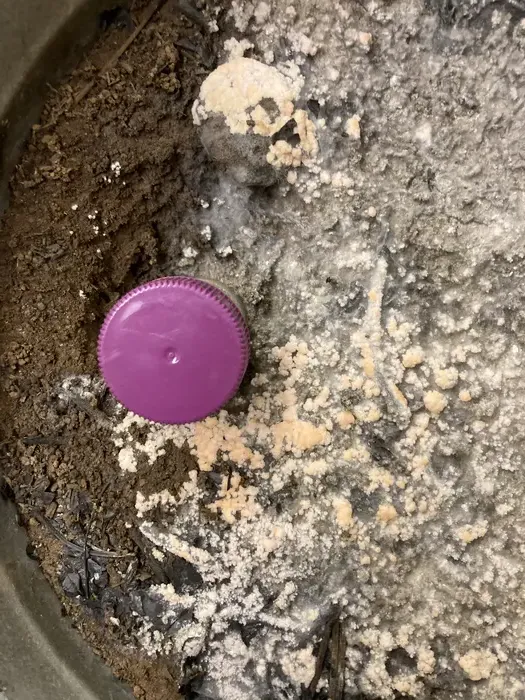
As wildfires continue to grow in intensity and size, unlocking the mysteries of fire-loving fungi might accelerate forest recovery. Their ability to break down charcoal and release carbon makes them key to restarting nutrient cycles, and some fire-loving fungi can even digest chemical pollutants.
Charcoal contains ring-shaped compounds called aromatic hydrocarbons, which are naturally occurring in wildfire areas but are carcinogens and pollutants in other contexts. Burn fungi, because they can break these compounds down, “also play this role in protecting human health,” Spear says. And future innovations might utilize the fungi more broadly. “Aromatic hydrocarbons are in other things, like oil, for example,” Glassman says. “Can [the fungi] be used to clean oil spills?”
Glassman highlights the possibility for industrial applications where these organisms can be used to help restore polluted landscapes and make the environment more hospitable for returning plants.
They do this in a multitude of ways. Some pyrophilous fungi form thick mycelial mats, or networks of fungi that bind the soil together, preventing erosion and allowing water to permeate. They might also grow abundantly then die off, leaving behind a nutrient-rich “necromass” that paves the way for future life in the soil, which Fischer has described in her own work. Glassman also found, in a 2015 study, that some fungi form symbiotic relationships with plant seedlings, enabling plant regrowth.
Within weeks after their emergence, many of these fungi have vanished. Though crucial to forest recovery, fire-loving fungi remain elusive, briefly transforming the landscape before disappearing again. “In one moment, they can be dormant and have low abundance in the soil,” Spear says. “Then the next moment, they’re the most important players.”


