These Gory, Rare Fossils Unravel Ancient Marine Rivalries



Explore
MMore than 100 million years ago, enormous marine reptiles may have chomped on marlin-like fish, violently beating their prey until their heads were ripped off, according to newly analyzed fossils.
Researchers studied more than 300 fossils belonging to Aspidorhynchusa genus of extinct fish, native to a large area of Germany that was once a series of scattered islands in a shallow sea. The region is known for producing particularly well-preserved fossils from the Late Jurassic, which spanned approximately 160 million to 145 million years ago.
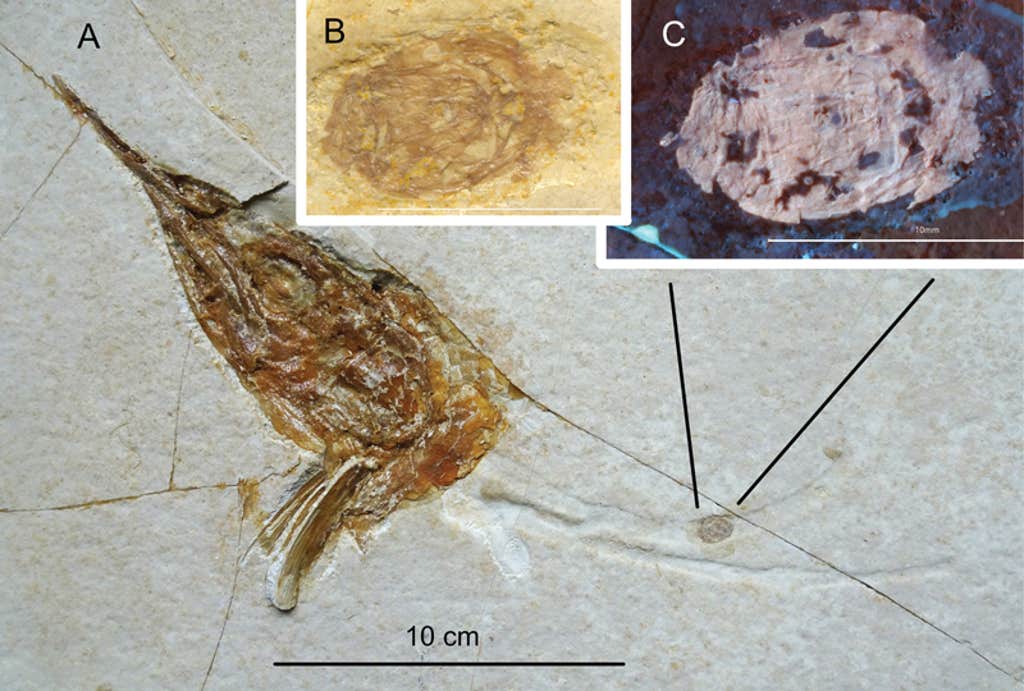
Among this collection were 10 disembodied Aspidorhynchus heads with guts still attached, according to a new study published in Fossil record. These bloody scenes, frozen in evolutionary time, are “extraordinary fossils” and “unique in the fossil record,” the authors wrote.
ADVERTISEMENT
Nautilus members enjoy an ad-free experience. Log in or register now.
Aspidorhynchus grew to about 3 feet long and had a long, sword-shaped upper jaw, like the swordfish or marlins you may have seen decorating the walls of a seafood restaurant. Aspidorhynchus and other members of its family were among the largest predatory fish commonly found in this Late Jurassic aquatic ecosystem of modern Germany.
In previously discovered Aspidorhynchus fossils, the creatures’ gastrointestinal tracts were obscured by thick scales. But thanks to a rare look into their guts, scientists have learned more about the Aspidorhynchus diet. They found that these pointy fish appeared to be munching on small teleosts, related to many existing fish species, by eating them whole and head first. Researchers suggest that Aspidorhynchus hunted in much the same way as today’s swordfish, using its sharp upper jaw to slice through schools of prey. One specimen suggested that they sometimes ate larger meals, such as a 6-inch-long fish. allothrisops fish.
Read more: »The rise and fall of the living fossil»
The decapitated fossils also provided clues to their grisly demise: They may have been hunted by “grabbing” predators, including large reptiles, which “grabbed their prey by the tail first and paralyzed or even killed it with vehement head shaking and biting,” the study authors wrote. Then these thieves may have let go, picked up again and swallowed up their victims. Predators probably consumed the most nutritious and least labor-intensive pieces first, so it is possible that they left the Aspidorhynchus heads and let them sink into the depths with their guts still intact.
ADVERTISEMENT
Nautilus members enjoy an ad-free experience. Log in or register now.
AspidorhynchusThe heads also appear vulnerable to decapitation: their vertebrae are relatively soft and can be easy to bite. And if a predator “cuts off the head at the dorsal connection to the spine and then rips the head off,” then “the intestines come with it,” according to a quote from David Bellwood, a marine biologist at James Cook University in Australia, included in the article.
This would be an easy feat for enormous reptiles such as ichthyosaurs and pliosaurs, some of which measured more than 13 feet long, offering terrifying new insights into the aquatic wild west of the Late Jurassic.
Enjoy Nautilus? Subscribe for free to our newsletter.
Main image: Nobu Tamura / Wikimedia
ADVERTISEMENT
Nautilus members enjoy an ad-free experience. Log in or register now.


