These private spacecraft will attempt lunar landings in 2026

When you purchase through links on our articles, Future and its syndication partners may earn a commission.

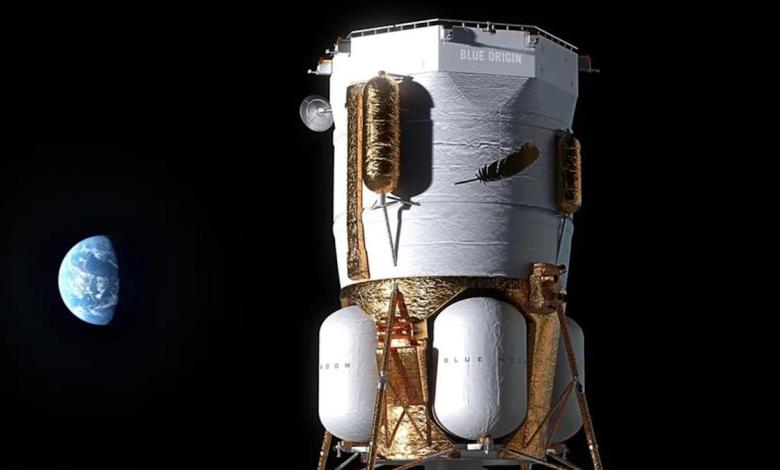
Artist’s illustration of Blue Origin’s Blue Moon Mark 1 lander on the lunar surface. | Credit: Origine Bleue
2026 is shaping up to be a spectacular year for lunar exploration, with a growing fleet of commercial missions ready to attempt to land on Earth’s celestial neighbor.
This will be a huge year for the moon overall. NASA plans to send humans back near the Moon with the Artemis 2 mission no earlier than February, while China, in the second half of the year, aims to land at the lunar south pole and search for water ice with its robot. Chang’e 7 spacecraft. But it’s not just national agencies targeting Earth’s companion, as commercial companies are also taking aim, with a series of robotic landers, at what could be the start of a sustainable, more market-driven lunar presence for humanity.
Below are commercial missions currently targeting moon landing attempts in 2026, pending launch schedules and mission readiness.
Blue Origin: Blue Moon Pathfinder Mission 1
That of Jeff Bezos Blue origin is about to fire its first shot at the moon with the Blue Moon Mark 1 scout. The robotic lander is expected to be launched on a New Glenn rocket from Cape Canaveral as early as early 2026, the company announced in November, shortly after NASA’s successful launch of the rocket. GETAWAY Mission to Mars.
The mission is designed to be a technology demonstration of the Blue Moon Mark 1 cargo lander design, featuring precision landing systems and propulsion technology that will support subsequent deliveries of commercial and NASA payloads to the lunar surface, with a capacity of up to 6,600 pounds (3,000 kilograms).
The lander will target the lunar south pole and carry a NASA satellite SCALP payload that will study how the lander’s exhaust gases interact with the moon’s surface during landing. The stakes are high: Blue Origin is one of the prime contractors for NASA’s Human Landing System (HLS) with its Blue Moon lander, which is intended to land astronauts on the moon later this decade, making Mark 1 Pathfinder a key rehearsal.
Firefly: Blue Ghost M2
Texas-based Firefly prepares to return to the Moon a year after its historic landing from Blue Ghost to Mare Crisium on the near side. Blue Ghost M2 is the next step in the company’s efforts to become a commercial repeatable lunar delivery provider. It will fly as part of NASA’s Commercial Lunar Payload Services (CLPS) program, while also carrying commercial and international payloads.
Blue Ghost M2 will be launched on a EspaceX Falcon 9 rocket no earlier than the second quarter of 2026, aiming to land on the the hidden side of the moon — a feat that only China has achieved to date, with Chang’e 4 in 2019 and Chang’e 6 in 2024. Among six government and commercial payloads will be the Rashid Rover 2 for the United Arab Emirates and a wireless power receiver for Volta Space.
The mission also carries European Space Agency‘s Lunar Pathfinder orbiter, which will be deployed into lunar orbit by Firefly’s Elytra orbital transfer vehicle. Elytra will also serve as a communications relay for Blue Ghost M2 during its 10 days of operations. A communications relay is a necessity because the far side of the Moon is not visible from Earth.

A view of the Blue Ghost lander on the moon | Credit: NASA/Firefly Aerospace
Intuitive machines: IM-3
Intuitive machines will attempt its third Moon landing in the second half of 2026 with the IM-3, seeking to build on the efforts of the IM-1 Ulysses spacecraft in February 2024 and last year’s IM-2 Athenaboth of which rolled onto their sides shortly after landing on the lunar surface.
IM-3, still using the NOVA-C lander, will be launched on a Falcon 9 NASA rocket Kennedy Space Center in Florida and target a landing in the Reiner Gamma region on the near side, which features a mysterious lunar vortex with an associated local magnetic field. The lander will be packed with scientific payloads, including magnetometers and plasma instruments, as part of the CLPS program.
Astrobotics: Griffin 1 mission
Astrobotics first lunar lander, Peregrine, launched in January 2024 but suffered a propulsion anomaly due to a faulty valve and finished in the Pacific Ocean. But the Pennsylvania-based company is back with its first Griffin lander, currently scheduled for launch no earlier than July 2026 on a Heavy Falcon rocket.
Griffin-1 will target the Moon’s south pole. It was originally planned to take NASA’s VIPER rover to search for volatile substances, but the rover was moved to a subsequent missionfollowing its cancellation and subsequent resumption. Instead, Astrolab’s four-wheeled vehicle, weighing 1,000 pounds (450 kg) Lunar rover FLIP will join Griffin-1 for the ride, along with Astrobotic’s own, much smaller CubeRover. The lander will also carry other small commercial and cultural payloads.
Together, these missions represent a further expansion of efforts to explore the Moon, test technologies and deploy science payloads that will be used in or inform future missions, including the Artemis program, as well as increase the commercial footprint in space. How the missions unfold will indicate whether private lunar landers are ready to move from experimental to routine mode.


