This All-Female Fish Has Been Cloning Itself for 100,000 Years — and Its DNA Is Still Thriving


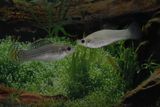
Asexual reproduction occurs in the animal kingdom, with species copying their DNA generation after generation. By the rules of evolution, that strategy comes with trade-offs. But one small fish has been doing it for more than 100,000 years, and its genome shows no signs of decline.
Known as the Amazon molly, this all-female species reproduces by cloning itself, a process that should allow harmful mutations to build up over time and limit its ability to adapt. Instead, it has remained genetically stable. Though it does not take genetic material from a male, the Amazon molly does need male sperm from a related species to trigger reproduction
New research from the University of Missouri points to why. Using long-read sequencing, researchers identified a process called gene conversion, in which one copy of a gene can overwrite another, helping to repair DNA as the fish reproduces. The findings, published in Nature, offer an explanation for how this species has persisted longer than expected.
“This fish seems to have the best of both worlds — the genetic health that normally comes from sexual reproduction, while not needing a male’s DNA to reproduce,” Wes Warren, senior author, said in a press release.
Read More: Asexual Reproduction is Surprisingly Common in the Animal Kingdom
Amazon Molly Fish Defies Evolution Through Asexual Reproduction
The Amazon molly first appeared more than 100,000 years ago through a hybrid event between two species: Poecilia latipinna and Poecilia mexicana. Since then, it has reproduced by cloning itself, producing genetically similar offspring each generation.
Without mixing DNA through sex, mutations are expected to accumulate, reducing genetic health and adaptability. Many models suggest such species should disappear within about 10,000 years.
When researchers mapped its genome in 2018, they expected to find signs of deterioration. Instead, the DNA appeared stable, resembling what scientists would expect in sexually reproducing species.
“This was shocking because it goes against everything scientists thought we understood about mutation rates,” said first author Edward Ricemeyer.
A Genetic Process That Keeps DNA Intact
To study how the genome remains stable, researchers used long-read sequencing, which reads long stretches of DNA and allows entire gene sequences from both parent species to be compared side by side.
That comparison revealed a mismatch. The two inherited genomes were not changing in sync: one accumulated mutations more quickly, while the other remained relatively stable within the same cells.
Over time, this imbalance appears to be corrected. Mutations are overwritten, while beneficial variants persist, producing a filtering effect similar to that seen in sexually reproducing species.
The process depends on balance. Too much correction would erase genetic differences, while too little would allow damage to build up. In the Amazon molly, it appears to operate within a narrow range that maintains both stability and variation.
“When we submitted our work to the journal, the reviewers didn’t believe us at first. They were just as surprised as we were, and asked us to provide much more evidence,” Ricemeyer said.
Rethinking How Evolution Works
The findings challenge long-held assumptions about the limits of asexual reproduction.
They show that genetic systems can maintain themselves over long periods, even without the exchange of DNA between individuals. At the same time, they highlight how evolution can operate through multiple pathways, not just the ones most commonly observed.
This raises new questions about other species that reproduce without sex, including Komodo dragons and New Mexico whiptail lizards, and whether similar processes may be at work.
The implications extend beyond evolution. Understanding how genes repair and regulate themselves could inform research into genetic diseases, breeding strategies, and cancer.
“Better understanding the different ways that reproduction happens helps us better understand ourselves,” Ricemeyer concluded in the press release. “How we got here, and where we may be headed.”
Read More: Wild Fish Can Recognize Individual People, and Maybe Even Human Faces
Article Sources
Our writers at Discovermagazine.com use peer-reviewed studies and high-quality sources for our articles, and our editors review for scientific accuracy and editorial standards. Review the sources used below for this article:


