Imaging Technique Reveals DNA’s Hidden Shape in the Earliest of Embryos


After fertilization, the gametes in the egg prepare to coordinate the formation of new life. Genomicists traditionally believe that this period, before the start of a coordination process called zygotic genome activation, is marked by genome disorganization. This initial period, they believed, was only a liminal transitional state before the embryo began to sort itself out and make a new complex organism.
Now, two new studies suggest that, at this early stage of life, the genome is actually more organized than originally thought.
Learn more: A laboratory created a synthetic human embryo without a fertilized egg
What is Pico-C?
In the first study, published in Natural geneticsscientists have unveiled a tool called Pico-C that reveals the 3D structure of the genome during the first days of life. The tools reveal how this structure, called chromatin, is organized.
Pico-C showed that before zygotic genome activation began, the genome had already packed itself into a structure. The findings could help us understand these key developmental milestones, which can lead to serious and lifelong health problems when they go wrong.
“We used to think of the period before the genome awakened as a time of chaos,” Noura Maziak, an epigenomicist at Imperial College London and co-author of the new study, said in a press release. “But zooming in closer than ever, we can see that this is actually a very disciplined construction site. The genome scaffolding is erected in a precise, modular way, long before the switch is fully flipped.”
Fruit fly DNA structure
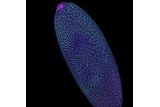
The team made their findings using Pico-C to image the fruit fly (Drosophila) embryos. The rapid development of the fly, during which thousands of cells form in just a few hours of nuclear divisions, makes it an ideal model for developmental biologists.
When they looked at the fly’s developing genome, they saw an ordered structure rather than a messy maze. The fly’s DNA was folded into loops, allowing external regulators to alter the development of the genome.
The DNA props and actors were neatly arranged on stage, ready for the show. The team even identified so-called “pioneer” factors which, once exhausted, disrupted this careful initial organization.
Pico-C should help us understand much more than just how fruit flies develop. In a second study, conducted by researchers at ETH Zürich in Switzerland and sharing some of the same authors as Natural genetics paper, the tool was tested on human cells. This second article was published in Natural cellular biology.
Here, the researchers tested the effects of removing the chromatin “tethers” that maintain genome structure. They found that disruption of the genome architecture triggered a dramatic turn of events: the cell misinterpreted the collapse as a viral attack, triggering a wave of inappropriate autoimmune attacks. This type of misdirected activation could lead to disease.
“These two studies tell a complete story,” Juanma Vaquerizas, a developmental epigenomicist at Imperial College London and co-author of both studies, said in the press release. “The first shows us how the 3D structure of the genome is carefully constructed early in life. The second shows us the disastrous consequences for human health if we allow this structure to collapse.”
These studies may be just the first example of how Pico-C could help us understand genome development. Importantly, the tool only requires a small sample for analysis, ten times less than what other procedures require. Researchers hope this could help Pico-C reveal how the changing shape of DNA controls gene regulation in health and disease.
Learn more: More like a film than a portrait – New DNA model redefines family history
Article sources
Our Discovermagazine.com editors use peer-reviewed research and high-quality sources for our articles, and our editors review the articles for scientific accuracy and editorial standards. See the sources used below for this article:


