This is the best reason to finally upgrade your 3D printer


Bed leveling is the bane of my 3D printing existence, and my old 3D printers never made me want to 3D print. Upgrading my 3D printer to a newer model with better bed leveling was a complete game changer for me, and it will be for you too.
Manual bed leveling takes forever
And even when it’s connected, it’s not connected

When I started 3D printing about four years ago, the 3D printer I had only offered manual bed leveling. To manually level a bed, you need to screw four screws into each corner of the bed and use a piece of paper (or a feeler gauge) to correctly set the distance between the nozzle and the bed.
This is a step that can take five minutes or five hours. It all depended on the behavior of your 3D printer. Mine never wanted to play nice, so I would often spend an hour or two working on it just to get it to an acceptable level. I was never able to get it completely and it always frustrated me.

Everything you need to know about 3D printers
3D printing is becoming more and more common, so is it time to add one to your home?
The problem wasn’t my technique; this was with the technique used to level the bed. The bed itself only had four points of adjustment, and sometimes the build plate had waves because of the way it had to pull on the bed. There was no right answer here.
I finally managed to get decent quality prints with manual bed leveling, but a quick brush of that oversized bed leveling screw and I was back to square one. This was honestly the most exasperating part of 3D printing for me.
The first automatic bed leveling was more “assisted” than “hands-off”
I ended up going back to manual bed leveling.

A year after buying my first 3D printer, I got a second one, this time with “automatic bed leveling”. There was a probe that stuck out from under the print head and pushed the build plate to determine how to level it, except it wasn’t exactly hands-off.
The printer would be able to build a mesh of the bed, but it didn’t know how far to offset the Z height to know where to stick the nozzle. This is because you might mount the external bed level sensor slightly higher or lower than someone else, or it might be mounted slightly higher or lower from the factory.

5 Uncomfortable Truths About 3D Printing You Need to Hear
Even the greatest hobbies have downsides.
So to compensate for that, you had to set the Z offset for the printer, and that was something else I had to struggle with for hours to get set correctly. Once the Z offset was set correctly, you were golden.
It was better in some ways than manually leveling the bed, and worse than others. In the end, I often gave up on automatic bed leveling and went back to manual work – at least it was simpler.
Automatic bed leveling has become so good that there is no reason to return to it
I don’t even think about bed leveling anymore, and it’s glorious

About two years ago I upgraded my Ender 3 V2 clone printers that I owned to the Bambu Lab A1 mini and was instantly blown away. Not only did this printer have automatic bed leveling, but it also had automatic Z-offset and much more. Once I experienced the features of modern 3D printers, I never wanted to touch other methods of bed leveling again.
With the Bambu Lab A1 mini (and now my P1S and P2S), 3D printing has become more fun for me. I wasn’t worried about “Is the bed level?” or “Will the first layer come out okay?” Now I can just click print and wait for the project to finish.

Things You Can 3D Print at Home (But Shouldn’t)
Keep these projects in Pandora’s box.
The crazy thing is that most modern 3D printers that use new bed leveling technology don’t even have the ability to manually level a bed. None of my Bambu Lab 3D printers have the old button bed leveling screws on the bottom. This is because the software manages everything now.
Some might see this as a downside, but after two years of using Bambu Lab printers (and having a close friend who runs a Bambu printer print farm), there appear to be no downsides to the new technology, only upsides.
-
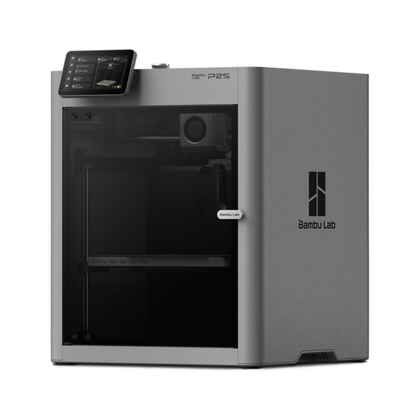
- Build volume
-
256x256x256mm
- Print speed
-
600mm/s
The Bambu Labs P2S 3D printer is ready to use and can get you printing in 15 minutes. It allows printing up to 20 colors with the AMS unit, has an improved built-in camera for remote monitoring and time-lapses, and has a closed body for printing even high-temperature filaments.
-
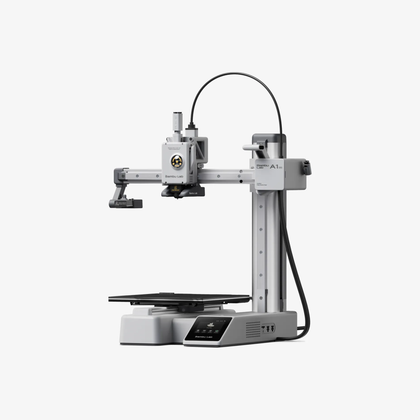
- Build volume
-
180x180x180
- Print speed
-
500mm/s
The Bambu Lab A1 Mini 3D Printer is ready to use and can get you printing in 30 minutes. Offering fully automatic calibration, this compact 3D printer features a build volume of 180mm and is compatible with the AMS Lite for multi-color printing. It also has built-in vibration and flow calibration, which are features typically only found on high-end printers.
-
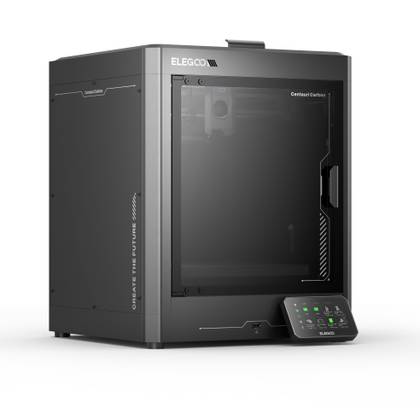
- Build volume
-
10.4 inches x 10.4 inches x 10.4 inches
- Print speed
-
500mm/s
The Centauri Carbon is Elegoo’s first Core XY printer, rivaling printers like the Creality K1C, Bambu Lab P1S and Bambu Lab X1, but at half the price in many cases. This would seem like a joke if the printer himself was not so competent and well-designed.
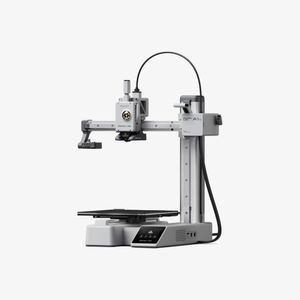

If you’re still holding onto that old Ender 3 V2 printer with a manual bed leveling system (or even the pin auto bed leveling system), it’s time to upgrade. Whether you go with Bambu Lab (my personal preference) or a newer Creality, Elegoo or even Prusa, just get something that has a more reliable system for bed leveling – it will make your 3D printing journey easier and more fun.


